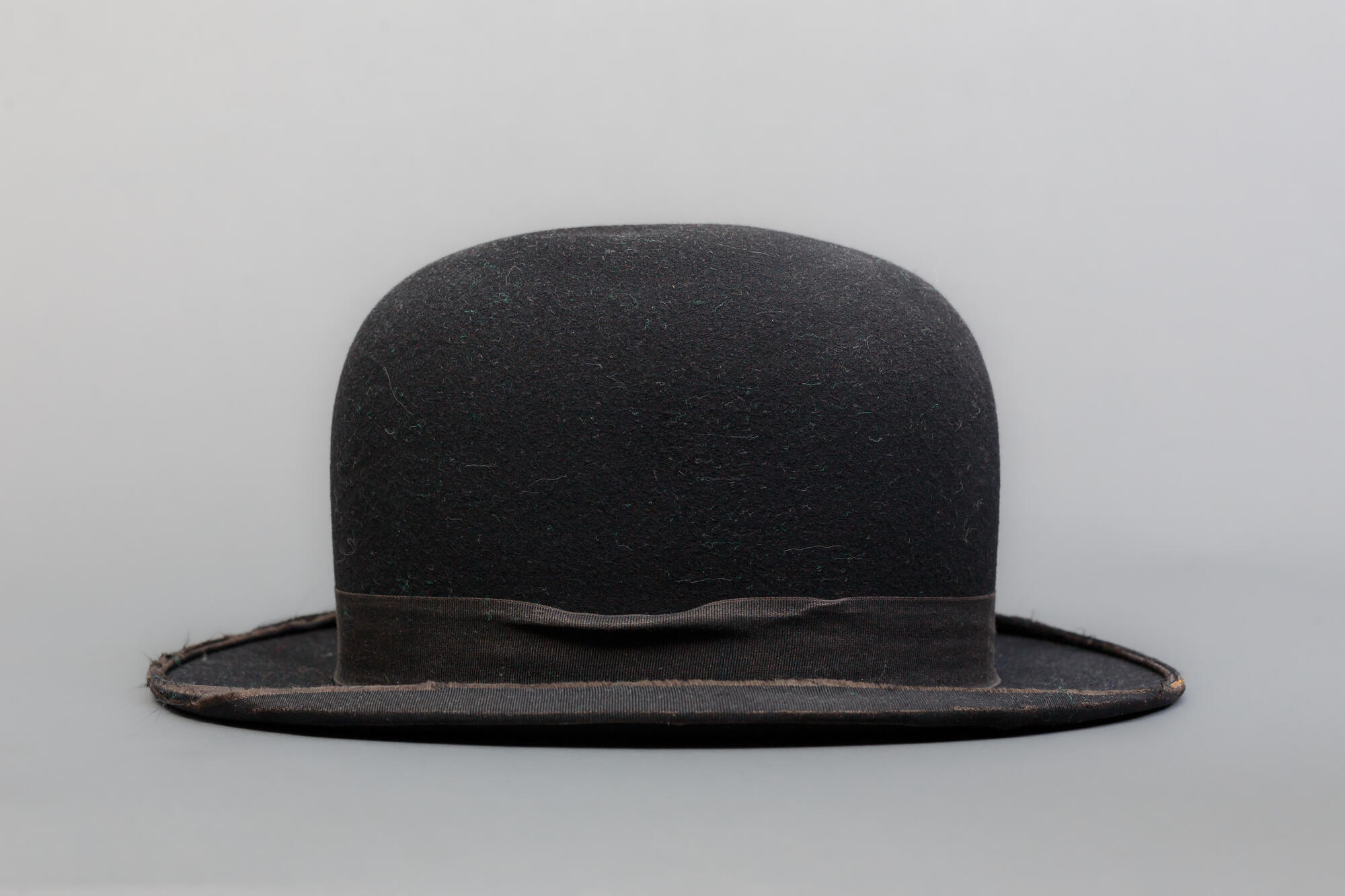


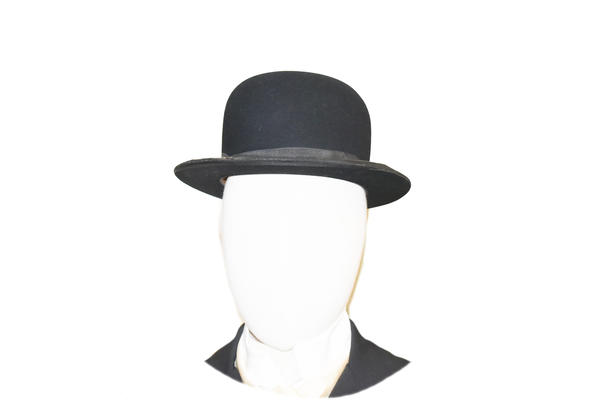
A popular headdress in Europe in the 19th — early 20th centuries, the bowler hat was originally created as part of the uniform of forest rangers. In the mid-19th century, they roamed the woods wearing classic top hats, which clung to branches in the woods and were often lost or damaged. The best-known story goes that in 1849 or 1850, a British soldier, judge and politician, Edward Coke, decided to order more appropriate headgear for his rangers, which would be secure on their heads and not disturb them when they were riding.
The order was placed with Lock & Co. Thomas and William Bowler sewed the sample from designs by George and James Lock. On arriving to collect it, Coke stepped on the hat twice to test its endurance and was pleased with the result. The first bowler hat is known to have been purchased for twelve shillings.
The name “bowler” does not refer to the external characteristics of the headwear. At first, the hats were called by the name of the first customer — “cokes”. When Bowler & Son started mass-producing them, the name changed: the name bowler literally means а “bowl”.
By the end of the century, “uniform” bowler hats had become fashionable for all social classes. This was due not only to their practicality and elegance, but also their low cost: unlike top hats, they were made using machine tools and the material was felted rabbit fur, which was impregnated with a mercury solution. The black bowler was a must-have accessory for a true dandy.
Originally, it was an exclusively male headdress worn with a blazer suit by bank clerks, lawyers and many others. Over time, these hats were worn by girls when riding a horse, and later by married ladies. Thanks to Charlie Chaplin, the bowler hat became a symbol of silent cinema.
In the early 1900s bowler hats began to give way to canotier hats and fedoras; in tradition-bound Britain they remained in use until the 1960s, but today even there they play more of a ceremonial role. A gentleman wearing a bowler hat can be spotted at the Epsom races and is also an identifiable officer of the Royal Guards in civilian attire.
In Russia, the round felt hat with small brim was popular in the first half of the 19th century. The exhibit on display was made in this period as well.
The order was placed with Lock & Co. Thomas and William Bowler sewed the sample from designs by George and James Lock. On arriving to collect it, Coke stepped on the hat twice to test its endurance and was pleased with the result. The first bowler hat is known to have been purchased for twelve shillings.
The name “bowler” does not refer to the external characteristics of the headwear. At first, the hats were called by the name of the first customer — “cokes”. When Bowler & Son started mass-producing them, the name changed: the name bowler literally means а “bowl”.
By the end of the century, “uniform” bowler hats had become fashionable for all social classes. This was due not only to their practicality and elegance, but also their low cost: unlike top hats, they were made using machine tools and the material was felted rabbit fur, which was impregnated with a mercury solution. The black bowler was a must-have accessory for a true dandy.
Originally, it was an exclusively male headdress worn with a blazer suit by bank clerks, lawyers and many others. Over time, these hats were worn by girls when riding a horse, and later by married ladies. Thanks to Charlie Chaplin, the bowler hat became a symbol of silent cinema.
In the early 1900s bowler hats began to give way to canotier hats and fedoras; in tradition-bound Britain they remained in use until the 1960s, but today even there they play more of a ceremonial role. A gentleman wearing a bowler hat can be spotted at the Epsom races and is also an identifiable officer of the Royal Guards in civilian attire.
In Russia, the round felt hat with small brim was popular in the first half of the 19th century. The exhibit on display was made in this period as well.