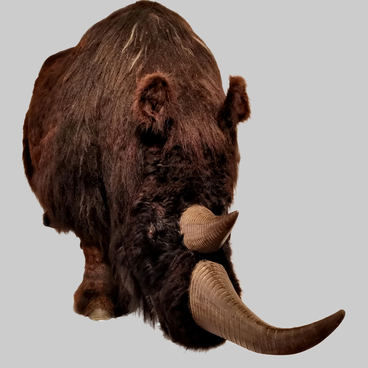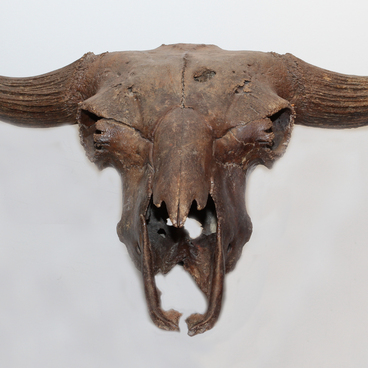
Woolly mammoths are an extinct species of elephants. They settled the territory of Siberia more than 300 thousand years ago. Over time, woolly mammoths mastered the entire north of the continent and moved to North America. Due to the sharp increase in temperature, most woolly mammoths became extinct. Only a small population managed to survive longer on Wrangel Island. They disappeared 4 thousand years ago, but by that time they were already a miniature version of the 4-meter giants of the past and rarely grew up to 1.8 m.
It is not for nothing that Siberian mammoths were called woolly: their bodies were covered from head to toe with thick reddish-brown or black wool, almost 1 m long. A thick reddish undercoat grew under the coat.
Additional protection from the cold included a 10 cm thick layer of subcutaneous fat. Scientists managed to get samples of it from the fat hump of a mammoth found in the permafrost. It turned out that in composition it is close to the fat that gophers and polar bears have. It contained substances that help these animals to hibernate. Mammoths may not have hibernated, but they could use up stored fat in winter and thereby temporarily reduce the need for food.
The bones and bodies of baby mammoths are rarely found. Their skeletons contained a lot of cartilaginous tissues and rapidly decomposed in Siberian soils. Bodies were better preserved in permafrost, but they can lie at inaccessible layers.
Thanks to separate findings of newborn mammoths and babies in the womb of a female, it was possible to find out that mammoths were born with teeth. They had four chewing teeth and two small tusks in their jaws. Over time, they changed to permanent teeth - the change of teeth occurred during certain periods of maturation of woolly elephants. The study of which, showed that newborn mammoths matured earlier than modern elephants and were six months ahead of them in development.
Woolly mammoths, like modern elephants, lived in groups of up to nine females, and the eldest of them headed the family. Males were solitary and joined groups only during the mating season. They reached the age of reproduction at 20 years old, and on average lived up to 45 years.
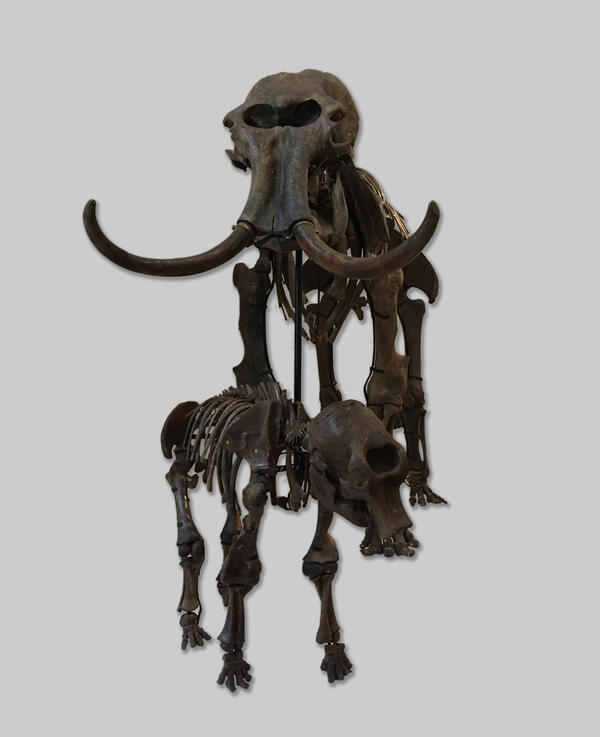
The skeletons of a female and baby mammoth presented in the museum are collected from the bones of various mammoths and replicas. The percentage of original bones in the reconstructions are 90% and 50%, respectively. Whole skeletons are rarely found in animal cemeteries - such places in ancient times attracted predators and primitive people.
It is not for nothing that Siberian mammoths were called woolly: their bodies were covered from head to toe with thick reddish-brown or black wool, almost 1 m long. A thick reddish undercoat grew under the coat.
Additional protection from the cold included a 10 cm thick layer of subcutaneous fat. Scientists managed to get samples of it from the fat hump of a mammoth found in the permafrost. It turned out that in composition it is close to the fat that gophers and polar bears have. It contained substances that help these animals to hibernate. Mammoths may not have hibernated, but they could use up stored fat in winter and thereby temporarily reduce the need for food.
The bones and bodies of baby mammoths are rarely found. Their skeletons contained a lot of cartilaginous tissues and rapidly decomposed in Siberian soils. Bodies were better preserved in permafrost, but they can lie at inaccessible layers.
Thanks to separate findings of newborn mammoths and babies in the womb of a female, it was possible to find out that mammoths were born with teeth. They had four chewing teeth and two small tusks in their jaws. Over time, they changed to permanent teeth - the change of teeth occurred during certain periods of maturation of woolly elephants. The study of which, showed that newborn mammoths matured earlier than modern elephants and were six months ahead of them in development.
Woolly mammoths, like modern elephants, lived in groups of up to nine females, and the eldest of them headed the family. Males were solitary and joined groups only during the mating season. They reached the age of reproduction at 20 years old, and on average lived up to 45 years.
The skeletons of a female and baby mammoth presented in the museum are collected from the bones of various mammoths and replicas. The percentage of original bones in the reconstructions are 90% and 50%, respectively. Whole skeletons are rarely found in animal cemeteries - such places in ancient times attracted predators and primitive people.