The main religion of the peoples of the North has always been shamanism and the worship of spirits. After the Christianization of the lands in the 18th–19th centuries, it was preserved in most of the rites, traditions, folklore and costumes. A shaman was an important member of the tribe, an interactor between the world of people and spirits. His ritual activity was very important for the ancient society, providing support and helping to cope with misfortunes.
According to the ideas of many peoples, a shaman could travel to the Upper and Lower worlds. People believed that all objects of animate and inanimate nature, weather phenomena and dead tribesmen have their own spirits that can both help and harm a person. A shaman knew how to speak with the spirits and tell them about people’s requests and questions. According to the Selkups, the people of Northern Siberia, the shamanic gift was inherited from a grandfather, father or mother.
The Selkups believed that a shaman could heal a person from illnesses caused by spirits — helpers of the underground deity Kyzy. They penetrated the human body through the skin “like the wind” and fed on it. The Selkups pictured evil spirits as worms or insects that move through the blood vessels. With the help of special spells, movements and rituals, the shaman drove them out of the patient’s body.
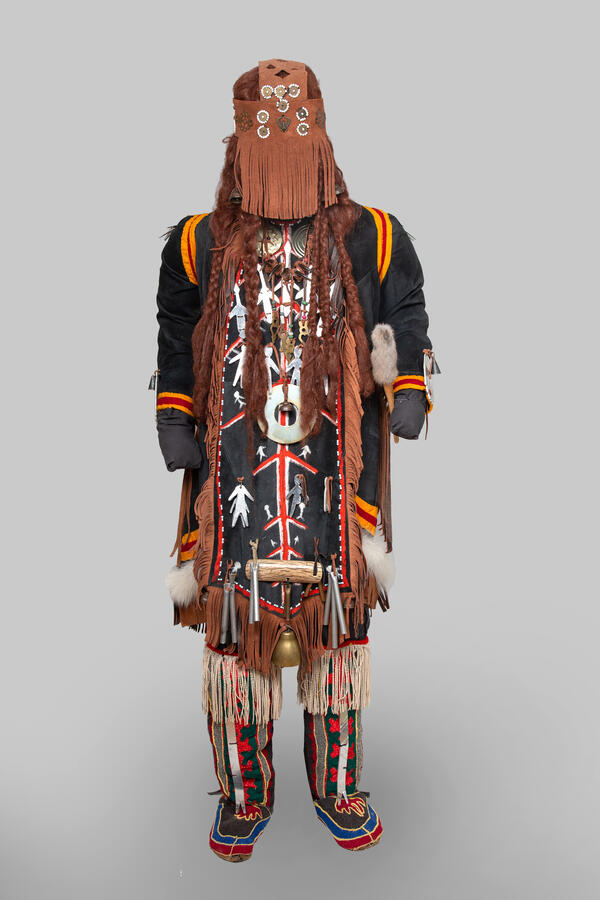
A shaman underwent initiation rites: it was believed that they increase his sacred power and lead along the path of the Great shaman. The status of a shaman was manifested in his costume. Shamans were divided into several categories — ranks. Shamans of the highest rank differed in the areas of their activity and were called shamans of the Upper, Middle and Lower worlds. The presented costume belonged to a middle-ranking Selkup shaman.
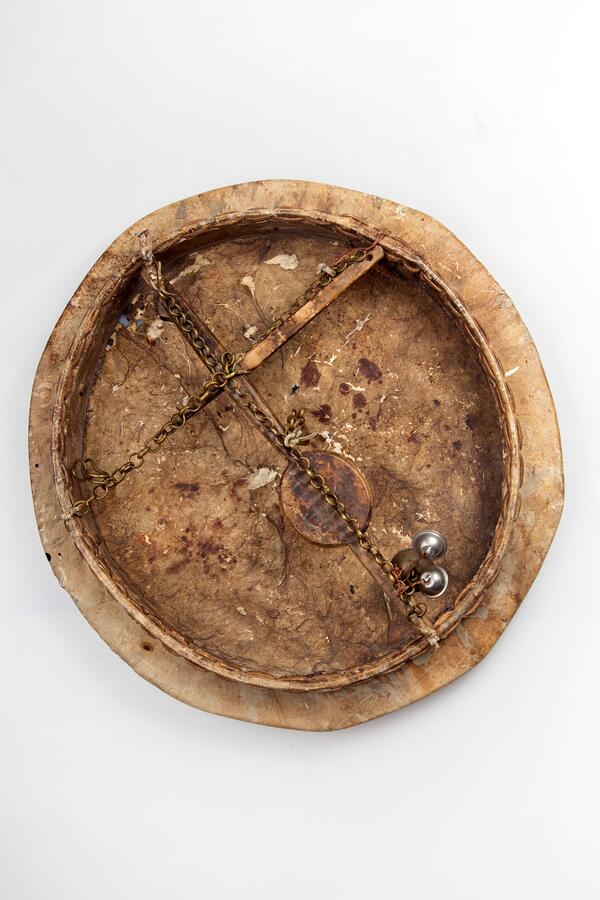
The set consists of a straight parka, a bib, a crown and shoes called pimy. Homemade metal bells are hung below and there is an image featuring the shaman’s guardian spirit. The shaman sang, called on spirit helpers and communicated with them, rhythmically striking the tambourine. The breastplate depicts a map of the Selkup worldview: the central band symbolizes a bird’s backbone, and there are symbols of the moon, a shaman, a loon, and a crane on different tiers. Above all is the world of heavenly people. In the center of the breastplate is a pendant in the form of a circle — a symbol of the shaman’s heart and celiac plexus.
According to the ideas of many peoples, a shaman could travel to the Upper and Lower worlds. People believed that all objects of animate and inanimate nature, weather phenomena and dead tribesmen have their own spirits that can both help and harm a person. A shaman knew how to speak with the spirits and tell them about people’s requests and questions. According to the Selkups, the people of Northern Siberia, the shamanic gift was inherited from a grandfather, father or mother.
The Selkups believed that a shaman could heal a person from illnesses caused by spirits — helpers of the underground deity Kyzy. They penetrated the human body through the skin “like the wind” and fed on it. The Selkups pictured evil spirits as worms or insects that move through the blood vessels. With the help of special spells, movements and rituals, the shaman drove them out of the patient’s body.
A shaman underwent initiation rites: it was believed that they increase his sacred power and lead along the path of the Great shaman. The status of a shaman was manifested in his costume. Shamans were divided into several categories — ranks. Shamans of the highest rank differed in the areas of their activity and were called shamans of the Upper, Middle and Lower worlds. The presented costume belonged to a middle-ranking Selkup shaman.
The set consists of a straight parka, a bib, a crown and shoes called pimy. Homemade metal bells are hung below and there is an image featuring the shaman’s guardian spirit. The shaman sang, called on spirit helpers and communicated with them, rhythmically striking the tambourine. The breastplate depicts a map of the Selkup worldview: the central band symbolizes a bird’s backbone, and there are symbols of the moon, a shaman, a loon, and a crane on different tiers. Above all is the world of heavenly people. In the center of the breastplate is a pendant in the form of a circle — a symbol of the shaman’s heart and celiac plexus.