

Samovars were a special attraction at any fair. They were not just a device for making tea — for three centuries they were a hallmark of Russian hospitality.
Historical documents first mention this device in the 1740s. The term “samovar” was not chosen at once, in different Russian cities it was called in its own way: in Kursk it was “samokipets”, in Yaroslavl — “samogar”, in Vyatka — “samogrey”.
The first enterprise, which started producing samovars, is believed to be Verkhne-Irginsky factory of copper goods of the Osokin merchants. However, it was the samovars from the Lisitsyn brothers’ workshop, which opened in Tula in 1778, that gained wide popularity.
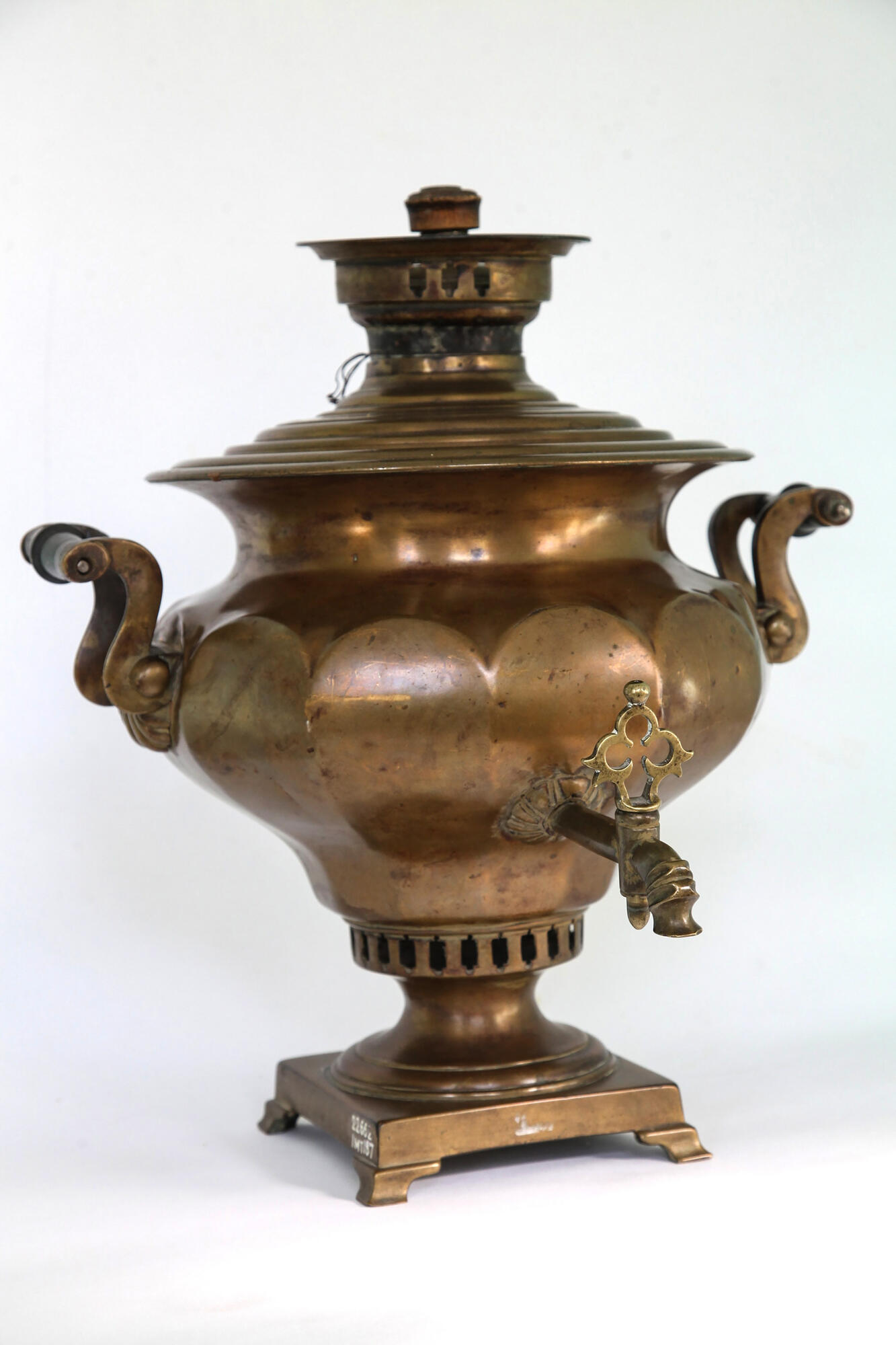
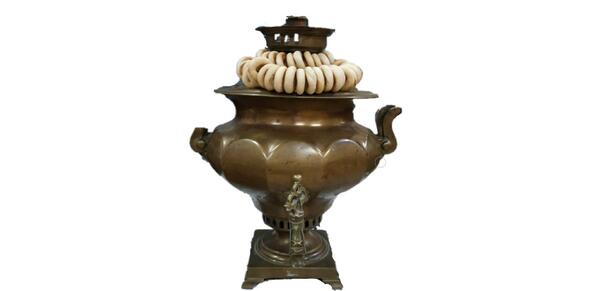
At first copper or brass was used in samovar production, followed later by nickel, due to which the appearance of samovars changed so that it was no longer covered with patina. Shapes were varied: “cannons” resembled the muzzle of an ancient weapon, “bullets” were rounded at the bottom, there were also “watermelons”, “pears” and “pumpkins”. The most common shapes were the “jar” and “shot glass”.
Most often samovars were heated with coal or wood, but cones were often used as well. They burned quickly, but gave off a pleasant pine aroma. Some people still use charcoal samovars to enjoy their tea and keep the tradition alive.
The collection of the Volgograd Regional Museum of Local History contains dozens of different samovars that were produced in the 19th and 20th centuries. Among them are several pieces from the Shemarins’ factory. Five brothers of this family opened their workshop in Tula in 1887.
In 1899, the Shemarin Brothers Trading House was established. The trademark of the factory was the image of an eagle. By 1904, 100 varieties of samovars were produced there. By that time 700 people were employed at the Shemarins’ factory. The daily output was about 200 articles.
The Shemarin brothers took part in some 20 international exhibitions and invariably received medals and certificates of merit. The medals chased on the samovars became commonplace, earning the device the nickname “General of the Table”.
Historical documents first mention this device in the 1740s. The term “samovar” was not chosen at once, in different Russian cities it was called in its own way: in Kursk it was “samokipets”, in Yaroslavl — “samogar”, in Vyatka — “samogrey”.
The first enterprise, which started producing samovars, is believed to be Verkhne-Irginsky factory of copper goods of the Osokin merchants. However, it was the samovars from the Lisitsyn brothers’ workshop, which opened in Tula in 1778, that gained wide popularity.
At first copper or brass was used in samovar production, followed later by nickel, due to which the appearance of samovars changed so that it was no longer covered with patina. Shapes were varied: “cannons” resembled the muzzle of an ancient weapon, “bullets” were rounded at the bottom, there were also “watermelons”, “pears” and “pumpkins”. The most common shapes were the “jar” and “shot glass”.
Most often samovars were heated with coal or wood, but cones were often used as well. They burned quickly, but gave off a pleasant pine aroma. Some people still use charcoal samovars to enjoy their tea and keep the tradition alive.
The collection of the Volgograd Regional Museum of Local History contains dozens of different samovars that were produced in the 19th and 20th centuries. Among them are several pieces from the Shemarins’ factory. Five brothers of this family opened their workshop in Tula in 1887.
In 1899, the Shemarin Brothers Trading House was established. The trademark of the factory was the image of an eagle. By 1904, 100 varieties of samovars were produced there. By that time 700 people were employed at the Shemarins’ factory. The daily output was about 200 articles.
The Shemarin brothers took part in some 20 international exhibitions and invariably received medals and certificates of merit. The medals chased on the samovars became commonplace, earning the device the nickname “General of the Table”.