

The samovar was one of the main objects of everyday life in 19th-century Russia. It is mentioned in hundreds of fairy tales, riddles, proverbs and works of Russian writers, and is also found in the paintings by famous artists.
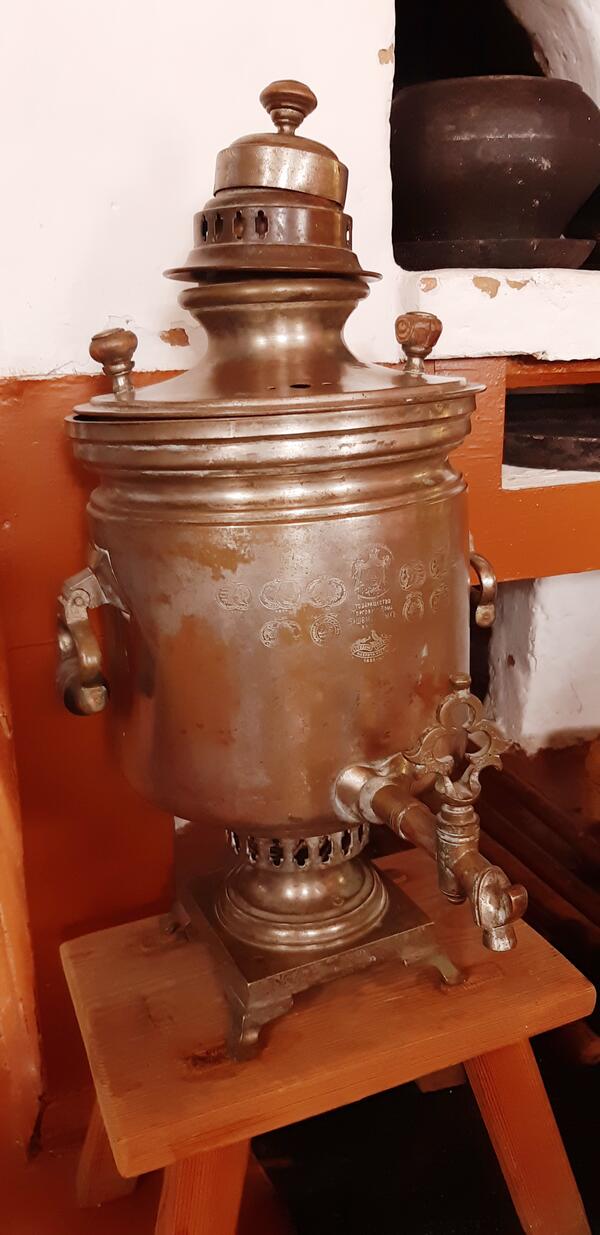
The house, where the academician Ivan Petrovich Pavlov was born and raised, had several samovars. The family was large and included the parents, five children, aunt, nephews and, of course, dear guests. The largest samovar was kept in the kitchen of the Pavlov house. It was called a bucket samovar because it could hold a whole bucket of water.
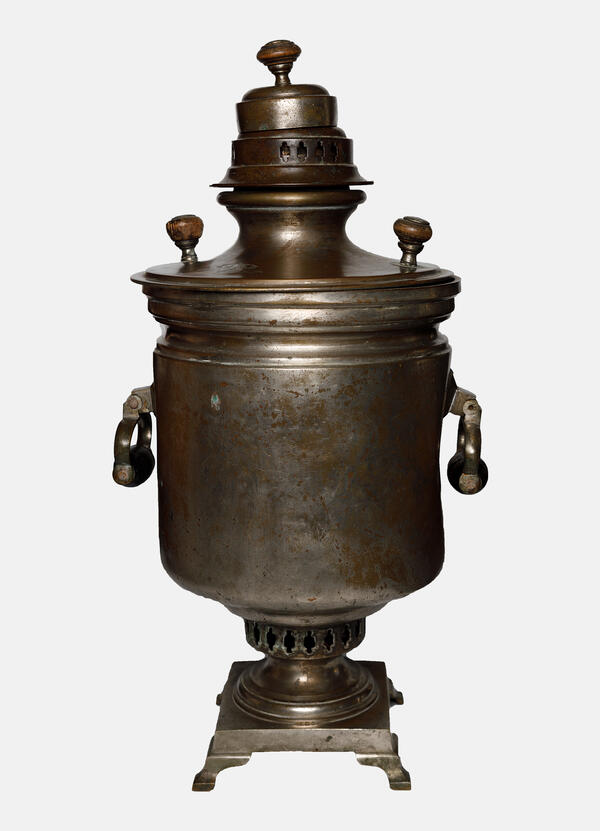
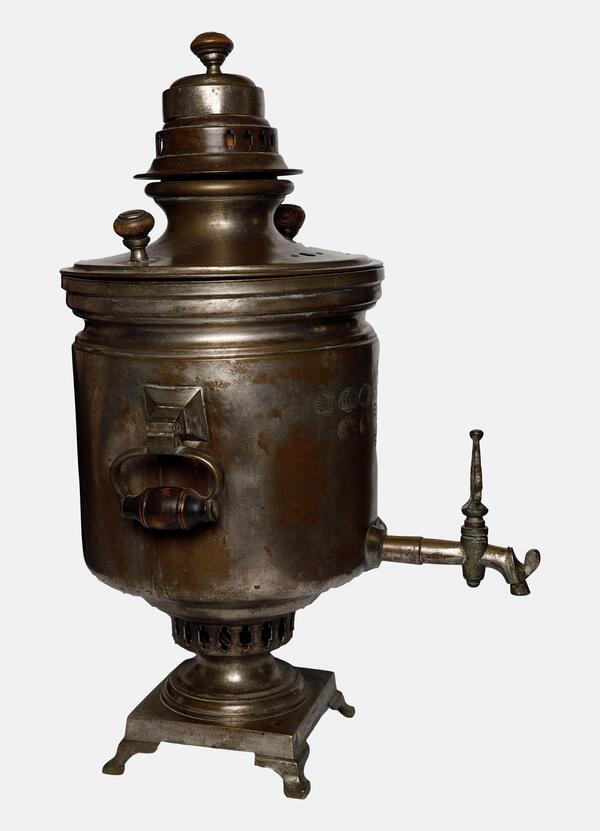
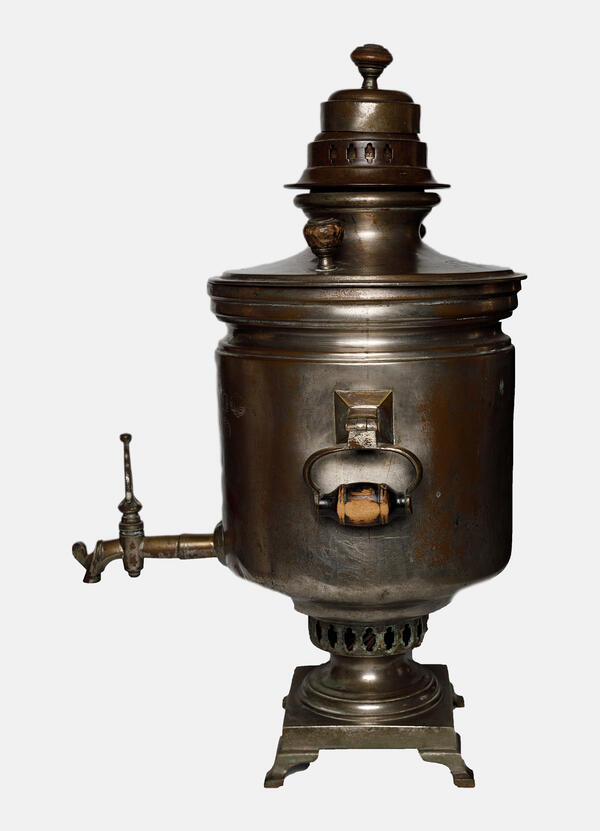
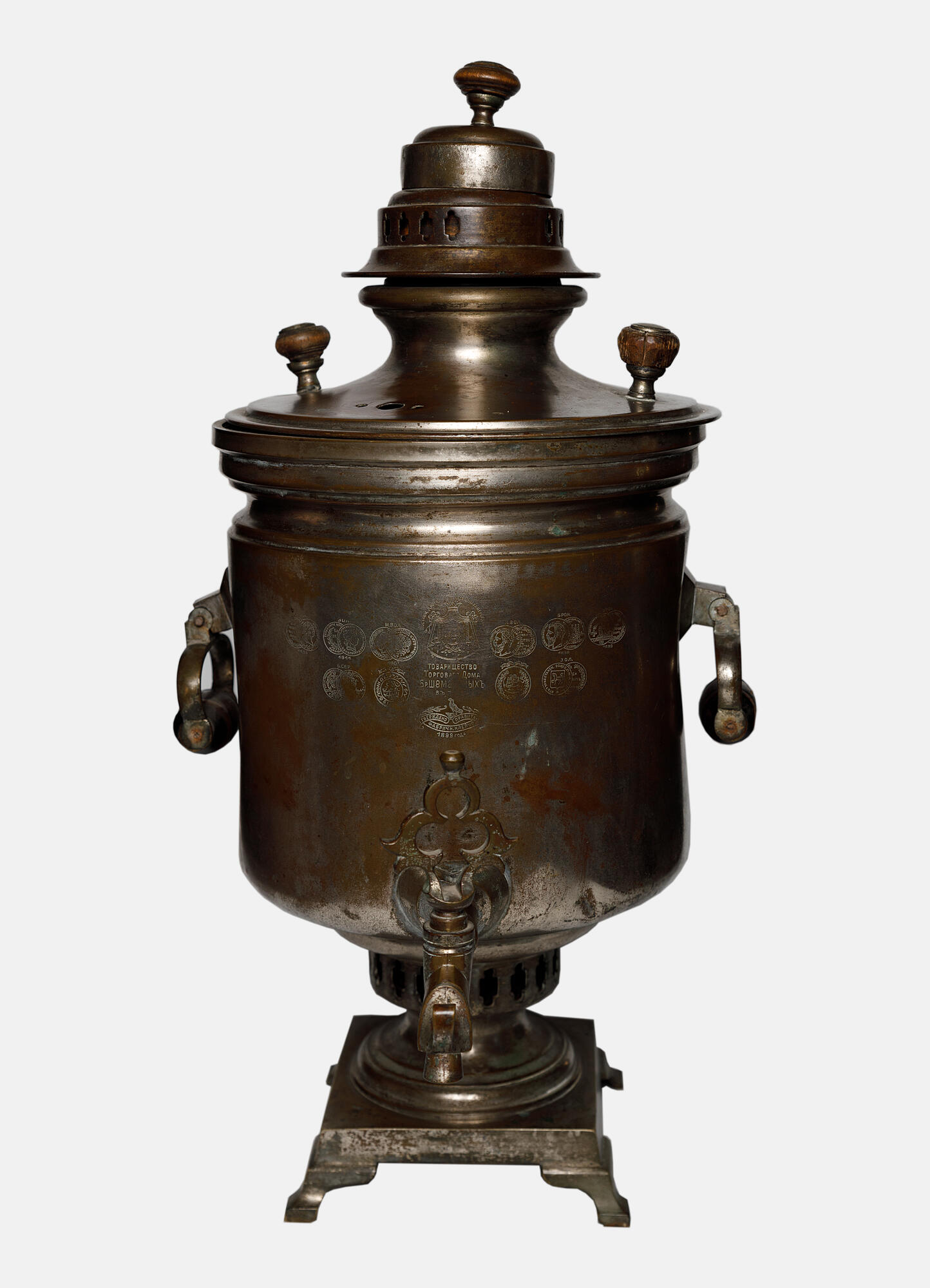
The samovar is shaped like a barrel, it has no special embellishments, except for the place, where the tap is attached, which is framed with a heart-shaped rowel. The elegant openwork tap key resembles a real one. Two movable handles are fixed with figured hinges. There are two wooden samovar knobs on the brass lid — grips that are designed to protect hands from getting burnt. The center of the samovar used to have an internal chimney — a cylinder for charcoal and chips, which is closed with a cap. There are 19 holes in the samovar ashpit, and the square base stands on four ornate legs.
The samovar features a brand in the form of a royal mantle and a crown. It has preserved an inscription ”SUPPLIER OF HIS MAJESTY COURT. PERS. SHAH” — the last letters are illegible. Below is ”TRADING PARTNERSHIP OF THE SHEMAROV BR. IN TULA” — a portion of the surname is almost indecipherable. Below is yet another inscription — “APPROVED BY GOVERN.” The factory mark is dated 1899. Above the figured tap of the samovar are the imprints of 10 medals received at various exhibitions.
A certain childhood memory of the academician Pavlov is connected with one of the samovars of the Pavlov house. His father was an archpriest in the Ryazan church. One night, Ivan and his younger brothers decided to fly a kite with “burning eyes” from the high bell tower. The townspeople were frightened by the kite and complained to the policeman saying “the devil is flying over the city.” The policeman Pafnutyich climbed the bell tower, found the little troublemakers there and brought them back to their father. At the Pavlov house, the prank issue was resolved over a cup of tea, and after this incident, the family started calling the pompous and round-bellied samovar in honor of the policeman — Pafnutyich.
The house, where the academician Ivan Petrovich Pavlov was born and raised, had several samovars. The family was large and included the parents, five children, aunt, nephews and, of course, dear guests. The largest samovar was kept in the kitchen of the Pavlov house. It was called a bucket samovar because it could hold a whole bucket of water.
The samovar is shaped like a barrel, it has no special embellishments, except for the place, where the tap is attached, which is framed with a heart-shaped rowel. The elegant openwork tap key resembles a real one. Two movable handles are fixed with figured hinges. There are two wooden samovar knobs on the brass lid — grips that are designed to protect hands from getting burnt. The center of the samovar used to have an internal chimney — a cylinder for charcoal and chips, which is closed with a cap. There are 19 holes in the samovar ashpit, and the square base stands on four ornate legs.
The samovar features a brand in the form of a royal mantle and a crown. It has preserved an inscription ”SUPPLIER OF HIS MAJESTY COURT. PERS. SHAH” — the last letters are illegible. Below is ”TRADING PARTNERSHIP OF THE SHEMAROV BR. IN TULA” — a portion of the surname is almost indecipherable. Below is yet another inscription — “APPROVED BY GOVERN.” The factory mark is dated 1899. Above the figured tap of the samovar are the imprints of 10 medals received at various exhibitions.
A certain childhood memory of the academician Pavlov is connected with one of the samovars of the Pavlov house. His father was an archpriest in the Ryazan church. One night, Ivan and his younger brothers decided to fly a kite with “burning eyes” from the high bell tower. The townspeople were frightened by the kite and complained to the policeman saying “the devil is flying over the city.” The policeman Pafnutyich climbed the bell tower, found the little troublemakers there and brought them back to their father. At the Pavlov house, the prank issue was resolved over a cup of tea, and after this incident, the family started calling the pompous and round-bellied samovar in honor of the policeman — Pafnutyich.