Font
Color
Graphics
Изображение точки

To see AR mode in action:

1. Install ARTEFACT app for iOS or Android;

2. Find the exhibition «Rus and Horde: 14th Century Warfare»

3. Push the «Augmented reality» button and point your phone's camera at the exhibit;

Скрыть точки интересаПоказать точки интереса
Показать в высоком качестве

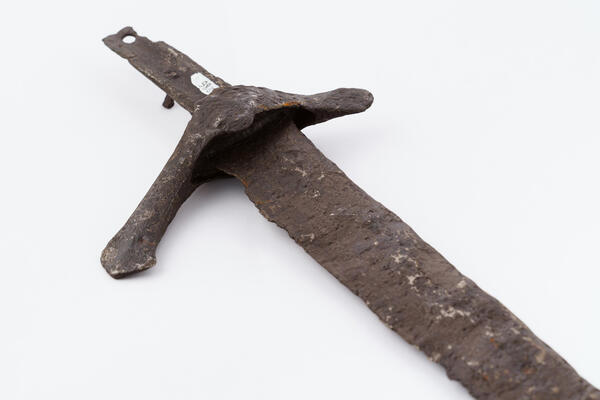
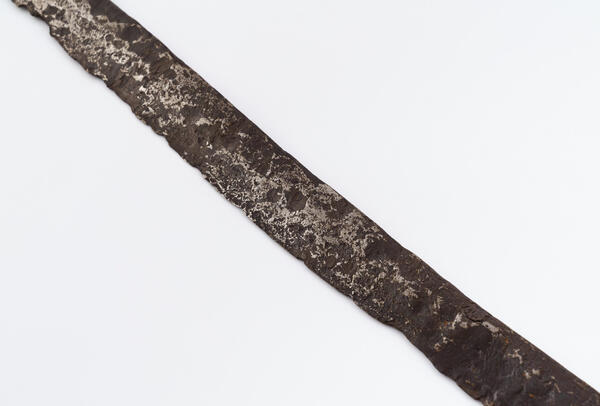
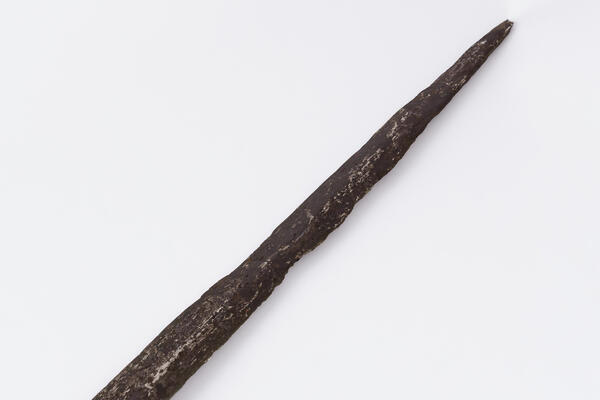
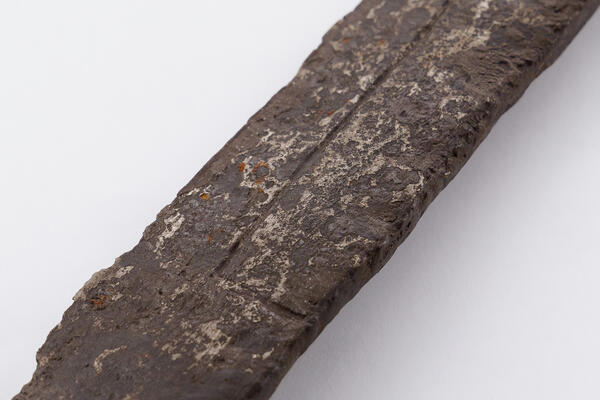
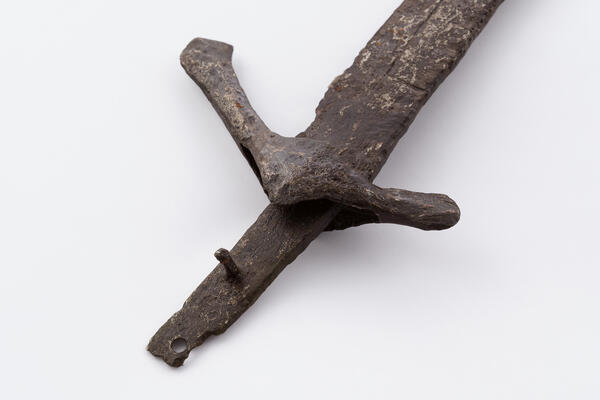
Saber

Creation period
the 13th–14th centuries
Dimensions
total length — 107,6 cm; guard — 10,5 cm; hilt — 9,4 cm; maximum blade width — 2,8 cm
Technique
iron, forging
0
Open in app
#2
The hall “Rus and Horde: 14th Century Warfare” of the State Museum-Reserve “Kulikovo Field” houses a saber. It is part of the offensive weaponry of a warrior from the 14th–15th centuries.


According to the Great Russian Encyclopedia, a saber is a type of melee weapon with a long, narrow blade that can be used for slashing, cutting, or stabbing.


According to most researchers, the saber originated in Russian lands in the 9th–10th centuries spreading from the south and southeast, and it took several centuries for it to replace the sword as the weapon of choice.

The saber was primarily a weapon for horsemen. Warriors would stand up in their stirrups and use their full body weight to deliver a powerful strike with the saber, making it much more effective than a sword. Without stirrups, it is likely that the saber would not have been as effective as it was.


Anatoly Nikolayevich Kirpichnikov wrote in his book “Ancient Russian Weapons”,
#6

The use of a saber requires the stability of the warrior (in the saddle and stirrups), and provides him with great maneuverability in movements, allowing him to reach the enemy more easily and accurately. The speed of combat can be very high, while the precision of strikes and striking qualities of the weapon increase along with the speed. This explains the close connection between the saber and the horseman; in his hands, the curved saber is a much more advantageous and effective weapon compared to that of the infantryman.

#7
Each region that produced sabers had its own unique traditions. First and foremost, the appearance of sabers was determined by the production techniques.


Like the sword, the saber is a symbol of wealth and nobility for the Russians and their allies. It was found in the tombs of princes and boyars, military leaders and warriors who defended their land at the forefront against the steppe nomads.


Nowadays, there are many myths about sabers. For example, some people think that a saber was less prestigious than a sword for a warrior or that it had no decorations and was cheaper. Another misconception is that the saber became popular in the Arab world only in the 15th century, while it was already dominant in the Balkans at the beginning of the 15th century.

#3
Saber
#8
View in the State Catalogue
read morehide
00:00
00:00
1x

Saber

Creation period
the 13th–14th centuries
Dimensions
total length — 107,6 cm; guard — 10,5 cm; hilt — 9,4 cm; maximum blade width — 2,8 cm
Technique
iron, forging
0
Point your smartphone camera to open in the app
Share
VkontakteOdnoklassnikiTelegram
Share on my website
Copy linkCopied
Copy
Open in app
To see AR mode in action:
  1. Install ARTEFACT app for 
  2. iOS or Android;
  3. Find and download the «Paintings in Details» exhibition
  4. Push the «Augmented reality» button and point your phone's camera at the painting;
  5. Watch what happens on your phone screen whilst you flip through the pictures.
 
We use Cookies
Cookies on the Artefact Website. We use cookies to ensure that we give you the best experience on our website. If you continue without changing your settings, we'll assume that you are happy to receive all cookies on the Artefact website. However, if you would like to, you can change your cookie settings at any time.
Learn more about useHide
Content is available only in Russian

X

Нашли опечатку?...

%title%%type%