Font
Color
Graphics
Изображение точки

To see AR mode in action:

1. Install ARTEFACT app for iOS or Android;

2. Find the exhibition «History of the region: 1589 – early 20th century»

3. Push the «Augmented reality» button and point your phone's camera at the exhibit;

Скрыть точки интересаПоказать точки интереса
Показать в высоком качестве

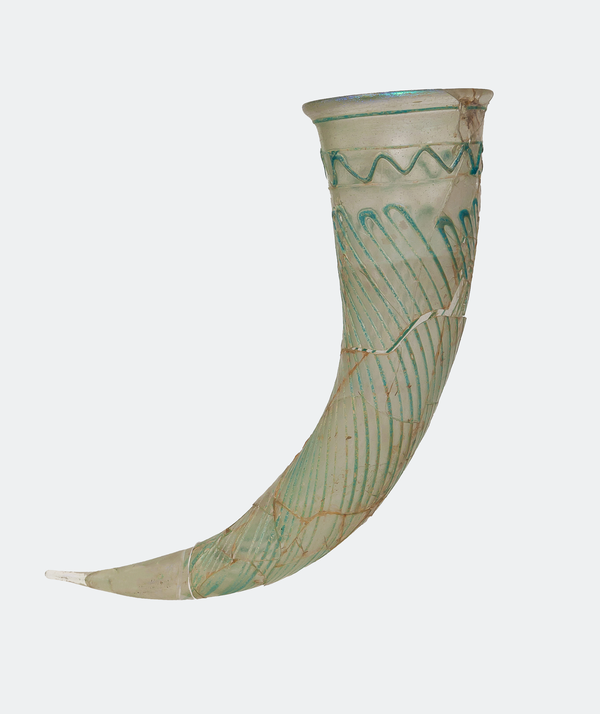
Rhyton

Creation period
second half of the 2nd – first half of the 3rd century AD
Dimensions
32x14x6 cm
Technique
glass, blasting
0
Open in app
#2
Rhyton
#3

A rhyton is a vessel shaped like a horn or a truncated cone, typically with a small opening at the bottom end. The lower end is often shaped like the protome (it is the form of the head and upper torso) of a mythical creature. Moreover, the body is often decorated and could have a handle. The rhytons were mainly made from colored metals, ceramics, horn, bone, or glass. They were intended for drinking, ritual libations and similar uses and have been known since the Bronze Age. Many rhytons are examples of toreutics including those associated with ancient Iranian tradition. Ceramic red and black-figure rhytons with short bodies ending in animal heads were common in ancient Greek art. Glass items of various types and purposes became widespread in the ancient areas of the Northern Black Sea region in the first centuries AD.


A unique find for the Volga-Don interfluve region is a ritual vessel for libations to the gods, made in the shape of a large horn. It was discovered in the burial of a Sarmatian priestess in 1988 near the Nagavskaya village in the Kotelnikovsky District. The rhyton was made using glassblowing techniques from transparent colorless glass and its outer surface is decorated with relief ornamentation of zigzag, spiral and horizontal threads of turquoise-colored glass. Glass rhytons are rare finds, not only in Sarmatian graves but also in ancient cities of the Northern Black Sea region. Its method of ornamentation is similar to the so-called Serpentine style, which originated in the East and was especially popular in the 2nd — 3rd centuries AD.
#4
read morehide

Rhyton

Creation period
second half of the 2nd – first half of the 3rd century AD
Dimensions
32x14x6 cm
Technique
glass, blasting
0
Point your smartphone camera to open in the app
Share
VkontakteOdnoklassnikiTelegram
Share on my website
Copy linkCopied
Copy
Open in app
To see AR mode in action:
  1. Install ARTEFACT app for 
  2. iOS or Android;
  3. Find and download the «Paintings in Details» exhibition
  4. Push the «Augmented reality» button and point your phone's camera at the painting;
  5. Watch what happens on your phone screen whilst you flip through the pictures.
 
We use Cookies
Cookies on the Artefact Website. We use cookies to ensure that we give you the best experience on our website. If you continue without changing your settings, we'll assume that you are happy to receive all cookies on the Artefact website. However, if you would like to, you can change your cookie settings at any time.
Learn more about useHide
Content is available only in Russian

X

Нашли опечатку?...

%title%%type%