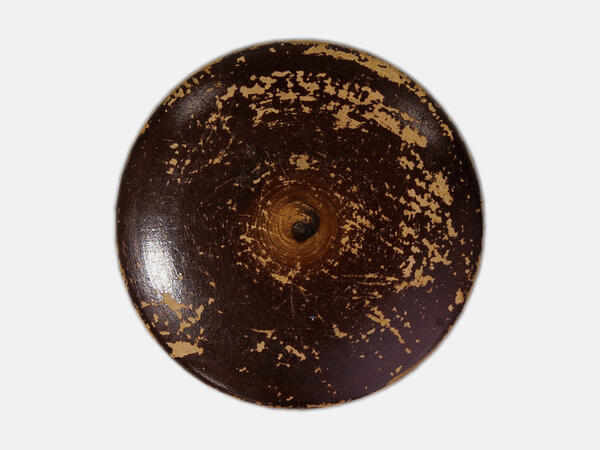
This lacquered wooden powder box was donated to the museum by Valentina Chekhova, the widow of Anton Chekhov’s nephew Sergey. It belonged to the writer’s family in the 20th century. Such powder boxes were usually kept on the dressing table.
Tabletop powder boxes were made of glass, crystal, wood, silver, or brass. Unlike compacts, such powder boxes had no mirror and often no powder puff. The design of this powder box is minimalistic. It is not decorated with painting, branding, or ornaments. It might have been a handmade present.
Until the 20th century, a powder box was a status symbol: face powder was used only by women of high society, who sought to maintain a pale complexion as a sign of nobility. Powder helped them look younger and better in the uneven light of the candelabra. It was also often used by actors for theatrical makeup.
The actress Olga Knipper-Chekhova wrote to her husband Anton Chekhov in 1902,