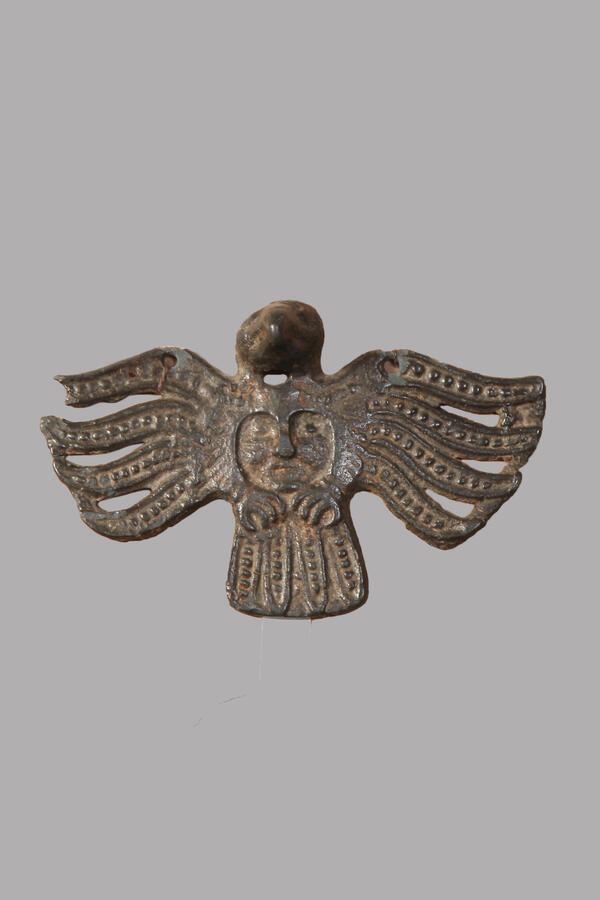
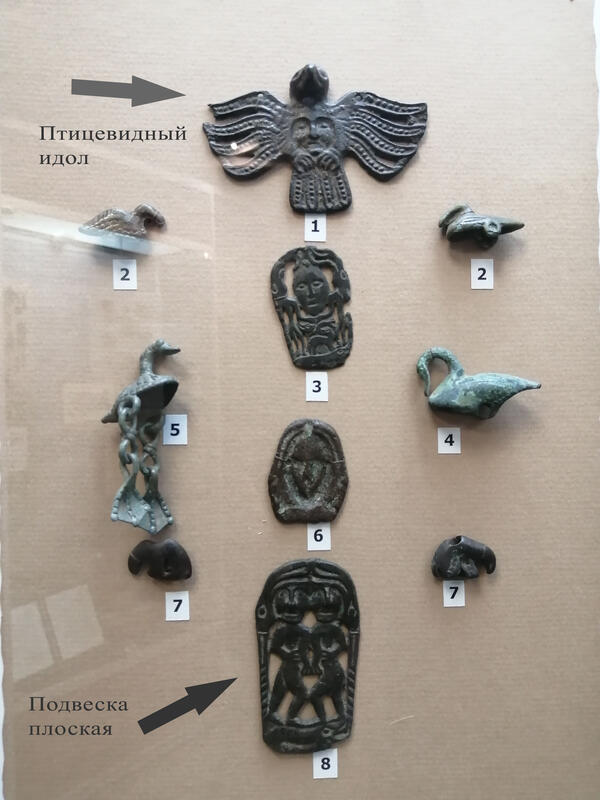
A pendant in the form of a bird-shaped idol was found in the village of Bolshaya Kocha, Kochyovsky District, Perm Territory. The symbol of the bird is among the most ancient ones in human culture. It was associated with ideas of the main mysteries of life —— birth and afterlife. The first items shaped as birds of prey with a human face on their chest appeared in the Ananyino culture in the 3rd century BC on the territory of the Volga and Kama rivers. People believed that after death, the bird took the human soul which also grew wings.
Birds of prey, especially the eagle-owl, hawk, and owl, were revered by the local Finno-Ugric peoples of the Urals, including the Komi-Permyaks. The owl was a totem of one of the clans of the Ob Ugric peoples, and the daughters of princes and warriors in the guise of an owl visited their beloved ones, unnoticed by their kinsmen. It was mostly women who created cast amulets. The Uralic peoples developed their own pantheon of gods and spirits, whose behavior explained to them the structure of the world. Before the advent of writing, all the beliefs and legends of the people were enshrined in casts, and the meanings of many of them have not been figured out to this day.
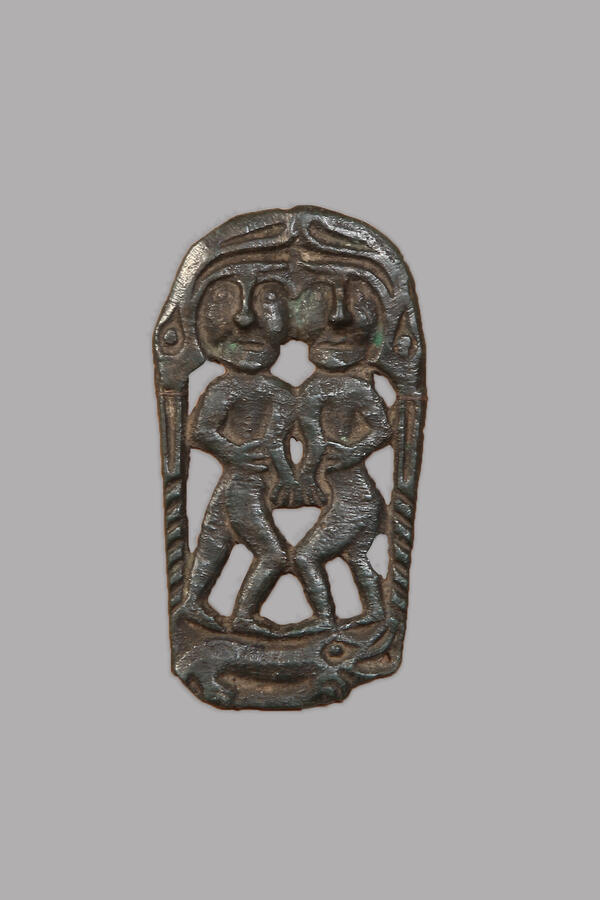
The Perm animal style emerged in the heart of a unique ancient culture at the intersection of roads, leading from Byzantium, Scandinavia and Iran. Similar images of birds and animals of later periods are found here as well, but they undergo gradual changes in terms of execution technique and symbolism. In the figurines of the 9–15th centuries the human face becomes schematic, disappears or turns into a stylized geometric shape of a rhombus or a circle. The images of idols, used as cult objects in pagan rituals of Finno-Ugric peoples, begin to be used over time on household items, clothes and utensils.
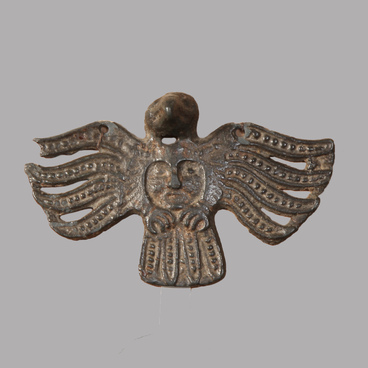
The pendant from the exhibition of the Komi-Permyak Local History Museum is a bird-shaped idol figure with a convex head and a human face on its chest. Its wings and tail are decorated with relief lines and notches, being the most popular decorative pattern of ancient craftsmen. The human face is depicted in a realistic manner and framed with clawed paws. The images of the Perm animal style are still preserved on leather goods, traditional embroidery and designs.
Birds of prey, especially the eagle-owl, hawk, and owl, were revered by the local Finno-Ugric peoples of the Urals, including the Komi-Permyaks. The owl was a totem of one of the clans of the Ob Ugric peoples, and the daughters of princes and warriors in the guise of an owl visited their beloved ones, unnoticed by their kinsmen. It was mostly women who created cast amulets. The Uralic peoples developed their own pantheon of gods and spirits, whose behavior explained to them the structure of the world. Before the advent of writing, all the beliefs and legends of the people were enshrined in casts, and the meanings of many of them have not been figured out to this day.
The Perm animal style emerged in the heart of a unique ancient culture at the intersection of roads, leading from Byzantium, Scandinavia and Iran. Similar images of birds and animals of later periods are found here as well, but they undergo gradual changes in terms of execution technique and symbolism. In the figurines of the 9–15th centuries the human face becomes schematic, disappears or turns into a stylized geometric shape of a rhombus or a circle. The images of idols, used as cult objects in pagan rituals of Finno-Ugric peoples, begin to be used over time on household items, clothes and utensils.
The pendant from the exhibition of the Komi-Permyak Local History Museum is a bird-shaped idol figure with a convex head and a human face on its chest. Its wings and tail are decorated with relief lines and notches, being the most popular decorative pattern of ancient craftsmen. The human face is depicted in a realistic manner and framed with clawed paws. The images of the Perm animal style are still preserved on leather goods, traditional embroidery and designs.