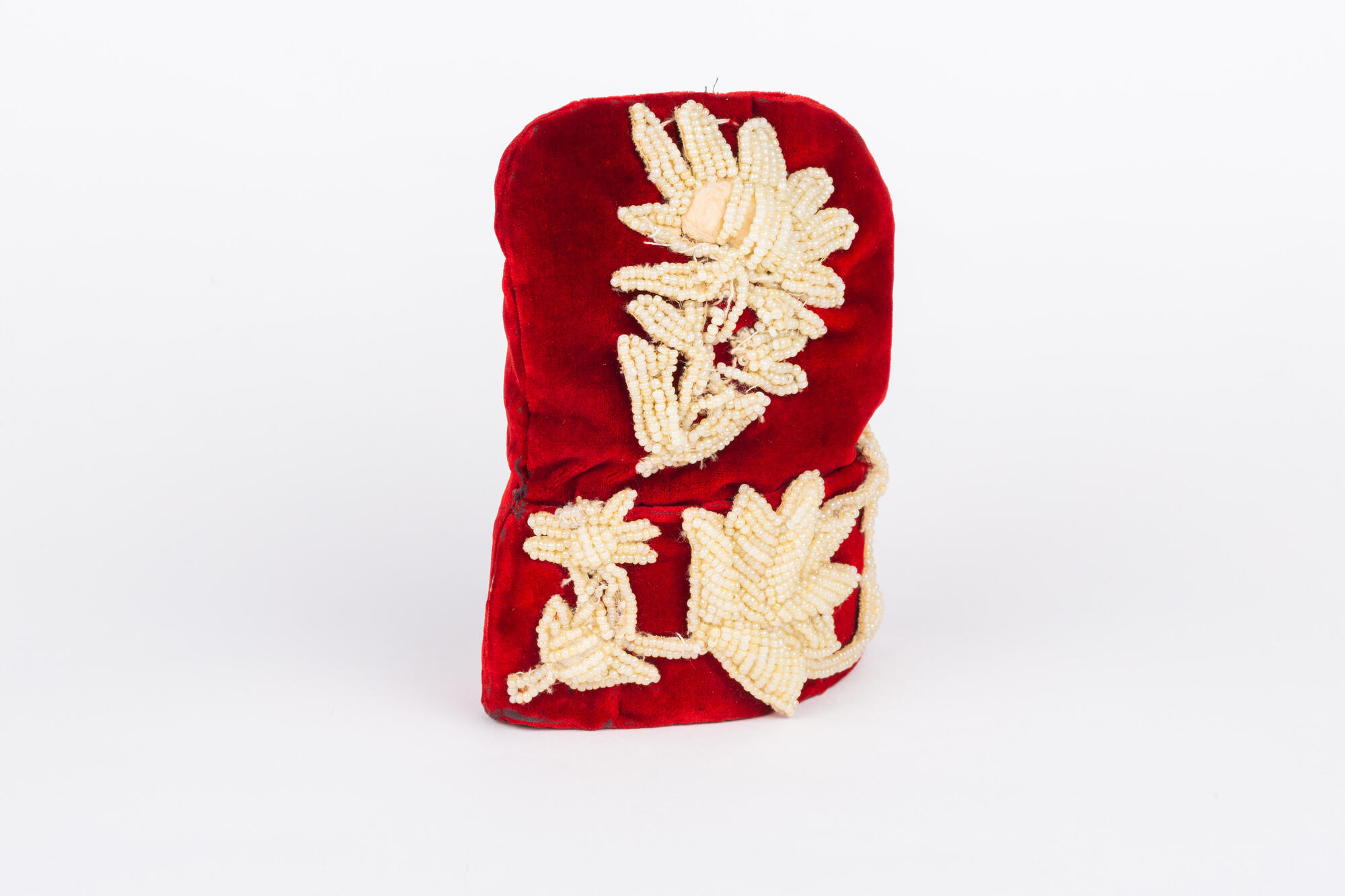


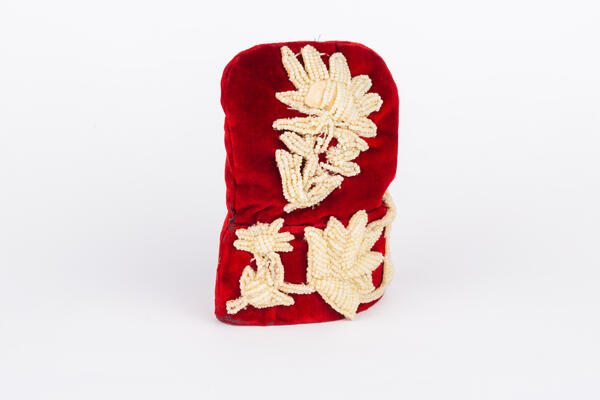
A qalfaq is the ancient headwear of Tatar women. This is enje qalfaq, or beaded qalfaq.
Out of the traditional headdresses popular among tatar women, the qalfaq was always the most special. No ethnic tatar garment would be complete without a qalfaq, richly adorned with embroidery, beads, and pure gold and silver thread.
A bead-adorned variety of qalfaq was called enje qalfaq. Almost all ethnic sub-groups within the Tatar family used this type of headwear. Even the Kryashens, the Tatars whose ancestors had converted to Christianity, have their own exquisite qalfaq designs.
Nikolay Vorobyov, a reputable ethnographer, teacher, and expert on Tatar history, wrote extensively on the symbolic meaning behind the qalfaq. In1953, he published a fundamental study on the Kazan Tatars, where he delved in-depth into the history of this headdress, describing its aesthetic elements and the rules that the Tatar women had to adhere to while wearing it.
In the past, the most widespread qalfaq variety was small and either knitted from woollen yarn or crafted out of soft warp-knitted fabric. Such headdresses were usually white and covered the wearer’s entire head. Originally, in addition to being a pretty accessory to a dress, the qalfaq was also believed to protect its owner from evil spirits.
Later on, larger qalfaqs made out of velvet gained more popularity. They were trimmed with tassels that reached down to the wearer’s shoulders, and adorned with gold embroidery. Then the qalfaq’s design changed dramatically once more: by the middle of the nineteenth century, the tassels had been removed, and the accessory’s size had shrunk again, making it more elegant. Traditionally, women also wrapped a shawl or scarf over their qalfaqs.
In the early 20th century, ethnic Tatar clothing absorbed numerous elements of European fashion. The traditional qalfaq did not go anywhere, though: by wearing it, a woman could demonstrate her Tatar heritage.
This article of headwear was crafted according a strict set of rules. The patterns on the fabric were made out of white or many-coloured beads. They were usually inspired by nature and mostly featured floral motifs. For example, it was considered good look to embroider a qalfaq with images of rowan, cinnamon rose, or juniper. Garden roses, in turn, were meant to help women find love and remain beautiful. Finally, tulips, which were a very common motif in Tatar embroidery, symbolised renewal.
Out of the traditional headdresses popular among tatar women, the qalfaq was always the most special. No ethnic tatar garment would be complete without a qalfaq, richly adorned with embroidery, beads, and pure gold and silver thread.
A bead-adorned variety of qalfaq was called enje qalfaq. Almost all ethnic sub-groups within the Tatar family used this type of headwear. Even the Kryashens, the Tatars whose ancestors had converted to Christianity, have their own exquisite qalfaq designs.
Nikolay Vorobyov, a reputable ethnographer, teacher, and expert on Tatar history, wrote extensively on the symbolic meaning behind the qalfaq. In1953, he published a fundamental study on the Kazan Tatars, where he delved in-depth into the history of this headdress, describing its aesthetic elements and the rules that the Tatar women had to adhere to while wearing it.
In the past, the most widespread qalfaq variety was small and either knitted from woollen yarn or crafted out of soft warp-knitted fabric. Such headdresses were usually white and covered the wearer’s entire head. Originally, in addition to being a pretty accessory to a dress, the qalfaq was also believed to protect its owner from evil spirits.
Later on, larger qalfaqs made out of velvet gained more popularity. They were trimmed with tassels that reached down to the wearer’s shoulders, and adorned with gold embroidery. Then the qalfaq’s design changed dramatically once more: by the middle of the nineteenth century, the tassels had been removed, and the accessory’s size had shrunk again, making it more elegant. Traditionally, women also wrapped a shawl or scarf over their qalfaqs.
In the early 20th century, ethnic Tatar clothing absorbed numerous elements of European fashion. The traditional qalfaq did not go anywhere, though: by wearing it, a woman could demonstrate her Tatar heritage.
This article of headwear was crafted according a strict set of rules. The patterns on the fabric were made out of white or many-coloured beads. They were usually inspired by nature and mostly featured floral motifs. For example, it was considered good look to embroider a qalfaq with images of rowan, cinnamon rose, or juniper. Garden roses, in turn, were meant to help women find love and remain beautiful. Finally, tulips, which were a very common motif in Tatar embroidery, symbolised renewal.