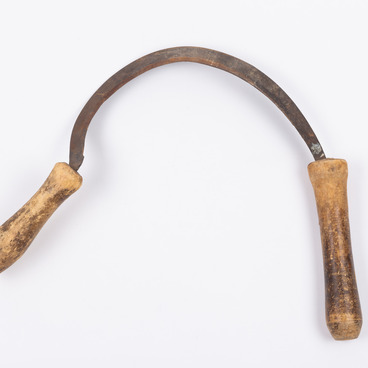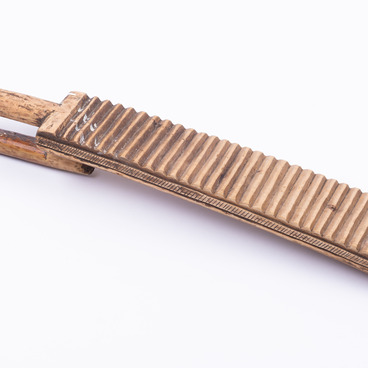
In the past, people had to use their hands to spin wool, twisting the yarn in a variety of ways to produce knitted goods. The first mechanised spinning tool was invented in Ancient Rome. However, the only kind of yarn that it produced was thick and far from top grade. The yarn quality largely depended on which sheep breed’s wool it was made from. A Roman spinning wheel was operated with one hand; with the other hand, the spinner would twist the bits of wool under different angles in relation to the moving spindle.
In Ancient Rus', spinners were exclusively women, and a spinning wheel was traditionally considered a woman’s tool. Young girls would spend hours upon hours in the evening at their spinning wheel for an entire season, starting in autumn and all the way until Easter. More often than not, they had to stay up late, sitting in a special upstairs room called svetlitsa and humming folk songs as they spun yarn in the dim glow of a rushlight.
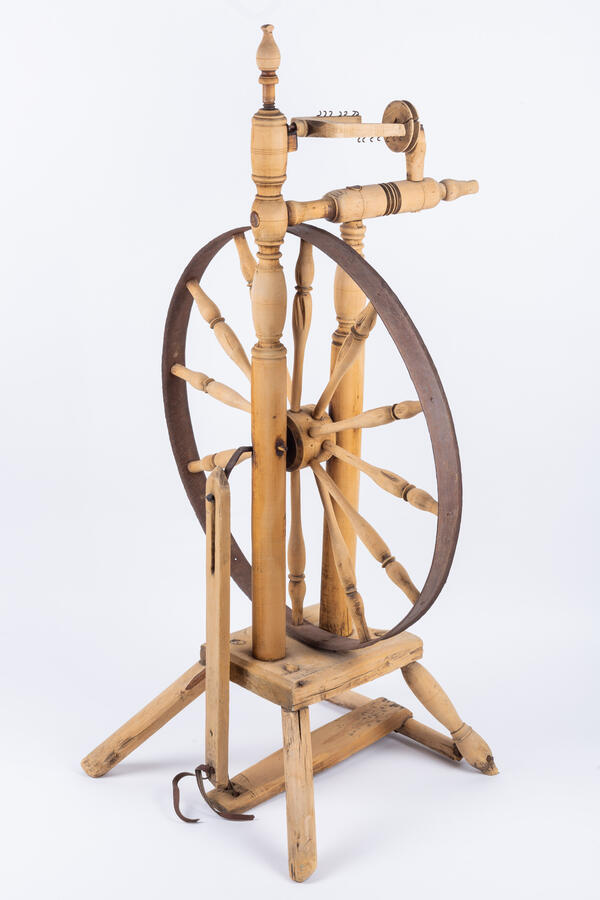
For working with yarn, spinners used a special device: a self-spinning wheel. They rotated the device’s wheel with their right hand; the wheel, in turn, passed the momentum on to the spindle through a tightly wound belt. The yarn was “fed” into the device from the left-hand side, where the spindle’s sharp tip was located. Once the spinner finished working on a spool of yarn as long as her arm, she moved it towards the spindle axis and continued spinning. Self-spinning wheels were highly efficient, allowing for processing almost half a kilo of wool in a single day.
While women were the only people allowed to spin, it fell to men to craft and fix their spinning wheels. Each Russian family had its own self-spinning wheel, always with a unique detail or two: those were added deliberately to set it apart from the neighbors' wheels. Self-spinning wheels were most commonly crafted out of wood, such as linden, birch, aspen, or maple.
In 1530, a craftsman from Braunschweig named Juergen modernised the traditional self-spinning wheel, adding a foot drive. The new wheel was set in motion by pressing a pedal; this way, both of the spinner’s hands were freed up for working with the yarn.
The world’s first multi-spindle spinning and combing machine was designed and assembled by Rodion Glinkov, a Russian merchant, in 1760. Glinkov’s innovation was to use a waterwheel for powering up the machine; this hydraulic construct rotated 6 times per minute. The Glinkov wheel model had 30 spindles with bobbins that made a total of 1260 rotations per minute, increasing productivity fivefold.
In Ancient Rus', spinners were exclusively women, and a spinning wheel was traditionally considered a woman’s tool. Young girls would spend hours upon hours in the evening at their spinning wheel for an entire season, starting in autumn and all the way until Easter. More often than not, they had to stay up late, sitting in a special upstairs room called svetlitsa and humming folk songs as they spun yarn in the dim glow of a rushlight.
For working with yarn, spinners used a special device: a self-spinning wheel. They rotated the device’s wheel with their right hand; the wheel, in turn, passed the momentum on to the spindle through a tightly wound belt. The yarn was “fed” into the device from the left-hand side, where the spindle’s sharp tip was located. Once the spinner finished working on a spool of yarn as long as her arm, she moved it towards the spindle axis and continued spinning. Self-spinning wheels were highly efficient, allowing for processing almost half a kilo of wool in a single day.
While women were the only people allowed to spin, it fell to men to craft and fix their spinning wheels. Each Russian family had its own self-spinning wheel, always with a unique detail or two: those were added deliberately to set it apart from the neighbors' wheels. Self-spinning wheels were most commonly crafted out of wood, such as linden, birch, aspen, or maple.
In 1530, a craftsman from Braunschweig named Juergen modernised the traditional self-spinning wheel, adding a foot drive. The new wheel was set in motion by pressing a pedal; this way, both of the spinner’s hands were freed up for working with the yarn.
The world’s first multi-spindle spinning and combing machine was designed and assembled by Rodion Glinkov, a Russian merchant, in 1760. Glinkov’s innovation was to use a waterwheel for powering up the machine; this hydraulic construct rotated 6 times per minute. The Glinkov wheel model had 30 spindles with bobbins that made a total of 1260 rotations per minute, increasing productivity fivefold.