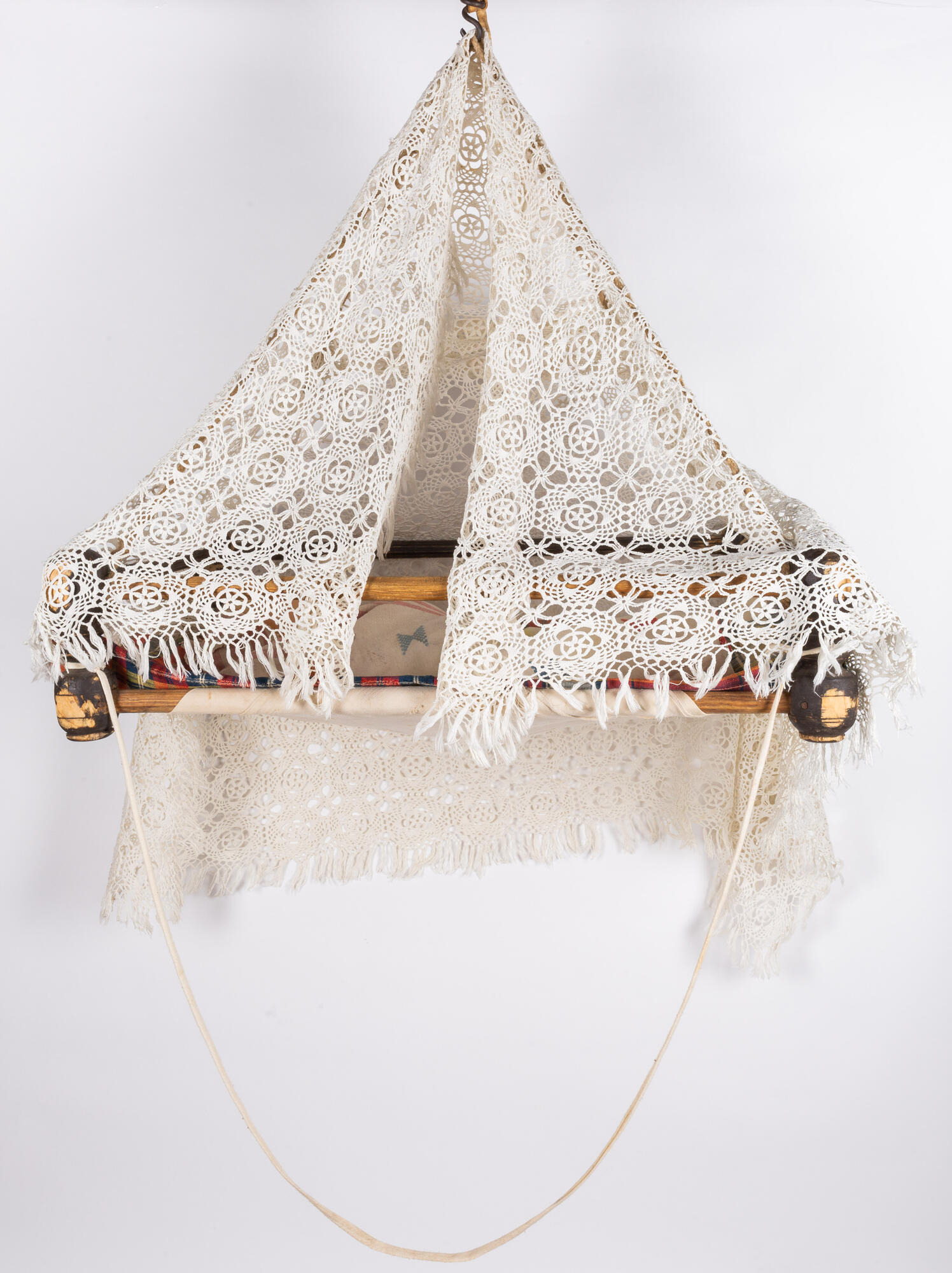


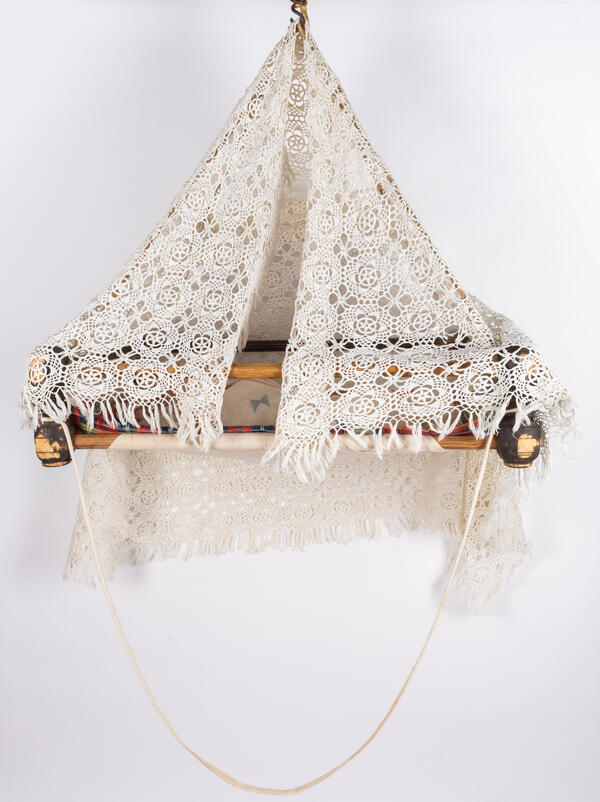
Our museum’s collection includes a traditional Bashkir suspended cradle, also known as a bishek or a sangeldak.
In the past, the Bashkirs believed that everything associated with children’s cradles had magical properties. For example, if you did not want to bring a curse on your household, you could not place your child’s cradle in some random spot: tradition designated a very specific location inside the house where you were allowed to put the cradle. It was also forbidden to rock an empty cradle; and once the child grew too big for it, it could not, under any circumstances, remain inside the house.
Craftsmen made cradles with both comfort, safety, and ritual symbolism in mind. For instance, they chose the material with great care, refusing to use wood from trees that were associated with bad luck.
The Bashkirs specifically preferred to make their children’s cradles out of rowan, birch, hackberry, or linden wood. For seams and trimmings, they used durable materials like horsehair or hemp yarn. Traditional cradles were commonly built over a rectangular wooden frame. It was wrapped in canvas or surrounded with woven bast, while sturdy ropes or belts were tied to the corners. The suspended cradle usually hung from a stick or hook that was affixed to the ceiling beam.
In the Urals and around the river Kama, where birch groves abounded, cradles were often crafted out of bast and birch bark. A birch bark cradle was also rectangular, about 60 cm long. The most common way of crafting it was to take a large piece of bark, and then bend it at the corners and sew the edges together. The back of the cradle was also made out of wood and then sewn to the main body. The crosswise seams were made out of colorful ribbons, and the canopy was held together by an arching twig. There were several belts attached to a cradle of this type: the mother would sling some of them over her shoulder, while securing the baby in the cradle with the rest. The cradles would often be decorated with many-colored tassel and carved patterns. Some bast cradles looked like wicker baskets, with a handle woven out of rowan branches.
To protect the baby from the evil eye, the Bashkirs adorned the cradle with various good-luck charms: inscriptions quoting the Qur’an, needles, rings, arrow tips, animal claws, rowan berries, and some other objects.
In the past, the Bashkirs believed that everything associated with children’s cradles had magical properties. For example, if you did not want to bring a curse on your household, you could not place your child’s cradle in some random spot: tradition designated a very specific location inside the house where you were allowed to put the cradle. It was also forbidden to rock an empty cradle; and once the child grew too big for it, it could not, under any circumstances, remain inside the house.
Craftsmen made cradles with both comfort, safety, and ritual symbolism in mind. For instance, they chose the material with great care, refusing to use wood from trees that were associated with bad luck.
The Bashkirs specifically preferred to make their children’s cradles out of rowan, birch, hackberry, or linden wood. For seams and trimmings, they used durable materials like horsehair or hemp yarn. Traditional cradles were commonly built over a rectangular wooden frame. It was wrapped in canvas or surrounded with woven bast, while sturdy ropes or belts were tied to the corners. The suspended cradle usually hung from a stick or hook that was affixed to the ceiling beam.
In the Urals and around the river Kama, where birch groves abounded, cradles were often crafted out of bast and birch bark. A birch bark cradle was also rectangular, about 60 cm long. The most common way of crafting it was to take a large piece of bark, and then bend it at the corners and sew the edges together. The back of the cradle was also made out of wood and then sewn to the main body. The crosswise seams were made out of colorful ribbons, and the canopy was held together by an arching twig. There were several belts attached to a cradle of this type: the mother would sling some of them over her shoulder, while securing the baby in the cradle with the rest. The cradles would often be decorated with many-colored tassel and carved patterns. Some bast cradles looked like wicker baskets, with a handle woven out of rowan branches.
To protect the baby from the evil eye, the Bashkirs adorned the cradle with various good-luck charms: inscriptions quoting the Qur’an, needles, rings, arrow tips, animal claws, rowan berries, and some other objects.