#1

Zhukovsky V.A., Bunina A.P.
#13
#8
#3
VasIly Zhukovsky was a poet, translator, literary critic. Zhukovsky was born on February 9, 1783 in the village of MIshenskoye, Belyovsky district, Tula Governorate. He was the son of the landowner Afanasy Ivanovich Bunin and the captured Turkish woman Salkha, who was brought by the servants to the lord from the war as a trophy. In Russia, Salkha learned Russian and was christened with the name Elizabeth. The illegitimate child received his surname and patronymic from his father’s friend, Andrey Grigoryevich Zhukovsky. Afanasy Ivanovich’s wife, MarIa Grigoryevna, accomplished the will of her dying husband, and brought up VasIly as her own son.
The views and literary tastes of the young Zhukovsky were influenced by his studies in the Moscow Noble University School, where he studied in 1797-1800 and by the ‘Friendly literary society’ following the traditions of noble liberalism. He became known in literature in 1802 when he wrote the elegy ‘Rural cemetery’. Since 1808, his poetry became more and more romantic, he wrote ballads (‘LyudmIla’, ‘SvetlAna’, ‘Aeolian harp’ and others), in which he recreates the world of folk legends, church or chivalric legends, which were far from the reality, but at the same time, they opened up the human spiritual world. In the same year, ZhukOvsky became the editor of the ‘Europe’s Messenger’ magazine.
In 1812, when the war with Napoleon began, Zhukovsky joined the people’s army. His response to the war events was the poem ‘the Singer in the camp of Russian soldiers’ (1812), which immediately became widely known. In early 1813 he became ill with typhoid fever and resigned. From 1817, Vasily Andreevich served at the court of Nicholas I: first as a teacher of the Russian language for the Grand Duchess Alexandra Feodorovna, then from 1826 to 1841 he was a mentor to the heir, the future Emperor Alexander II. In 1837, while accompanying his educatee in his trip across Russia, Zhukovsky visited Yelets. In his travel diary on July 7 he wrote: ‘Yelets is a big city, with a large merchant community. Up to 300 merchants. We were staying at the merchant’s Koraulov’s house. After his resignation in 1841, he went to Germany for medical treatment. There, in addition to poetry, he did some drawing. He managed to get married and have a family only at the end of his life. In 1812, Zhukovsky asked for the hand of his niece Maria Protasova for marriage, with whom he was hopelessly in love, but was twice refused. In 1841, when he was already 58, he married Elizabeth, the 18-year-old daughter of the painter Yevgraf Reytern. They had 2 children - Pavel and Alexandra. He became blind by the end of his life. He died in Baden-Baden on 24 April 1852. He was buried in the Alexander Nevsky Lavra in Saint Petersburg.
The views and literary tastes of the young Zhukovsky were influenced by his studies in the Moscow Noble University School, where he studied in 1797-1800 and by the ‘Friendly literary society’ following the traditions of noble liberalism. He became known in literature in 1802 when he wrote the elegy ‘Rural cemetery’. Since 1808, his poetry became more and more romantic, he wrote ballads (‘LyudmIla’, ‘SvetlAna’, ‘Aeolian harp’ and others), in which he recreates the world of folk legends, church or chivalric legends, which were far from the reality, but at the same time, they opened up the human spiritual world. In the same year, ZhukOvsky became the editor of the ‘Europe’s Messenger’ magazine.
In 1812, when the war with Napoleon began, Zhukovsky joined the people’s army. His response to the war events was the poem ‘the Singer in the camp of Russian soldiers’ (1812), which immediately became widely known. In early 1813 he became ill with typhoid fever and resigned. From 1817, Vasily Andreevich served at the court of Nicholas I: first as a teacher of the Russian language for the Grand Duchess Alexandra Feodorovna, then from 1826 to 1841 he was a mentor to the heir, the future Emperor Alexander II. In 1837, while accompanying his educatee in his trip across Russia, Zhukovsky visited Yelets. In his travel diary on July 7 he wrote: ‘Yelets is a big city, with a large merchant community. Up to 300 merchants. We were staying at the merchant’s Koraulov’s house. After his resignation in 1841, he went to Germany for medical treatment. There, in addition to poetry, he did some drawing. He managed to get married and have a family only at the end of his life. In 1812, Zhukovsky asked for the hand of his niece Maria Protasova for marriage, with whom he was hopelessly in love, but was twice refused. In 1841, when he was already 58, he married Elizabeth, the 18-year-old daughter of the painter Yevgraf Reytern. They had 2 children - Pavel and Alexandra. He became blind by the end of his life. He died in Baden-Baden on 24 April 1852. He was buried in the Alexander Nevsky Lavra in Saint Petersburg.
#9

Brullov K.P. “Portrait of Zhukovsky V.A.”, The State Tretyakov gallery, Moscow
#11
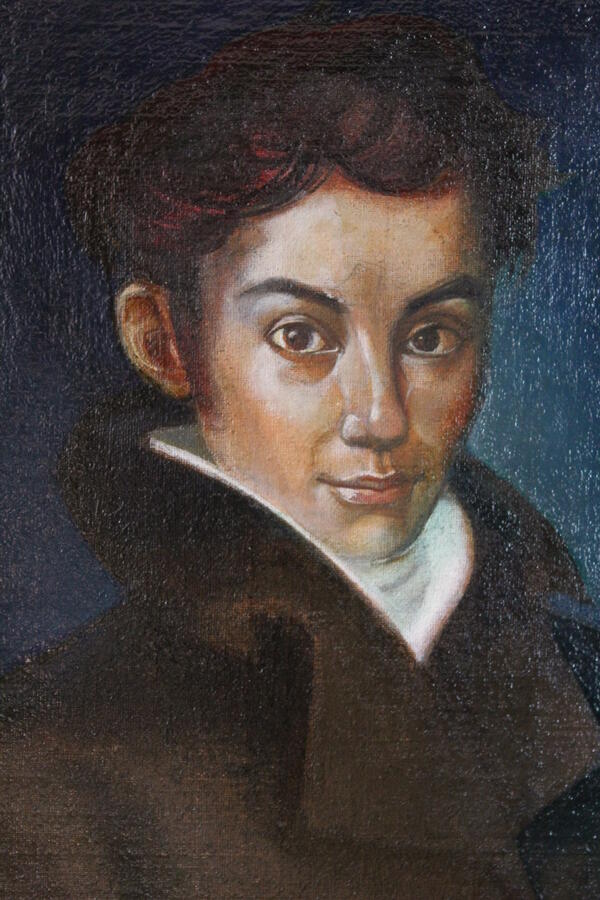
Full name: Zhukovsky Vasily Andreevich. A portrait
Author: Klimov Nikolay Ivanovich
Date: 1988 year
Technique: canvas, oil
Dimensions: 28×35 cm
Collection: Yelets Local History Museum
Copyright: Yelets Local History Museum
Author: Klimov Nikolay Ivanovich
Date: 1988 year
Technique: canvas, oil
Dimensions: 28×35 cm
Collection: Yelets Local History Museum
Copyright: Yelets Local History Museum
#14
Bunina Anna Petrovna. A portrait
#6

#7
Anna Bunina is considered the first Russian female poet. ‘No female writer in Russia had writing capabilities like she did’ - N. KaramzIn characterized Anna Bunina’s literary works. DerzhAvin also noted her “pleasant, crisp poems and a fine mind”. Her portrait was placed in the Assembly Hall of the Imperial Academy of Arts, next to the portraits of KaramzIn, DmItriev and GnEdich. Her coevals compared Bunina with SapphO, called her the Tenth Muse and North Corinne, and wrote odes in her honor.
The poetess was from the Bunin noble family, from which later Ivan Bunin - the first Nobel laureate in literature - came. Anna PetrOvna Bunina was born on 18 January 1774 in the village of UrUsovo, in RYAzhsky Uezd, RyazAn Governorate (now it’s ChaplYginsky District of LIpetsk region) in a noble family. She had her education at home: she had only general knowledge of grammar and arithmetics. She lived with her aunt until the age of 28, the aunt took care of her after the girl’s mother died. After the father’s death Anna BUnina could have her own money to spend. In 1802, in defiance of the opinion of her family members, she went to St. Petersburg and lived there alone — at that time this was an unheard-of audacity. BUnina was learning foreign languages, she was fond of reading and started writing poems. After several years she ran out of all her money which she spent on the professors who were teaching her.
Her earnings came from her literary works. These were not common fees for publications, but some other types of remuneration. Empress Elizabeth granted to Anna BUnina a small annual pension, and the poet also received an annuity from Maria FYOdorovna. Later, her patron Alexander ShishkOv, with the help of Kutuzov, obtained a pension for BUnina from the Emperor Alexander. In 1808 the first BUnina’s writing was published — a translation of the “Rules of poetry” by the Abbé Batteux, and in the next years she published several collections of her own poems and odes. In 1811, she was elected an honorary member of the society “Conversation of lovers of the Russian literature”.
Coevals treated her rather in different ways. Some considered Anna Bunina a mediocre poet and believed that the language of her high-toned odes was rather archaic. Others praised and supported the poet. So, poet K. BAtyushkov once wrote to GnEdich: “Her poem is missing philosophy and many other things, but it is a beautiful poetry.” In general, Anna Bunina was appreciated as one of the first female poets.
In 1815, Anna Bunina was diagnosed with a serious illness, breast cancer. The Emperor took it under his personal control to have the poetess sent to England for treatment. It was believed that only English doctors would be able to cure her illness. Anna Bunina lived in the Great Britain for 2 years. She stayed at Bath, a famous resort, and at Brighton and other places. However, Anna didn’t recover and in 1817 she came back to Russia. Her illness became even worse, Bunina stopped writing her poems and focused on translations. Often she had to work standing on her knees: any other posture was painful for her. In 1824 Anna Bunina left Moscow and went to live with her relatives in the country side. 4 years later she died, at the age of 54 in DenIsovka village, in RyazAn Governorate.
The poetess was from the Bunin noble family, from which later Ivan Bunin - the first Nobel laureate in literature - came. Anna PetrOvna Bunina was born on 18 January 1774 in the village of UrUsovo, in RYAzhsky Uezd, RyazAn Governorate (now it’s ChaplYginsky District of LIpetsk region) in a noble family. She had her education at home: she had only general knowledge of grammar and arithmetics. She lived with her aunt until the age of 28, the aunt took care of her after the girl’s mother died. After the father’s death Anna BUnina could have her own money to spend. In 1802, in defiance of the opinion of her family members, she went to St. Petersburg and lived there alone — at that time this was an unheard-of audacity. BUnina was learning foreign languages, she was fond of reading and started writing poems. After several years she ran out of all her money which she spent on the professors who were teaching her.
Her earnings came from her literary works. These were not common fees for publications, but some other types of remuneration. Empress Elizabeth granted to Anna BUnina a small annual pension, and the poet also received an annuity from Maria FYOdorovna. Later, her patron Alexander ShishkOv, with the help of Kutuzov, obtained a pension for BUnina from the Emperor Alexander. In 1808 the first BUnina’s writing was published — a translation of the “Rules of poetry” by the Abbé Batteux, and in the next years she published several collections of her own poems and odes. In 1811, she was elected an honorary member of the society “Conversation of lovers of the Russian literature”.
Coevals treated her rather in different ways. Some considered Anna Bunina a mediocre poet and believed that the language of her high-toned odes was rather archaic. Others praised and supported the poet. So, poet K. BAtyushkov once wrote to GnEdich: “Her poem is missing philosophy and many other things, but it is a beautiful poetry.” In general, Anna Bunina was appreciated as one of the first female poets.
In 1815, Anna Bunina was diagnosed with a serious illness, breast cancer. The Emperor took it under his personal control to have the poetess sent to England for treatment. It was believed that only English doctors would be able to cure her illness. Anna Bunina lived in the Great Britain for 2 years. She stayed at Bath, a famous resort, and at Brighton and other places. However, Anna didn’t recover and in 1817 she came back to Russia. Her illness became even worse, Bunina stopped writing her poems and focused on translations. Often she had to work standing on her knees: any other posture was painful for her. In 1824 Anna Bunina left Moscow and went to live with her relatives in the country side. 4 years later she died, at the age of 54 in DenIsovka village, in RyazAn Governorate.
#12
Full name: Bunina Anna Petrovna. A portrait
Author: Nikolay Ivanovich Klimov
Date: 1988 year
Technique: canvas, oil
Dimensions: 35×28 cm
Collection: Yelets Local History Museum
Copyright: Yelets Local History Museum
Author: Nikolay Ivanovich Klimov
Date: 1988 year
Technique: canvas, oil
Dimensions: 35×28 cm
Collection: Yelets Local History Museum
Copyright: Yelets Local History Museum
read morehide
00:00
00:00
1x
Zhukovsky V.A., Bunina A.P.
Collection
Exhibition
0
 Point your smartphone camera to open in the app
Open in app
Share