The predecessor of the modern piano was the harpsichord, which was designed around 1709 by the Italian instrument maker Bartolomeo Cristofori. He named his instrument the “gravicembalo col piano e forte”, or “harpsichord with soft and loud sounds”.
This instrument was not meant for concert performances and was mainly played in smaller rooms.
The first piano that resembled modern instruments was designed by the American inventor John Hawkins in 1800. One year later, the Austrian inventor Mathias Müller independently invented a similar instrument with a foot pedal to control the sound.
The main difference between the upright piano and grand piano is the arrangement of the strings. In upright pianos, the strings, internal mechanism, and soundboard are located vertically, rather than horizontally as in grand pianos. As a result, they are significantly smaller.
The basic design of a piano is simple: when a key is depressed, a hammer strikes a string inside the piano, causing a sound vibration. An escapement action allowed the hammer to return to its original position rather than stay pressed against the string. This helped achieve a clear sound. In later and more advanced models, a double-escapement action appeared, that permitted repeating a note even if the key had only returned halfway. This facilitated rapid playing of repeated notes.
Pianos became widespread in Russia closer to the 1820s. Some of the leading instrument makers at the time were Carl Joseph Friedrich Wirth and Johann August Tischner.
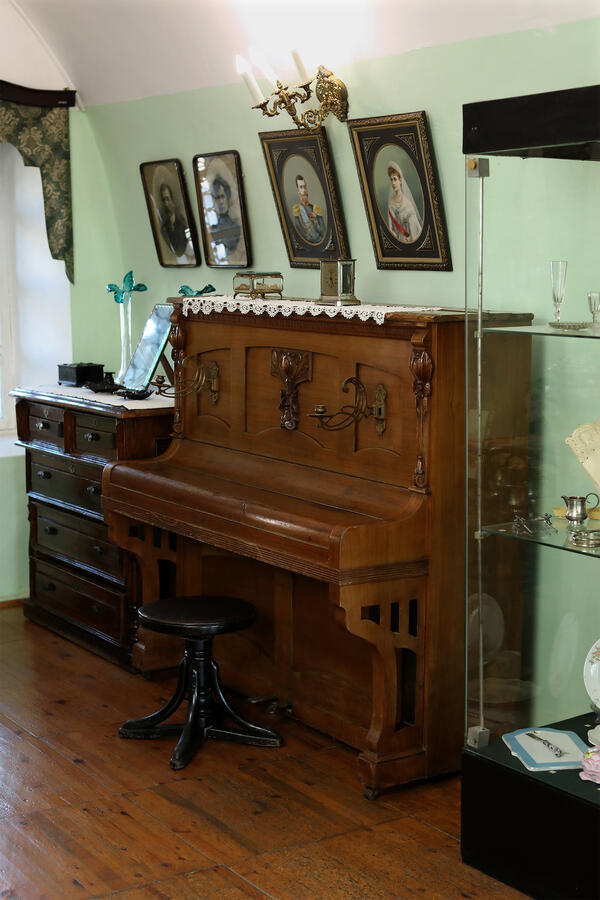
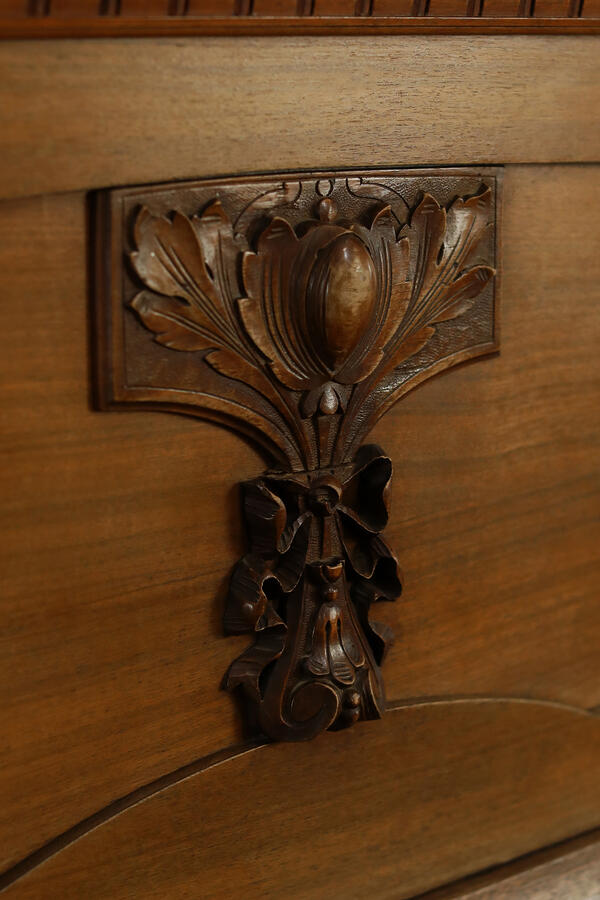
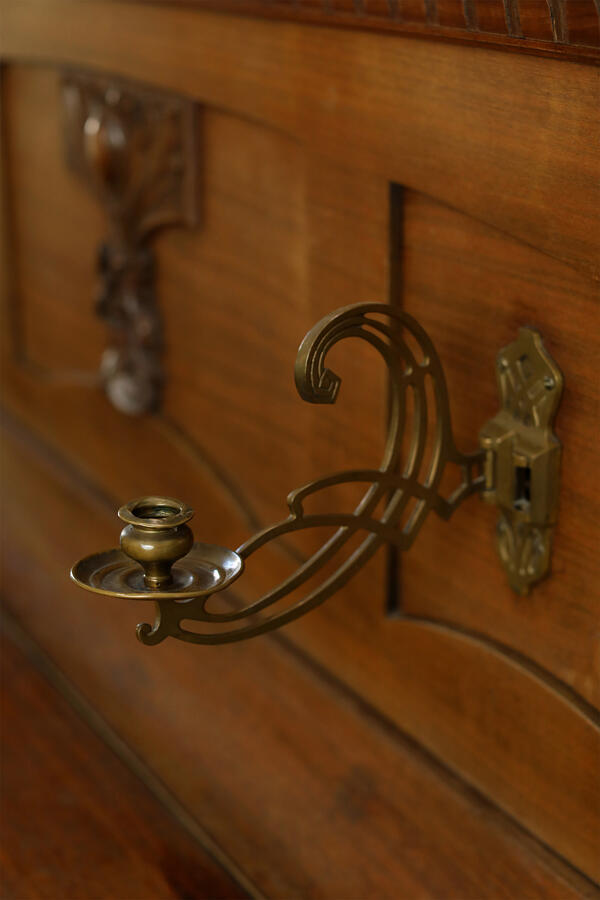
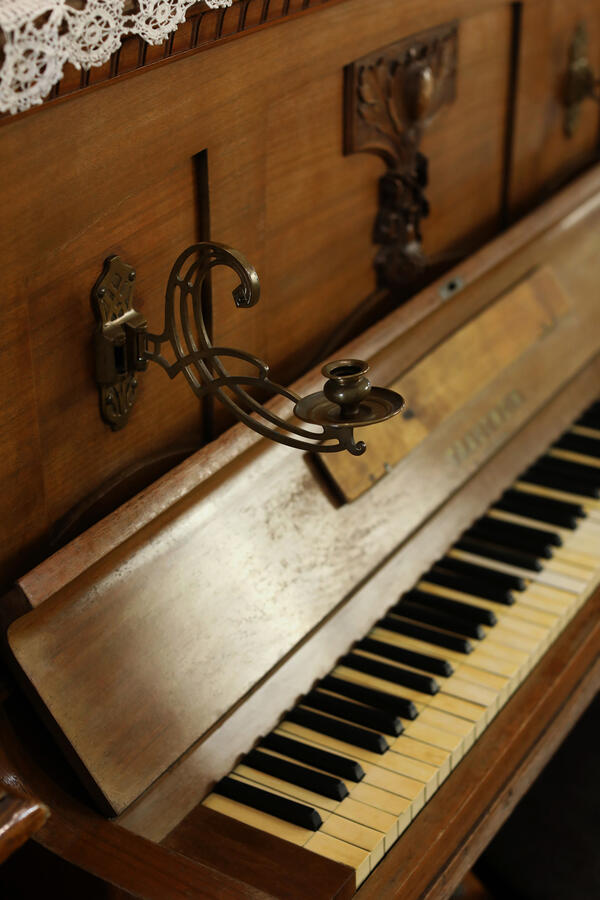
The museum houses a German-made piano by T. Trautwein from Berlin. It is over 100 years old. It has a wooden body with carved decorative patterns. The overall style can be described as rococo. The piano has foot pedals to adjust the sound.
Vasily Alekseyevich Perovsky, the Governor-General of
Orenburg, was a great admirer of music and social events. He introduced the
trend of playing musical instruments among wealthy families in Orenburg. Learning to play the piano became mandatory for nobles.