

#19
Paschenko V.V., Tsakni A.N., Bunin N.
#24
#18

#3
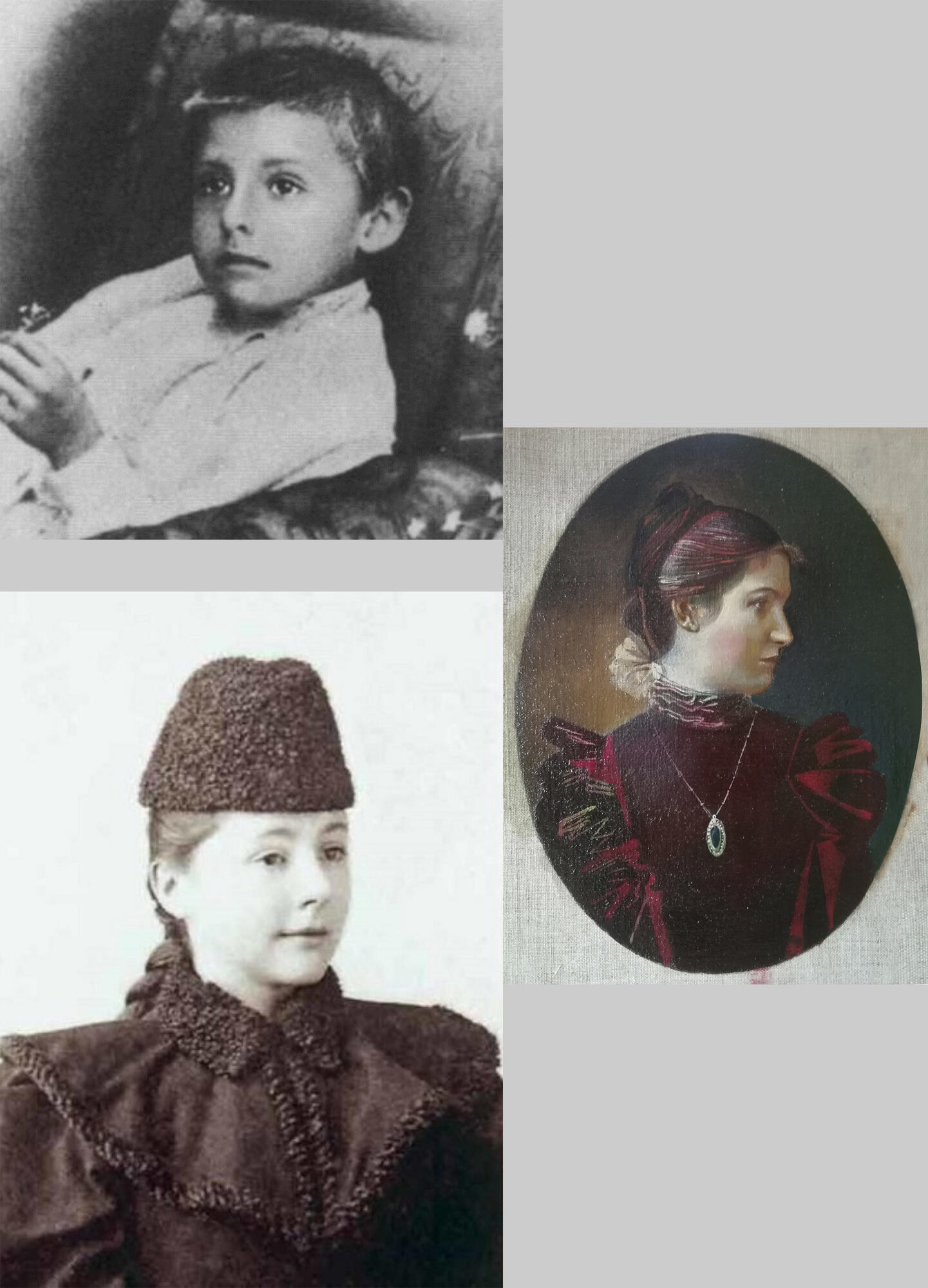
Varvara Paschenko was the first love and a common-law wife of BUnin. VarvAra was the niece of the publisher of the OrlOvsky Vestnik newspaper, ShElikhov, who was her mother’s brother. BUnin met her in Oryol in the editorial office in June 1889, and he wrote about her to his brother YUly: “A tall girl with very beautiful features and pince-nez came out for the morning tea. I even looked askance at her at first: her pince-nez made her seem proud and foppish. I even started to “nag” her. She responded and it sounded pretty great. She seemed to me quite intelligent and well-educated.’
The next five years of BUnin’s life were tightly connected with this girl. They lived in Oryol, PoltAva, they were meeting in Yelets, visited the BIbikov’s manor in Vorgol. They could not get officially married because of Varvara’s father, who was against their marriage. VladImir VladImirovich was a district doctor, a wealthy man, and he wanted a wealthier groom for his beloved daughter. Over time, young people began to show more and more different views on their future life. They kept breaking up and getting back together. In the end, despite the fact that her father gave his consent to her to marry Bunin, Varvara was the first to decide to break up, escaping secretly from PoltAva, and six months later she married Bunin’s friend ArsEniy BIbikov
15 years later, when the BIbikovs began to live in Moscow, they resumed their communication with BUnin. As Vera Nikolaevna recalled, ‘in 1909, on November 1, when the BIbikovs were having dinner with us, before we had to get up from the table and go to the living room to drink coffee, the maid handed me a telegram in which IvAn Alekseevich was congratulated on his election to the academicians belles-letres. I looked at BIbikova, who had already risen up from the table. She was pale, but calm. After a minute she said frostily and distinctly: “My congratulations”.
Varvara and her husband suffered the greatest stroke of fate due to the early death of their only daughter Militsa. Like her mother, the girl was very good at playing piano; they hoped that she would study at the conservatory — but at the age of 13, Militsa fell ill with tuberculosis. Her parents sent her to Switzerland for treatment. However, soon they were informed that her condition was deteriorating and becoming hopeless. Her father went to pick her up, but on the way, in Stockholm, the girl died. Her heartbroken father brought home only a picture of her on her deathbed in the church. Varvara Vladimirovna Paschenko-Bibikova died in Moscow on May 1, 1918, also from tuberculosis. On the day of her death, her widowed husband called her first lover in the morning. Bunin wrote in his diary: “At 10 in the morning, when I was still in bed — Arsik called my crying — Varvara Vladimirovna died. All day at the moment of this news I experienced no feelings about this death! How can it be?! How terrible and weird it is! It was her who played such a great role in my life! It seems that it was not so long ago — we came with her to Poltava…” Bunin’s experiences were reflected in the autobiographical book ‘Arseniev’s Life’, the prototype of Lika was Varvara.
The next five years of BUnin’s life were tightly connected with this girl. They lived in Oryol, PoltAva, they were meeting in Yelets, visited the BIbikov’s manor in Vorgol. They could not get officially married because of Varvara’s father, who was against their marriage. VladImir VladImirovich was a district doctor, a wealthy man, and he wanted a wealthier groom for his beloved daughter. Over time, young people began to show more and more different views on their future life. They kept breaking up and getting back together. In the end, despite the fact that her father gave his consent to her to marry Bunin, Varvara was the first to decide to break up, escaping secretly from PoltAva, and six months later she married Bunin’s friend ArsEniy BIbikov
15 years later, when the BIbikovs began to live in Moscow, they resumed their communication with BUnin. As Vera Nikolaevna recalled, ‘in 1909, on November 1, when the BIbikovs were having dinner with us, before we had to get up from the table and go to the living room to drink coffee, the maid handed me a telegram in which IvAn Alekseevich was congratulated on his election to the academicians belles-letres. I looked at BIbikova, who had already risen up from the table. She was pale, but calm. After a minute she said frostily and distinctly: “My congratulations”.
Varvara and her husband suffered the greatest stroke of fate due to the early death of their only daughter Militsa. Like her mother, the girl was very good at playing piano; they hoped that she would study at the conservatory — but at the age of 13, Militsa fell ill with tuberculosis. Her parents sent her to Switzerland for treatment. However, soon they were informed that her condition was deteriorating and becoming hopeless. Her father went to pick her up, but on the way, in Stockholm, the girl died. Her heartbroken father brought home only a picture of her on her deathbed in the church. Varvara Vladimirovna Paschenko-Bibikova died in Moscow on May 1, 1918, also from tuberculosis. On the day of her death, her widowed husband called her first lover in the morning. Bunin wrote in his diary: “At 10 in the morning, when I was still in bed — Arsik called my crying — Varvara Vladimirovna died. All day at the moment of this news I experienced no feelings about this death! How can it be?! How terrible and weird it is! It was her who played such a great role in my life! It seems that it was not so long ago — we came with her to Poltava…” Bunin’s experiences were reflected in the autobiographical book ‘Arseniev’s Life’, the prototype of Lika was Varvara.
#22
Full name: Paschenko Varvara Vladimirovna. Photocopy
Author: Goloschapov Boris Vladimirovich
Date: 1991 year
Technique: photography
Dimensions: 30×21 cm
Collection: Yelets Local History Museum
Copyright: Yelets Local History Museum
Author: Goloschapov Boris Vladimirovich
Date: 1991 year
Technique: photography
Dimensions: 30×21 cm
Collection: Yelets Local History Museum
Copyright: Yelets Local History Museum
#25
Tsakni Anna Nikolaevna. Portrait
#4
#6
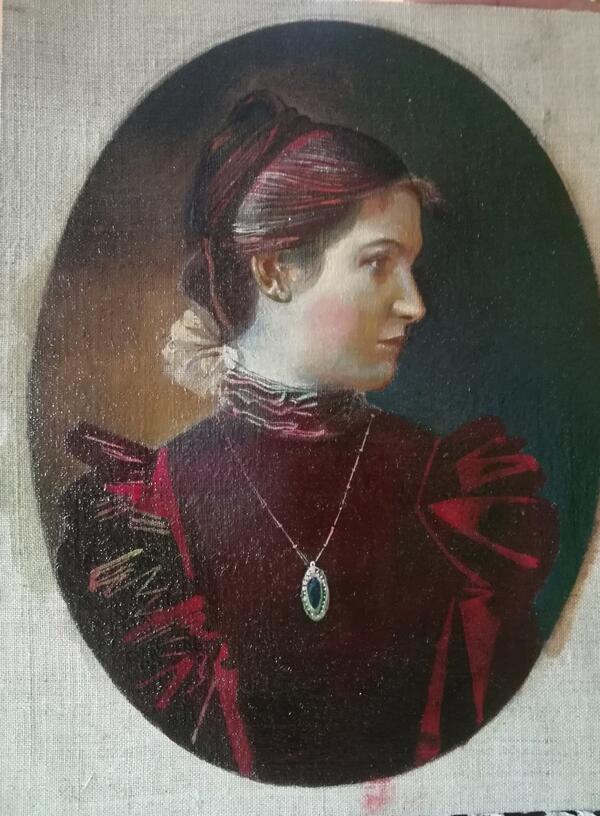
Anna TsaknI (1879 — 1963) was the Bunin’s first official wife, daughter of the publisher and editor of “Southern Outlook” newspaper. Ivan Bunin met her in Odessa in 1898, in summer. At that time, Anna was just 19 years old. In his letters to Yuly, his brother, Bunin was telling about spending time in Odessa: “Almost every day I go to TsaknI”s country house, he”s a good man with a good wife and a beautiful daughter”. Some time later Bunin told VEra NikolAevna about his impression when he first saw Anna strolling in the magnificent southern garden near the TsaknI’s country house, he even stopped walking, as he was stunned. Without delay, he chose one of the next evenings and proposed to marry her. Bunin’s wedding with Anna Nikolaevna was held in Odessa on September 23, 1898, after the wedding they went to the Crimea. They came back to Odessa on the “Pushkin” steam-ship.
#7
“Now we are going to the estate - me, Anna, Beba, we”ll go for a hunt. But surely, I”m also going to do some work there. There we”ll have anything we need, saddle-horses etc. - everything will be luxurious, we”ll even have a lady cook with us… I”ll be staying there for a week, not longer - I have some reviews to work on…”
Bunin I.A. From his letter to brother Bunin Y.A. 15 October 1898
#8
Living with Anna did not last long. Spouses were too different in their personalities, habits, attitude to life.
#9
“How can it be - she shows so much misunderstanding /…/ she is not able to understand my state, and she cannot be milder to me, she does not respect my nature and I mean nothing to her, what Anna does is unacceptable, nothing can be done to change the situation, and it”s even worse as I have to live with her for many years. I cannot say that she is complete fool, but her personality foolish and self-confident, as a child can be - this is what I”ve concluded from my long observations. /…/ She is /…/ selfish like a child and /…/ is unable to feel other person”s emotions /…/. It feels incredible for me to remember how many times and how deeply I opened my soul to her, my soul - full of the best amorousness — still she feels nothing, she is like dumbbell of some kind. /…/ She holds cheap any of my words or my opinions about anything — she doesn”t care what I think”.
Bunin I.A. From his letter to brother Bunin Y.A. 14 December 1898
#10
In March 1900 they separated. Their son KOlya died when he was five years old. Anna TsaknI’s second husband was Alexander Deribas (died in 1937). After the Great October Revolution Anna NikolAevna worked as a teacher at school in Odessa. She died in a nursing home for elderly people. After many years Bunin told Vera NikolAevna: ‘My feelings for LopAtina were merely romantic, while my feeling to TsaknI was rather a pagan obsession.’ On January 5, 1959 Vera MUromtseva-BUnina wrote to Alexander BaborEko, a renowned Russian expert in Bunin’s creative work and biography:
#11
“I”ve finished reading all the letters from the period of living with TsaknI. It made me upset: I thought things were different - I believed it was more Ivan”s fault. It became obvious from those letters: it wasn”t just about difference in attitude, or creative activities. Rather Anna herself didn”t love Bunin and wanted to get divorced… This is clear, they still were completely different in everything - their personalities, the environment they came from, and their nature - no points of interaction. It wasn”t that after the years passed IvAn Alekseevich forgave Anna, he simply forgot everything she did to make him suffer”.
Muromtseva-Bunina V.N.
#21
Full name: Anna Nikolaevna Tsakni. Portrait
Author: Klimov Nikolay Ivanovich
Date: 1988 year
Technique: painting
Dimensions: 26×21 cm
Collection: Yelets Local History Museum
Copyright: Yelets Local History Museum
Author: Klimov Nikolay Ivanovich
Date: 1988 year
Technique: painting
Dimensions: 26×21 cm
Collection: Yelets Local History Museum
Copyright: Yelets Local History Museum
#26
Bunin Nikolai. Photocopy
#13
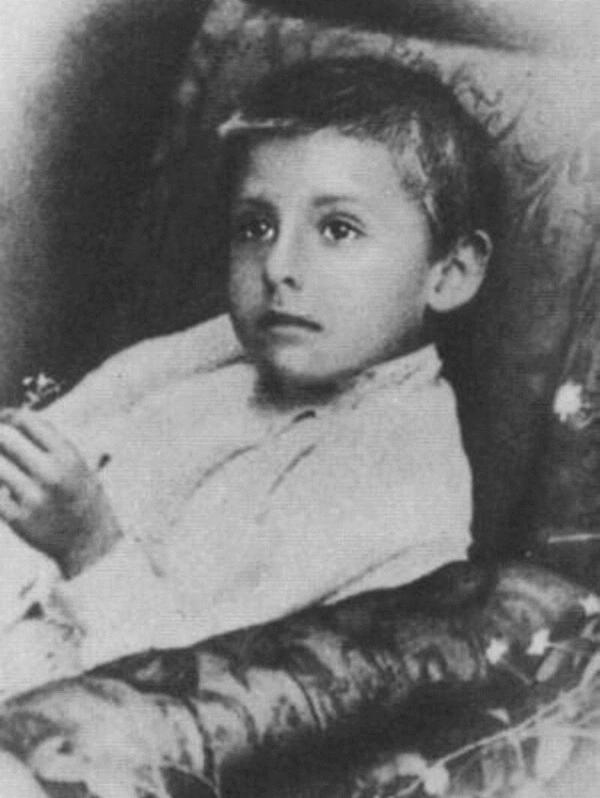
#14
Nikolay Bunin was Ivan Bunin’s son born in the marriage with Anna TsaknI. The boy was very cute, with his face like his mother’s, and his eyes were the bright blue, like his father’s. In 1901 Ivan Bunin wrote a poem about his son, the poem was called “Lullaby”:
The nice blue eyes are slowly closing
As the evening mist comes down
Oh, heavenly angels don’t stop
Rocking the baby’s cradle
The spring clouds are burning down sinking in the sunset
And the field is dark and peaceful
The remote, unearthly lights
Are bringing their shine to the open window
Sleep, oh, sleep my baby boy
Sleep like a flower closing its petals
You are my lampion
Carefully looked after by the God
Bunin I.A. “Lullaby”
On March 3, 1901 Bunin wrote to MarIa ChEkhova from OdEssa: “This is a cute and healthy boy with the bright blue eyes. I visit him every two days.” One week after he wrote in this letter to NikolAy TeleshOv: “I go to visit my son every two days, to see my KOlya, if I were refused to see him, I would have kicked up a row. I actually did, not too serious, however. That”s a pity that I have to go away from my child, but the spring has begun. My life includes visiting my mates and working. I”ll stay here for 10 more days.” Ivan AleksEevich could meet his son five times a year, and, according to him, during his visits “all the family members stayed behind the closed doors and breathed anger at him.” KOlya was rushing towards him, threw his arms around his father’s neck, and shouted loudly: ‘Dad, give me a ride on the tram! “. Those moments which he was spending with his son were the most precious ones for the writer. Bunin sometimes complained to his relatives and friends that the TsaknI family put obstacles for him to visit his son, as he recalled sometimes he even found his son alone on the beach waiting for him… In January 1905, in Moscow, Bunin received news of KOlya”s illness, followed by the tragic news of his death on January 16.
According to Vera Zaitseva, a friend of Vera MUromtseva, who met Bunin in one of the Moscow streets those days, the grief caused by his son”s death completely “destroyed him”.
The nice blue eyes are slowly closing
As the evening mist comes down
Oh, heavenly angels don’t stop
Rocking the baby’s cradle
The spring clouds are burning down sinking in the sunset
And the field is dark and peaceful
The remote, unearthly lights
Are bringing their shine to the open window
Sleep, oh, sleep my baby boy
Sleep like a flower closing its petals
You are my lampion
Carefully looked after by the God
Bunin I.A. “Lullaby”
On March 3, 1901 Bunin wrote to MarIa ChEkhova from OdEssa: “This is a cute and healthy boy with the bright blue eyes. I visit him every two days.” One week after he wrote in this letter to NikolAy TeleshOv: “I go to visit my son every two days, to see my KOlya, if I were refused to see him, I would have kicked up a row. I actually did, not too serious, however. That”s a pity that I have to go away from my child, but the spring has begun. My life includes visiting my mates and working. I”ll stay here for 10 more days.” Ivan AleksEevich could meet his son five times a year, and, according to him, during his visits “all the family members stayed behind the closed doors and breathed anger at him.” KOlya was rushing towards him, threw his arms around his father’s neck, and shouted loudly: ‘Dad, give me a ride on the tram! “. Those moments which he was spending with his son were the most precious ones for the writer. Bunin sometimes complained to his relatives and friends that the TsaknI family put obstacles for him to visit his son, as he recalled sometimes he even found his son alone on the beach waiting for him… In January 1905, in Moscow, Bunin received news of KOlya”s illness, followed by the tragic news of his death on January 16.
According to Vera Zaitseva, a friend of Vera MUromtseva, who met Bunin in one of the Moscow streets those days, the grief caused by his son”s death completely “destroyed him”.
#15
“The other day I met Bunin in the street, I was amazed at his look— his son died, he was crushed with this grief! You can”t even imagine how much he”s changed! … I felt so sorry for him, though at that time I hadn”t yet met him”.
Muromtseva-Bunina V.N. “Bunin”s Life”
#16
Ivan Alekseevich suffered silently, and for a long time did not inform any of his relatives about his son’s death. In particular, he concealed it from his mother, knowing that this would upset her very much, because his brothers had no children, and LyudmIla Alexandrovna was afraid that Bunin’s family line would end. After many years the sorrow of loss became dull, but did not disappear from his heart. Vera Nikolaevna MUromtseva remembered:
#17
“In the last months of his life, when he almost always stayed in bed, the last portrait of his living son was always with him, on the blanket… He received Kolya”s portraits with Kolya lying on a table and in a coffin, surrounded by flowers and toys — among them were the ones Ivan presented to his son. Those photos broke his heart, but they were with him until his last days.”
Muromtseva-Bunina V.N. “Bunin”s Life”
#23
Full name: Bunin Nikolai. Photocopy
Author: Goloschapov Boris Vladimirovich
Date: 1991 year
Technique: photography
Dimensions: 20×20 cm
Copyright: Yelets Local History Museum
Restorers: Yelets Local History Museum
Author: Goloschapov Boris Vladimirovich
Date: 1991 year
Technique: photography
Dimensions: 20×20 cm
Copyright: Yelets Local History Museum
Restorers: Yelets Local History Museum
read morehide
00:00
00:00
1x
Paschenko V.V., Tsakni A.N., Bunin N.
Collection
Exhibition
0
 Point your smartphone camera to open in the app
Open in app
Share