Easter eggs have been an important part of Orthodox Easter since ancient times: Christians used them as a symbol of remembrance of the miracle of the Resurrection. According to the Bible, Saint Mary Magdalene told Roman emperor Tiberius about the miraculous resurrection of Christ and held out an egg — before the ruler’s eyes, it turned red.
It is believed that she did not choose the egg by chance: since ancient times, it had a magical meaning. Many mythologies of the world often include legends in which an egg serves as a symbol of life, rebirth, and the source of the world’s origin. As pagan rituals were closely intertwined with the Christian faith, the tradition of gifting Easter eggs became widespread.
Along with natural, colored eggs (chicken, goose, pigeon, duck), masters made them from wood, bone, porcelain, glass, and natural stone. They were decorated with carvings, painted, overlaid with precious metals and stones.
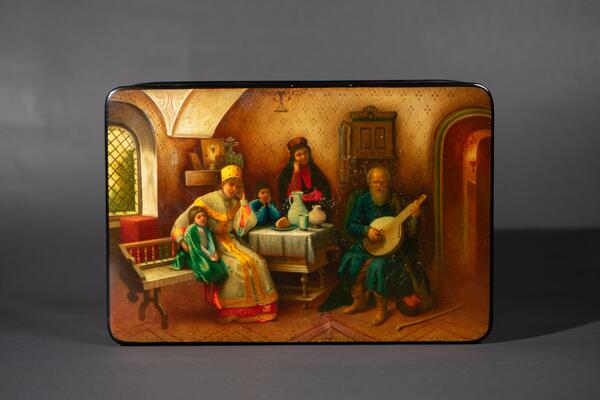
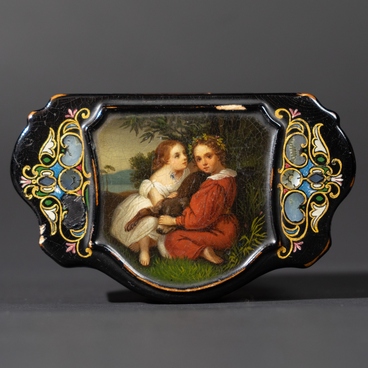
In the 19th century, souvenir Easter eggs gained enormous popularity: their manufacturing became a separate specialization in decorative and applied arts. Easter eggs made of papier mâché with lacquer paintings were in great demand in the middle of the century.
Easter eggs were produced at the Lukutin factory and by the Vishnyakov workshops. Due to their popularity, the range of products was expanded and new technologies were introduced, which included stamps and molds (egg-shaped molds). Often the masters made a through hole in the eggs in order to insert a ribbon with a bow at the bottom and a loop at the top. Such eggs were usually hung in the red corner of the house under the icon shelf.
The artists depicted scenes from the Resurrection of Christ, as well as views of Moscow and St. Petersburg churches on such eggs. They placed the figures of the Most Holy Theotokos, the Holy Equal-to-the-Apostles Mary Magdalene and various saints on the reverse side.
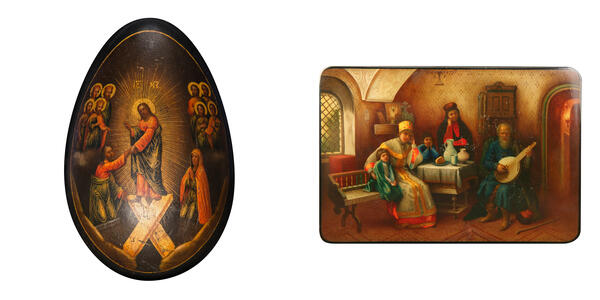
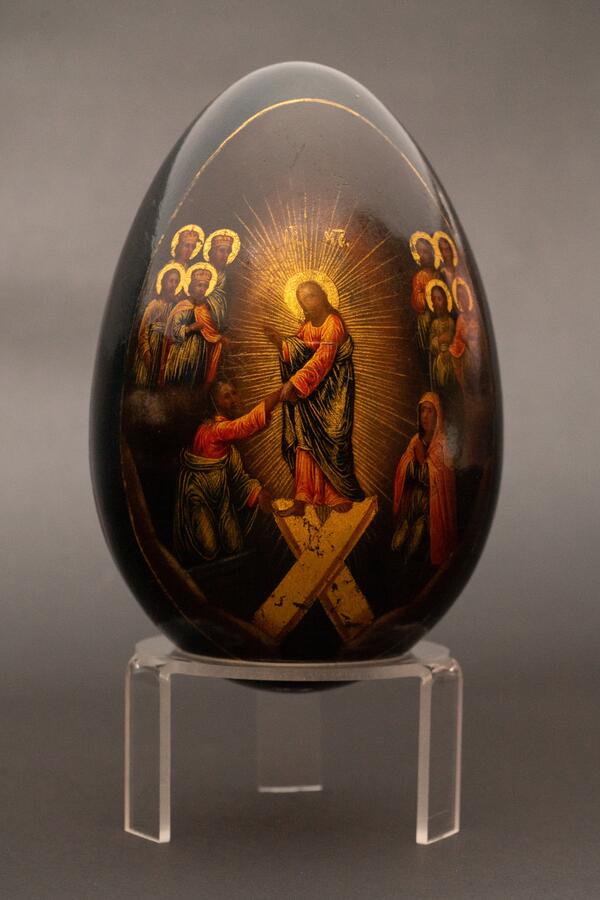
On the Easter egg displayed in the museum, the artist painted a scene from Christ’s Descent into hell. It is believed that after the crucifixion and the Entombment of Christ, his spirit crushed the gates of hell and led out the righteous Old Testament saints, and Adam and Eve.
The master executed this scene in the technique of traditional oil painting on a dark green background. He depicted the Savior in a red chiton (shirt) and a dark green himation (cloak) in the center of the composition. To the left of Christ is Adam who rises from the tomb. The Savior holds his hand and blesses him. On the right, the master depicted Eva in a red maforium (a cloak with a hood), she kneels and folds her hands in prayer. Old Testament kings, prophets and the righteous rise up behind Christ.
It is believed that she did not choose the egg by chance: since ancient times, it had a magical meaning. Many mythologies of the world often include legends in which an egg serves as a symbol of life, rebirth, and the source of the world’s origin. As pagan rituals were closely intertwined with the Christian faith, the tradition of gifting Easter eggs became widespread.
Along with natural, colored eggs (chicken, goose, pigeon, duck), masters made them from wood, bone, porcelain, glass, and natural stone. They were decorated with carvings, painted, overlaid with precious metals and stones.
In the 19th century, souvenir Easter eggs gained enormous popularity: their manufacturing became a separate specialization in decorative and applied arts. Easter eggs made of papier mâché with lacquer paintings were in great demand in the middle of the century.
Easter eggs were produced at the Lukutin factory and by the Vishnyakov workshops. Due to their popularity, the range of products was expanded and new technologies were introduced, which included stamps and molds (egg-shaped molds). Often the masters made a through hole in the eggs in order to insert a ribbon with a bow at the bottom and a loop at the top. Such eggs were usually hung in the red corner of the house under the icon shelf.
The artists depicted scenes from the Resurrection of Christ, as well as views of Moscow and St. Petersburg churches on such eggs. They placed the figures of the Most Holy Theotokos, the Holy Equal-to-the-Apostles Mary Magdalene and various saints on the reverse side.
On the Easter egg displayed in the museum, the artist painted a scene from Christ’s Descent into hell. It is believed that after the crucifixion and the Entombment of Christ, his spirit crushed the gates of hell and led out the righteous Old Testament saints, and Adam and Eve.
The master executed this scene in the technique of traditional oil painting on a dark green background. He depicted the Savior in a red chiton (shirt) and a dark green himation (cloak) in the center of the composition. To the left of Christ is Adam who rises from the tomb. The Savior holds his hand and blesses him. On the right, the master depicted Eva in a red maforium (a cloak with a hood), she kneels and folds her hands in prayer. Old Testament kings, prophets and the righteous rise up behind Christ.