Font
Color
Graphics
Изображение точки

To see AR mode in action:

1. Install ARTEFACT app for iOS or Android;

2. Find the exhibition «The Gaidars and the 20th century»

3. Push the «Augmented reality» button and point your phone's camera at the exhibit;

Скрыть точки интересаПоказать точки интереса
Показать в высоком качестве

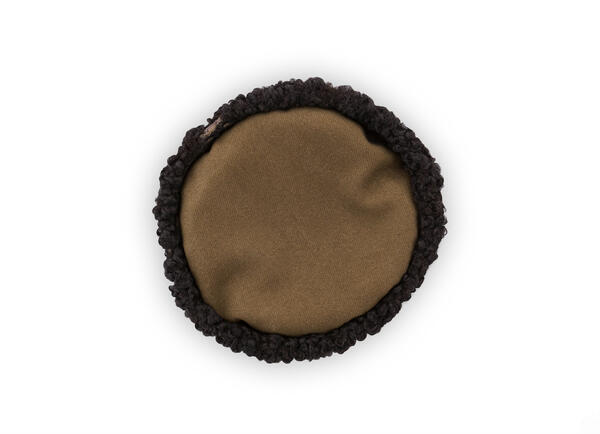
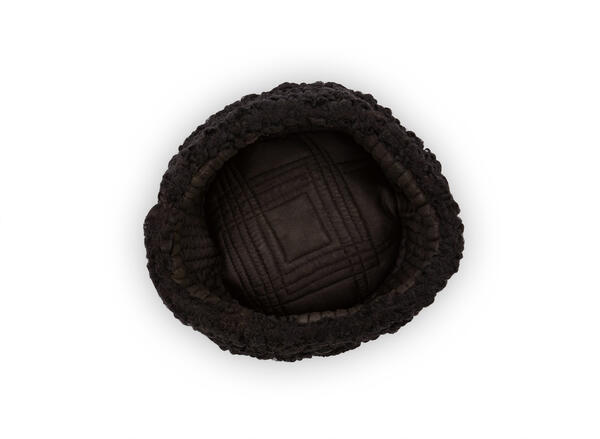
Papakha of Arkady Gaidar

Creation period
the late 1920s — the early 1930s
Place of сreation
the USSR
Dimensions
17x23 cm
Technique
astrakhan, fabric; machine stitching, factory production
0
Open in app
#1

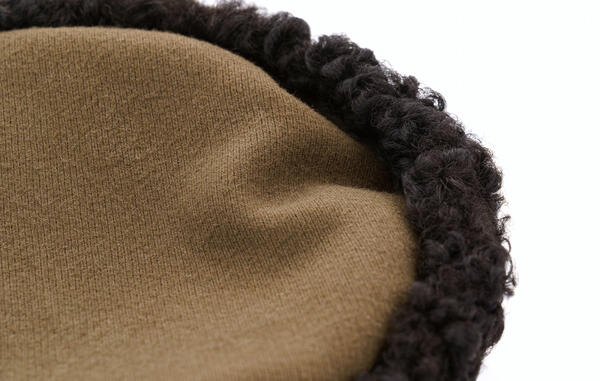
The exhibition features the papakha of Arkady Petrovich Gaidar. It is made of black astrakhan with a green cloth top on a satin lining. It was later altered to fit the writer’s son, Timur Arkadyevich.

In the Russian army, the prototype of the papakha was a fur hat, which was worn by military personnel of some units in the Caucasus and Central Asia from 1817 onwards. Officially, the papakha was established as a winter headdress in the Cossack troops in 1855. In 1913, the papakha was introduced as the standard winter headgear for all personnel of land forces of the Imperial Russian Army.

The 1910–1913 model of the papakha was foldable and resembled an ushanka, protecting the ears and neck from harsh weather. The papakha of the tsarist army with a red ribbon sewn on the front continued to be worn by soldiers during the revolutionary period starting in 1917.

In 1919, the Revolutionary Military Council of the Republic introduced a new winter headgear: a cloth helmet known as the “budenovka.” Despite this, the Red Army soldiers continued to wear papakhas during the Civil War — both the 1910 model and other variants traditional for the peoples of the Caucasus and Central Asia.

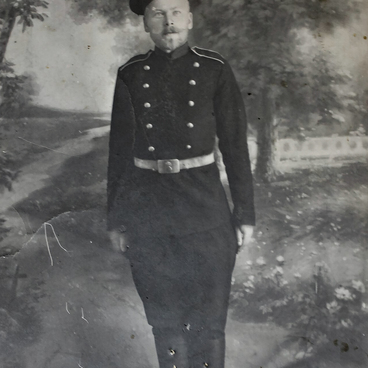
Arkady Gaidar wore papakhas throughout his life, as evidenced by numerous photographs. In 1935, he wrote about himself,
#2

Essentially, I only have three pairs of underwear, a duffel bag, a field bag. A sheepskin coat, a papakha — and nothing else — no home, no place, no friends. And this at a time when I’m not poor at all and certainly not abandoned or unwanted. It just doesn’t work out somehow.

#3

One of Timur Arkadyevich’s childhood memories of his father was related to his work at a newspaper in Arkhangelsk and his constant travels. “One winter, when I was standing in a warm room in front of a toy horse trying to feed it a piece of pie, but it wouldn’t eat and crumbs were falling to the floor,” Timur Arkadyevich recalled, “a tall stranger in a papakha and a furry bear-skin coat entered the room. He stopped, carefully watched what I was doing, and said, ‘Ah, boy, why are you feeding the horse without removing the bit? Is that how cavalrymen do it? ’ Then he smiled broadly, picked me up, pressed me to his frost-scented coat, and tossed me high in the air. My father had returned from some distant trip.

#5
Papakha of Arkady Gaidar
#4
View in the State Catalogue
read morehide
00:00
00:00
1x

Papakha of Arkady Gaidar

Creation period
the late 1920s — the early 1930s
Place of сreation
the USSR
Dimensions
17x23 cm
Technique
astrakhan, fabric; machine stitching, factory production
0
Point your smartphone camera to open in the app
Share
VkontakteOdnoklassnikiTelegram
Share on my website
Copy linkCopied
Copy
Open in app
To see AR mode in action:
  1. Install ARTEFACT app for 
  2. iOS or Android;
  3. Find and download the «Paintings in Details» exhibition
  4. Push the «Augmented reality» button and point your phone's camera at the painting;
  5. Watch what happens on your phone screen whilst you flip through the pictures.
 
We use Cookies
Cookies on the Artefact Website. We use cookies to ensure that we give you the best experience on our website. If you continue without changing your settings, we'll assume that you are happy to receive all cookies on the Artefact website. However, if you would like to, you can change your cookie settings at any time.
Learn more about useHide
Content is available only in Russian

X

Нашли опечатку?...

%title%%type%