As humanity evolved, writing tools improved. Pens, ink, paper, pencils, and crayons appeared. People started using paper almost every day, and paper knives became a necessary tool.
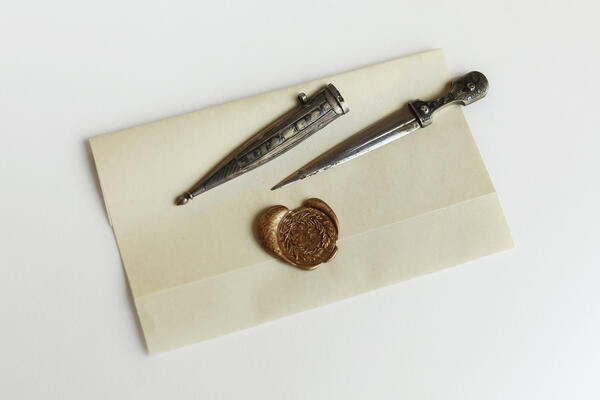
Knives themselves are a very ancient tool, however, specialized knives for cutting paper appeared relatively recently. They were first mentioned in written sources in the 16th century. It seems that back then, letters and envelopes were cut by ordinary knives, as well as military blades and daggers. Later, in the early 19th century, special paper knives emerged. At that time, one could not just open a new book and read it at once, as printing houses had no equipment capable of cutting a large number of book pages. Therefore, a large sheet folded several times, which contained up to twenty pages of the future book, was simply stitched, and joined to others. The pages of such a book needed to be cut before reading. For this purpose, there were bone, wooden, and metal paper knives of various types, thicknesses, and designs. These knives were also used in opening letters.
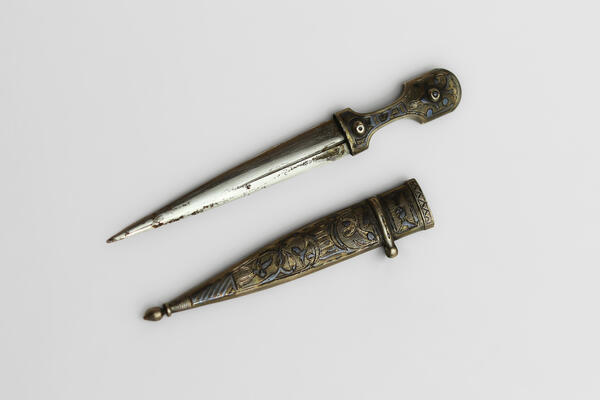
The paper knives had a narrow blade. Many of the surviving knives have a unique artistic finish. These knives were made from wood, ivory, or stone, and were cast from steel or precious metals. They were richly decorated with intricate carvings and patterns, and the handles could be covered in leather.
Paper knives were considered luxury items. Most importantly, this was associated with the spread of literacy — the ability to read and write. Until the early 20th century, most people who received letters and read books belonged to the middle and upper classes. This is reflected in the design of paper knives. Some had personal monograms or family coats of arms as decorations. These knives were expensive and were often passed down from one generation to another.