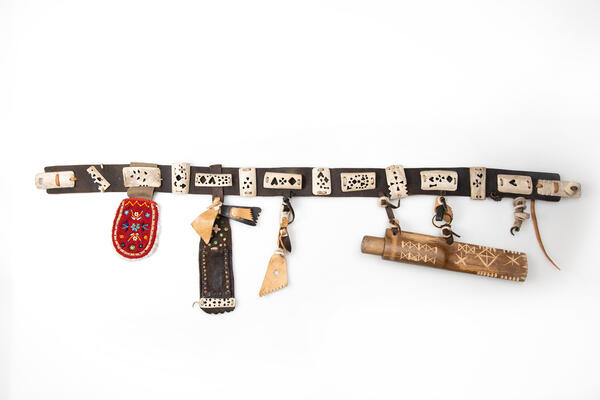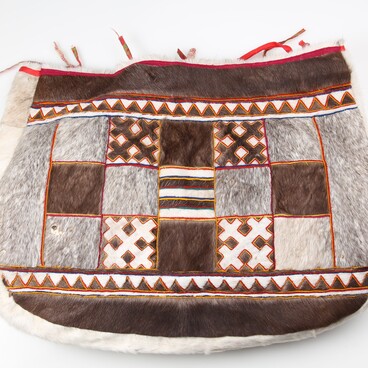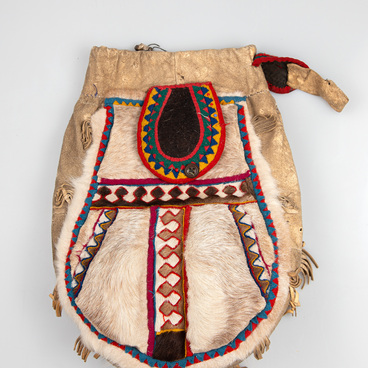
Bone carving is one of the oldest types of applied and decorative arts. Since ancient times, the inhabitants of the North — the Nenets, Khanty, and Selkups — use bone, reindeer horn, walrus tusk, as well as mammoth fossil bones as an ornamental material. The indigenous population of Yamal are nomadic reindeer herders, so their main raw material was reindeer horn and bone. The products are very strong and durable. Bone-carving artisans made hunting and fishing tools, harness parts, household and ritual items. Household utensils made of wood, fur and bone are the basis of the traditional material culture of the northern peoples.
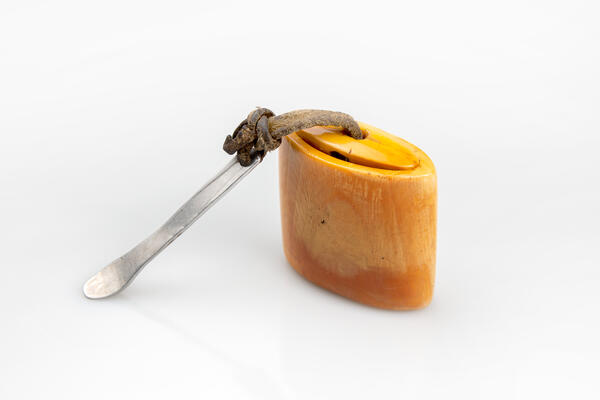
The Nenets have their own set of items related to tobacco use. It has entered the everyday life of the indigenous peoples of Yamal as soon as they began to trade with travelers and merchants from different countries. The snuff box in the Nenets language is called “syar ly”, which means “bone and tobacco”. The Nenets made snuff boxes from deer antler, mammoth tusk, wood and birch bark. It was a small container with a lid for storing snuff. Sometimes there was a small spatula, which was convenient to take tobacco with.
The exhibition of the Purovsky Museum presents a snuffbox, which was made in the 1920s. It is made from a mammoth tusk, which has always been valued for its color and quality. It is used around the world to create expensive trinket boxes, combs, jewelry, snuff boxes, panels and other items. The Nenets snuffbox could be elongated, and was more often oval in cross section. The bottom of the snuffbox could be solid or inserted. The lid tightly fit the neck of the box so that the tobacco did not get damp.
There were men’s and women’s snuffboxes. Men carried small snuffboxes, attached to their belt, along with a knife, a flint, amulets and working tools. A small amount of tobacco, which the owner might need away from his camp, was put inside the snuffboxes. Everyone tried to have the most beautiful snuffbox, so artisans and special manufactories decorated them with carvings, precious stones, chased ornaments and miniatures.
The Nenets have their own set of items related to tobacco use. It has entered the everyday life of the indigenous peoples of Yamal as soon as they began to trade with travelers and merchants from different countries. The snuff box in the Nenets language is called “syar ly”, which means “bone and tobacco”. The Nenets made snuff boxes from deer antler, mammoth tusk, wood and birch bark. It was a small container with a lid for storing snuff. Sometimes there was a small spatula, which was convenient to take tobacco with.
The exhibition of the Purovsky Museum presents a snuffbox, which was made in the 1920s. It is made from a mammoth tusk, which has always been valued for its color and quality. It is used around the world to create expensive trinket boxes, combs, jewelry, snuff boxes, panels and other items. The Nenets snuffbox could be elongated, and was more often oval in cross section. The bottom of the snuffbox could be solid or inserted. The lid tightly fit the neck of the box so that the tobacco did not get damp.
There were men’s and women’s snuffboxes. Men carried small snuffboxes, attached to their belt, along with a knife, a flint, amulets and working tools. A small amount of tobacco, which the owner might need away from his camp, was put inside the snuffboxes. Everyone tried to have the most beautiful snuffbox, so artisans and special manufactories decorated them with carvings, precious stones, chased ornaments and miniatures.