A stone flower from a distant era is not just a flower. It’s a geological letter from the Paleozoic era.
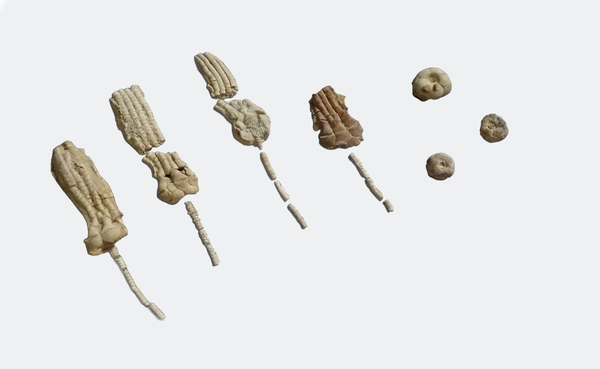
A valuable exhibit of the Volgograd Regional Museum of Local Lore was discovered in our region. Crinoidea (or sea lilies) are very rare in these parts of Russia. The paleontological exhibition contains 4 fossilized organisms freed from surrounding rock as well as limestone imprint of Pegocrinus sp. Lilies and Tabulipora sp., Askopora sp., Fenestella sp. Bryozoans in addition to brachiopods. These lilies were discovered in Frolovsky district of Shlyakhovskaya village.
Over the course of millions of years, the sea levels flactuated. Each time the water level lowered layers of sediment in which images of ancient sea animals — fossils — were forever imprinted.
Sea lilies are very unusual bottom dwelling animals. Despite the “plant” name, these are, indeed, animals. The animal got its name for its body shape and bright coloring reminiscent of a flower. They are truly fantastic organisms — their bodies are made up of a stem, a calyx and arms (brachioles) the descendants of ancient sea lilies still exist today and inhabit ocean floor. They also used to dwell in shallow waters in ancient times. Sea lilies live a sedentary lifestyle attaching to various underwater surfaces. Lilies feed on small planktonic organisms and crustaceans. However, these creatures are long past their prime. It started going extinct in Middle Paleozoic period. By the end of the Permian period, most of them became completely extinct. And it has reached our time only in fossil form.