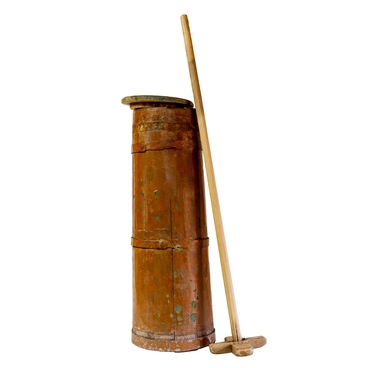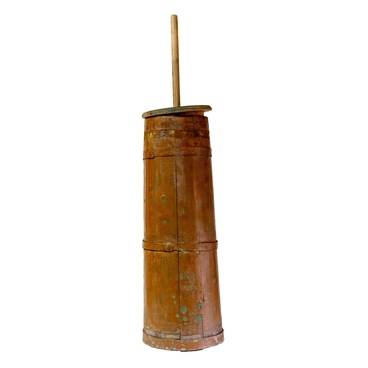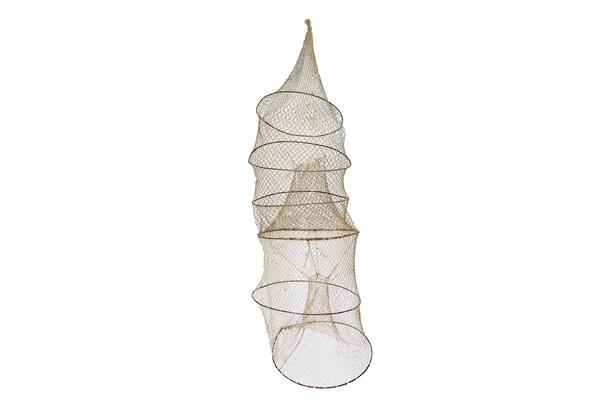
In the olden days, fishing was one of the main traditional occupations in Siberia, especially among the indigenous people. Fish served as food, and its skin was used for making clothes, shoes, and bags for small items. The indigenous people boiled fish scales to make glue. There were about thirty kinds of fish in the rivers and lakes of Yugra. Northern pike, crucian carp, muksun, nelma, sturgeon, sterlet, and others were among them. Caught fish were dried, frozen, and sun-dried which helped to store fish longer. Fish was salted very rarely because salt was too expensive and considered a rare product. That is why people tried to use it sparingly.
When the Russians moved to Siberia, they adopted local fishing traditions. Therefore, they began using the same fishing tools. All catching methods could be divided into active and passive. Active methods required nets and harpoons. Passive methods required various traps, which were left in different places, and then were checked from time to time.
Morda was one of the most popular passive fishing traps. It consisted of two cones inserted into each other. Mordas were woven of willow twigs that were previously soaked in hot water to make them more flexible. When a base dried, it shrank slightly, and a trap became more durable. The outer basket length reached one and a half meters. The inner basket length was about 70 cm.
Mordas were used to catch fish near the shore, in shallow water. Before lowering a trap into the water, it was necessary to stick fir branches into its base. They served as a bait for fish, which tried to hide under them. There were also weights outside the cones, which did not let it move. Most often, ordinary stones were used for that purpose. Mordas could be drifted away. So, to prevent such a situation, people tied them to a bush or a wooden stick driven in the bottom. When fish fell into a trap, it could not turn around and swim out of it. As a rule, only one fish got into each morda, but less often, there could be two or three small fish.
Fish were caught with mordas by using a shutoff technique. It means that a water area was blocked with a kind of a wooden fence leaving a few small passages, where the traps were located. Fish got into them while trying to overcome a hedge.
When the Russians moved to Siberia, they adopted local fishing traditions. Therefore, they began using the same fishing tools. All catching methods could be divided into active and passive. Active methods required nets and harpoons. Passive methods required various traps, which were left in different places, and then were checked from time to time.
Morda was one of the most popular passive fishing traps. It consisted of two cones inserted into each other. Mordas were woven of willow twigs that were previously soaked in hot water to make them more flexible. When a base dried, it shrank slightly, and a trap became more durable. The outer basket length reached one and a half meters. The inner basket length was about 70 cm.
Mordas were used to catch fish near the shore, in shallow water. Before lowering a trap into the water, it was necessary to stick fir branches into its base. They served as a bait for fish, which tried to hide under them. There were also weights outside the cones, which did not let it move. Most often, ordinary stones were used for that purpose. Mordas could be drifted away. So, to prevent such a situation, people tied them to a bush or a wooden stick driven in the bottom. When fish fell into a trap, it could not turn around and swim out of it. As a rule, only one fish got into each morda, but less often, there could be two or three small fish.
Fish were caught with mordas by using a shutoff technique. It means that a water area was blocked with a kind of a wooden fence leaving a few small passages, where the traps were located. Fish got into them while trying to overcome a hedge.