On June 21, 1922, after the Battle of Nikolskoye in Namsk ulus, the Red Army took total initiative on the battlefield, and the Petrograd Regiment, after liberating the village of Dyupsyun in Ust-Aldansky ulus, headed for Churapcha. After the Provisional Yakutsk Regional People’s Administration heard the news of the rebels’ defeat, they left Churapcha and headed towards the Tatta and Amga rivers. Only the detachment of white colonel Valentin Duganov, who had arrived in Churapcha at the end of May 1922, remained there. Duganov had escaped from the Irkutsk prison in 1920 and formed a detachment of 70–80 soldiers from the Semyonovsky Regiment in the Far East.
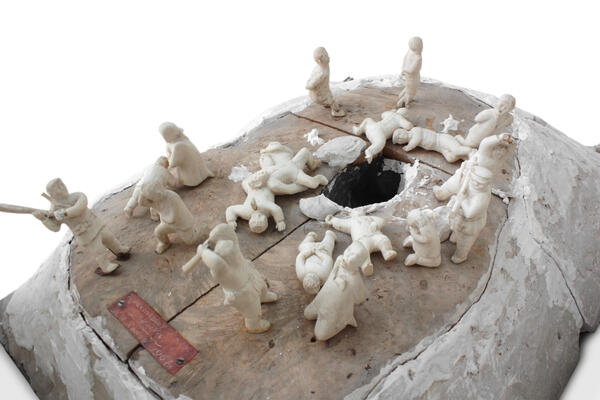
On the evening of July 1, before leaving Churapcha, Duganov’s detachment massacred the Red Army prisoners who had been arrested earlier by the Provisional Yakutsk Regional People’s Administration. They were slaughtered and thrown into a pit. Seventeen civilians were killed in the Churapcha “massacre”. Afterwards, the White Guards set fire to a new hospital, two school buildings, a paramedic’s house, a bathhouse, a two-story barn, the administration and other buildings.
Among the victims of the “massacre” were residents of Churapchinsky, Namsky and Bayagantaysky uluses.
Elena Innokentievna Yakovleva was among those killed. She was born in 1868 in the Altansky settlement of Meginsky ulus. Her three sons were supporters of the Soviet power. The story goes that when the soldiers with prisoners were moving from Chakyr to Churapcha and stopped in Dirin to water the horses, Elena Yakovleva said to the prisoners, “I will delay these guys. You run, what can they do with a hunting rifle. We are probably being led for a reason.” The prisoners refused her offer. They didn’t think they would be killed, they hoped the locals would not do anything cruel to them.
One of Elena Yakovleva’s sons, Semyon, established a Revolutionary Committee in the district, and later became a famous writer Erylik Eristin. The younger, Gavril, was shot by the White Guards. The third, Stepan, helped his brothers in everything.
In his works, Erylik Eristin showed the reality of
life, trying to accurately recreate events. He sought to be historically
accurate. His short story “On the Threshold of Death”, the tale “Execution of
the Will”, the play “At the White Guard Headquarters”, and the poem “Bolshevik
Tikhon” were based on the events of the civil war in Yakutia.