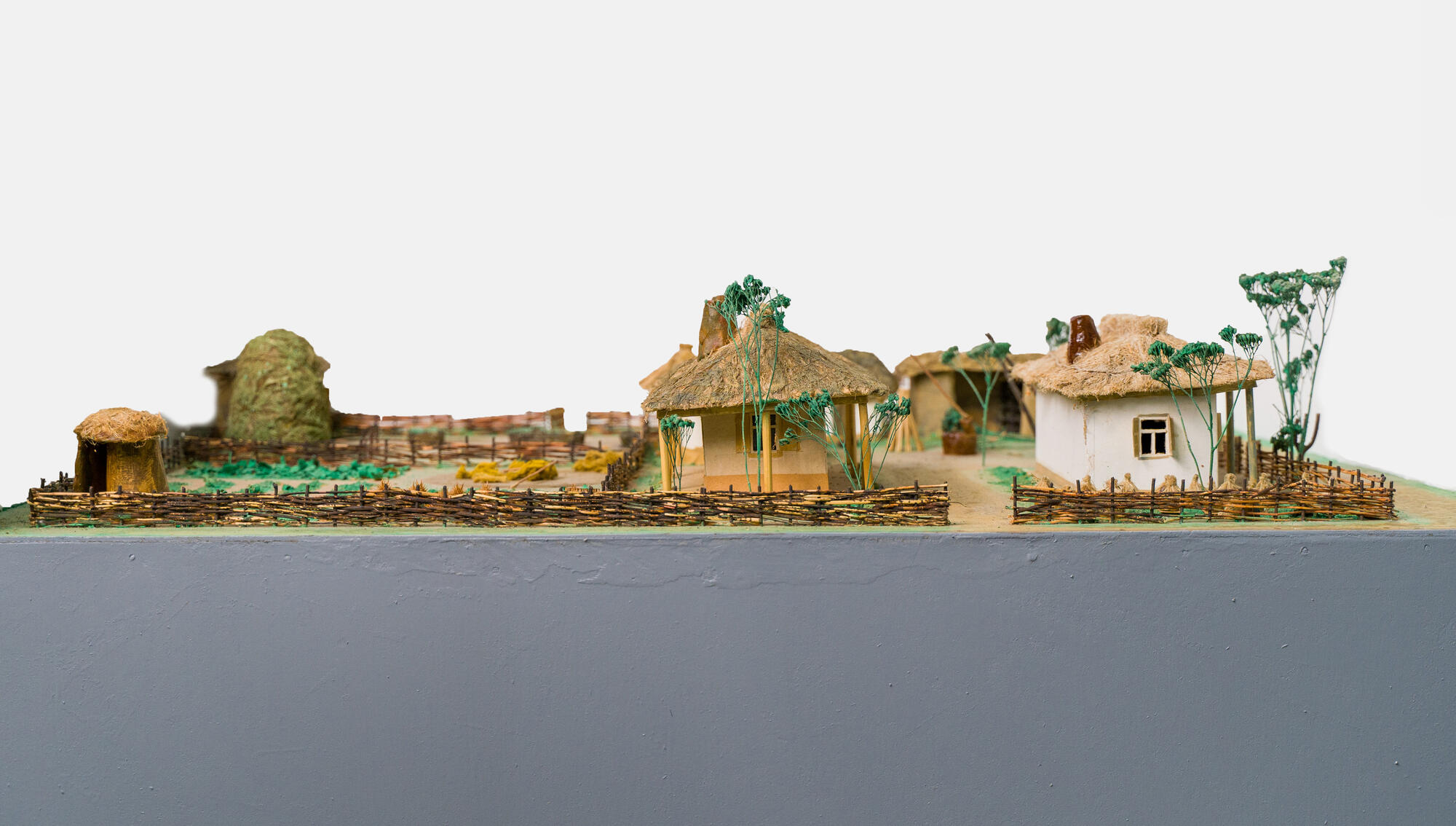


A typical Adyghe homestead of the 18th–19th century usually consisted of three courtyards surrounded by a fence with a main roadside gate and several crossings or small gates. The owner’s house — called uneshkho — was usually in the center of the homestead. Houses for married sons were built separately, however, sometimes, a room was simply built beside the uneshkho.
All outbuildings were located in the main courtyard: 1) a shed or barn for agricultural products, drying and processing; 2) a shed for household needs; 3) a chicken coop; 4) a women’s toilet; 5) a men’s toilet; 6) a stable with two entrances for cattle and sheep; 7) a haystack; 8) a wicker container for storing grains; 9) a well with a shadoof.
Uneshkho is a long wattle and daub house with two entrances, two fireplaces (two chimneys), a clay-daubed floor and a canopy around the house.
Khachesh or kunatskaya is a guest house. It was considered an indispensable part of the Adyghe homestead. It had one hearth, two entrances, a canopy with a facade and was a hitching post at the gate. The guest houses of wealthy Adyghe were usually richer than the owner’s house with pelts hanging on the walls and a small mat (namazlik) for performing namaz. In the corner stood a narrow-necked copper jug and a copper basin. Musical instruments were sometimes hung on the walls of the kunatskaya. Weapons decorated the walls of the guest house. The furniture in both the guest’s and the owner’s house was almost the same: bunks and sofas, small round tables and benches.
In their homestead, the Adyghe were engaged in agriculture. They sowed, harvested and stored crops. Gardening was an integral part of arable farming. The Adyghe maintained a high level of gardening by skillfully selecting and cross-breeding species of plants and vegetables.
In the second half of the 18th century, animal farming became most prominent among the Adyghe. They bred small cattle (sheep, goats), horses and cattle (cows and bulls). In many ways, the development of this branch of the Adyghe economy was determined by the population’s need for food, means of transporting goods and the demands of factories and local craftspeople in raw materials.

