A spoon is a utensil used for eating liquid or semiliquid foods, and very small or powdery solid items.
The first spoons appeared three thousand years BC. Initially, primitive people used seashells, halves of nutshells, or bent dense leaves of plants for this purpose. As times went by, spoons began to be made of burned clay. They looked like miniature clay ladles with short handles. Later, people started using wood for making spoons.
Legend has it that the first spoons appeared in Russia in 988, when Prince Vladimir introduced the custom of eating with utensils instead of using hands. Even in the “Tale of Bygone Years, ” the spoon was already mentioned as a common and necessary item.
Craftsmen painted and decorated spoons to make them more beautiful. This is why spoons from different regions in Russia differed from each other. For example, Khotkovo spoons were carved using geometric patterns, Khokhloma spoons were painted, and Vyatka spoons were decorated with pyrography. The finished products were lacquered.
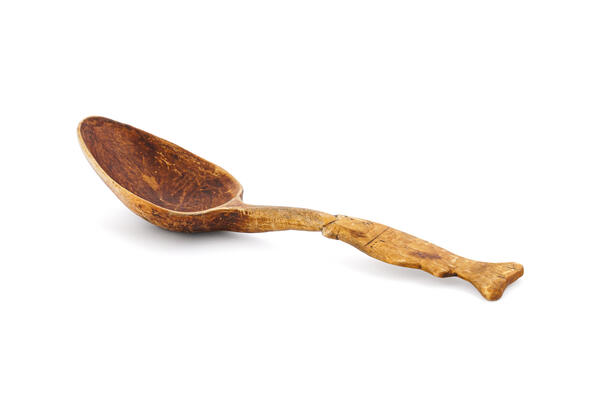
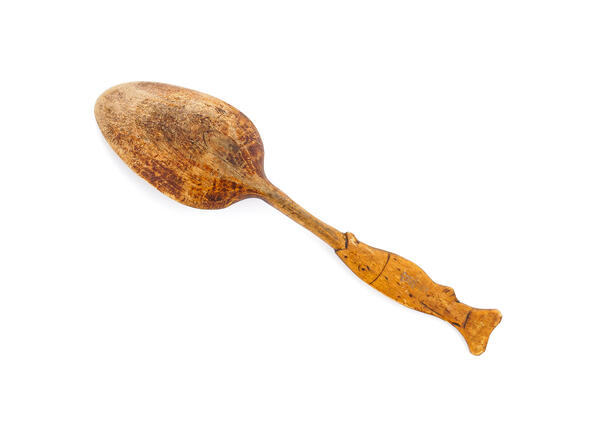
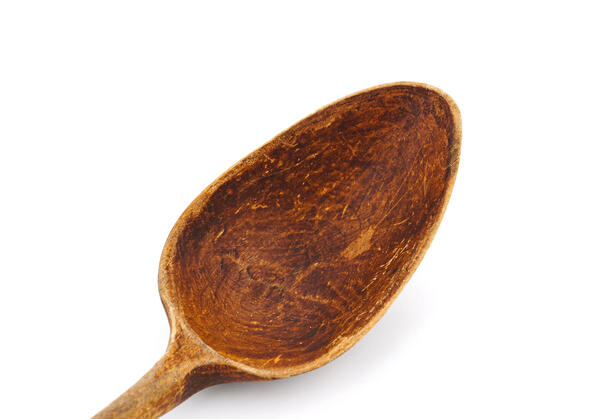
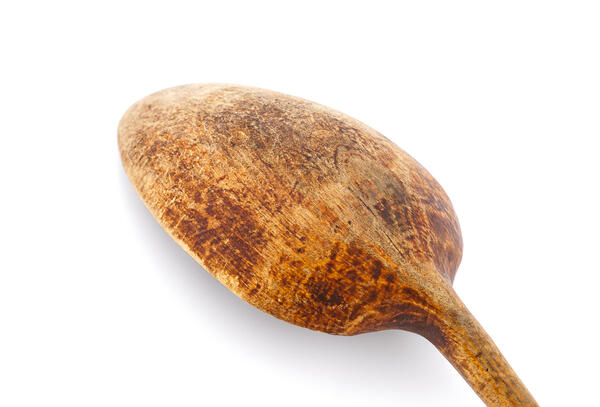
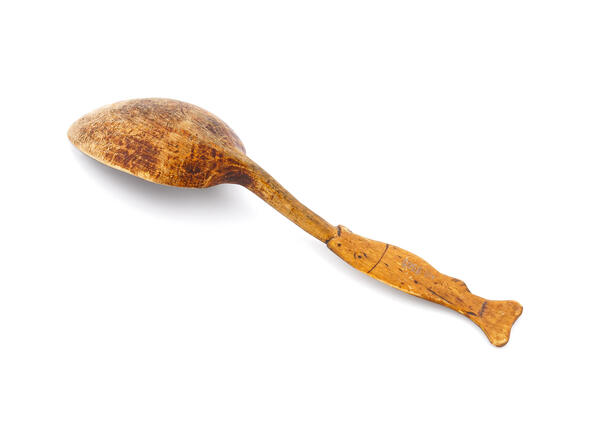
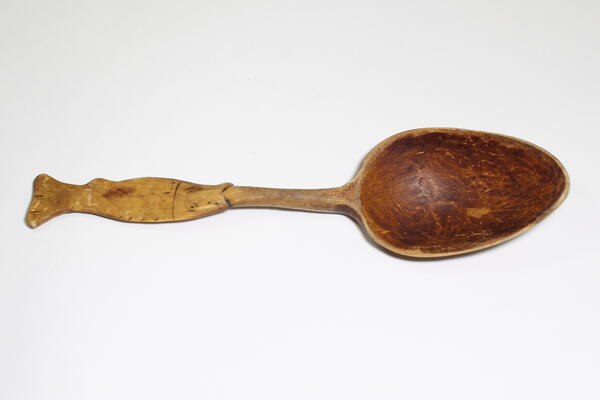
The displayed wooden spoon was used at the refectory of the Sarov Monastery. The monks used tableware crafted by hand from soft wood such as linden and aspen. The monastery had a well-established tradition of turning and spoon making.
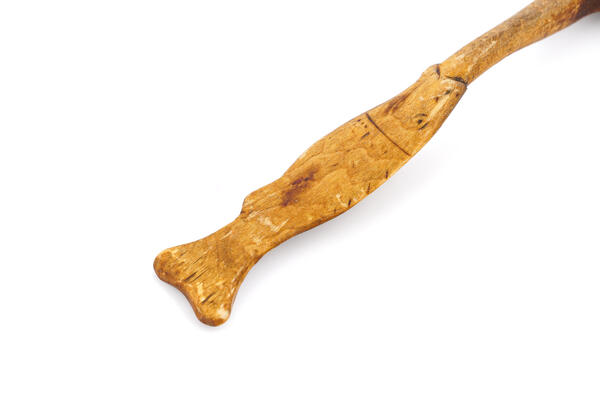
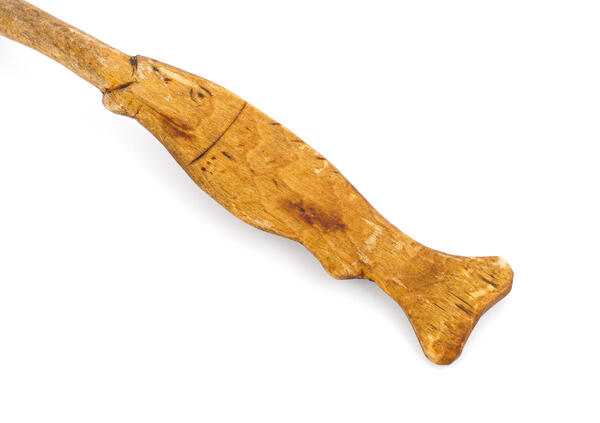
The spoon’s handle is crowned with a stylized figure of a fish. This was a common decoration for wooden spoons in many Russian monasteries in the 19th century. Similar fish-shaped ornaments can be found on spoons from the Trinity Lavra of St. Sergius, the Optina Monastery, and the Solovetsky Monastery.
Fish was an important symbol in early Christianity. One of Christ’s miracles is connected to fish: He fed five thousand people with five loaves of bread and two small fish.
The image of a fish also represents monastic abstinence and the monastic Lenten diet. Meat was not consumed in monasteries, and fish was the primary food on all days except during Lent. The monks of Sarov annually harvested hundreds of poods of various fish species, including sturgeon, pike perch, and starred sturgeon. According to eyewitness accounts, the food was better than in other monasteries, although it was not luxurious, but rather modest and nutritious.
The displayed wooden spoon was donated to the museum by Valentin Alexandrovich Stepashkin, a local historian and writer from Sarov, in 2015. Legend has it that the spoon was crafted in the lathe workshop of the Sarov Monastery.