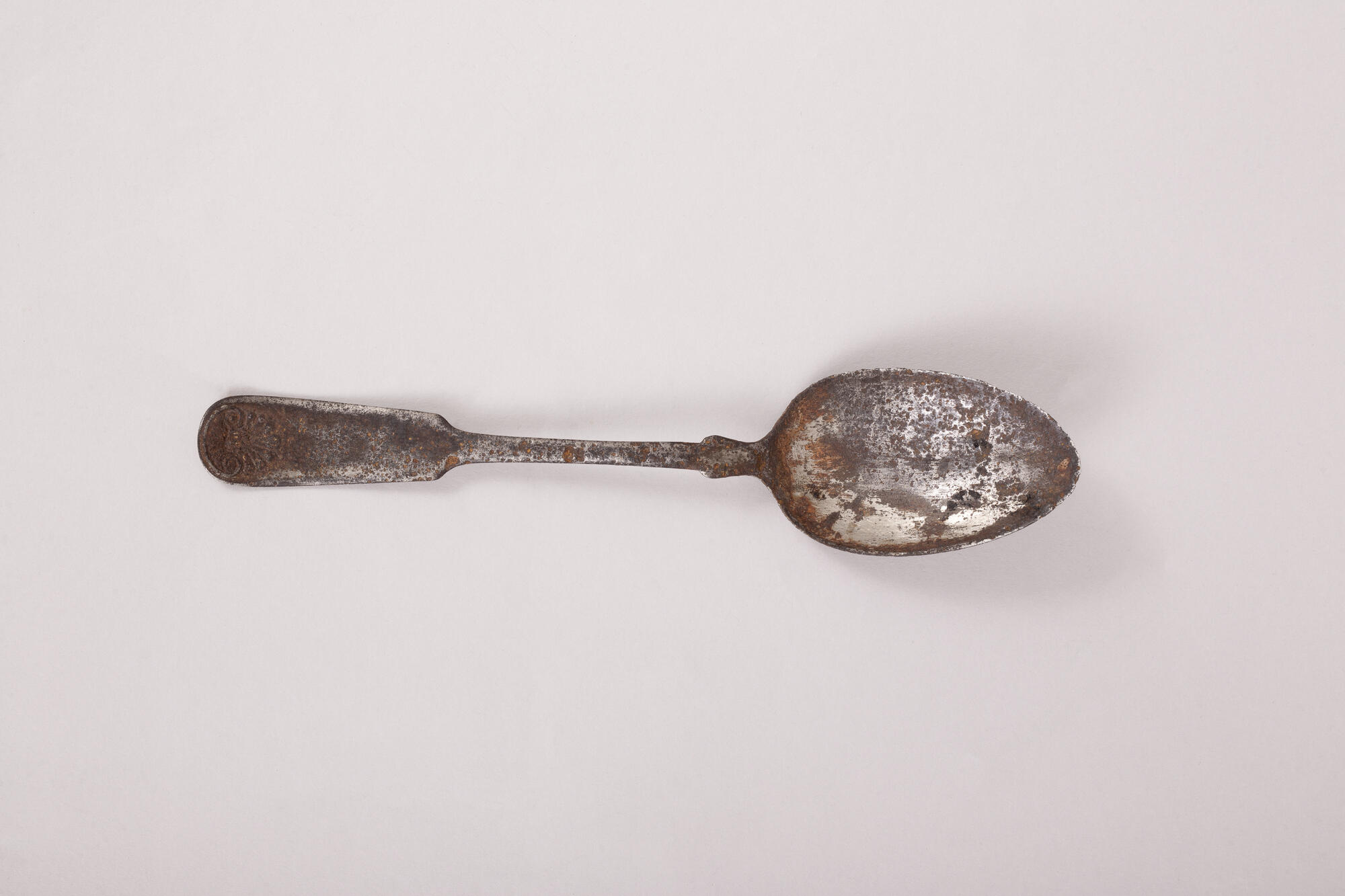


Most often, soldiers ate various soups and porridge. Hence, the spoon was the universal and only utensil, because both liquid and solid food could be eaten with it.
The spoons used by the lower ranks had a wide rounded bowl and were similar to the spoons of Russian peasants who had the same type of diet. The spoons were paid for using regimental money, so they all had different designs. They differed in the shape of the handle, the presence of letters (usually the owner’s initials) cut on them and arbitrary decorations, relief or figured ornamentation. Sometimes the bowl was made asymmetrical — more convex on the left side of the handle, so that it was more convenient to sip soup.
Since the Ministry of War did not allocate any separate funds for the manufacture of spoons, they were often made by the soldiers themselves. The most common were wooden spoons made of soft wood (linden or aspen), but there were also burl wood ones. Only wooden spoons were used in hospitals and infirmaries. The hospital spoon was made of linden wood. It was simple and smooth, the handle was round, with notches at the end. The spoon was covered with yellow varnish. But during military campaigns and wars, wooden spoons were impractical.
Already ahead of World War I, artisanal aluminum and tin spoons appeared. For example, spoons of cadets were the same as soldiers’ spoons, but smaller and usually made of metal. Some soldiers also tried to purchase metal spoons, which were specially produced by small factories.
During the war, the spoon became one of the most coveted gifts from the rear. A soldier once reported that their spoons were “broken, lost, and now we have to eat soup in turn. Although wooden spoons are fragile, <…> they do not burn the lips, which is also important in a campaign, when eating in a hurry, and they do not move around behind the boot like a metal one would, and the soldiers usually do not accept any other place to keep it.”
Despite certain advantages of wooden spoons, the
production of metal spoons was established in the units during the war. Metal
(tin and aluminum) was extracted from captured unexploded shells, and molds for
casting were made using soil. At the same time, soldiers were still creative
even in the trenches: they decorated the surface or the handles with carvings,
inscriptions, ornaments, sculptural compositions and regimental symbols.


