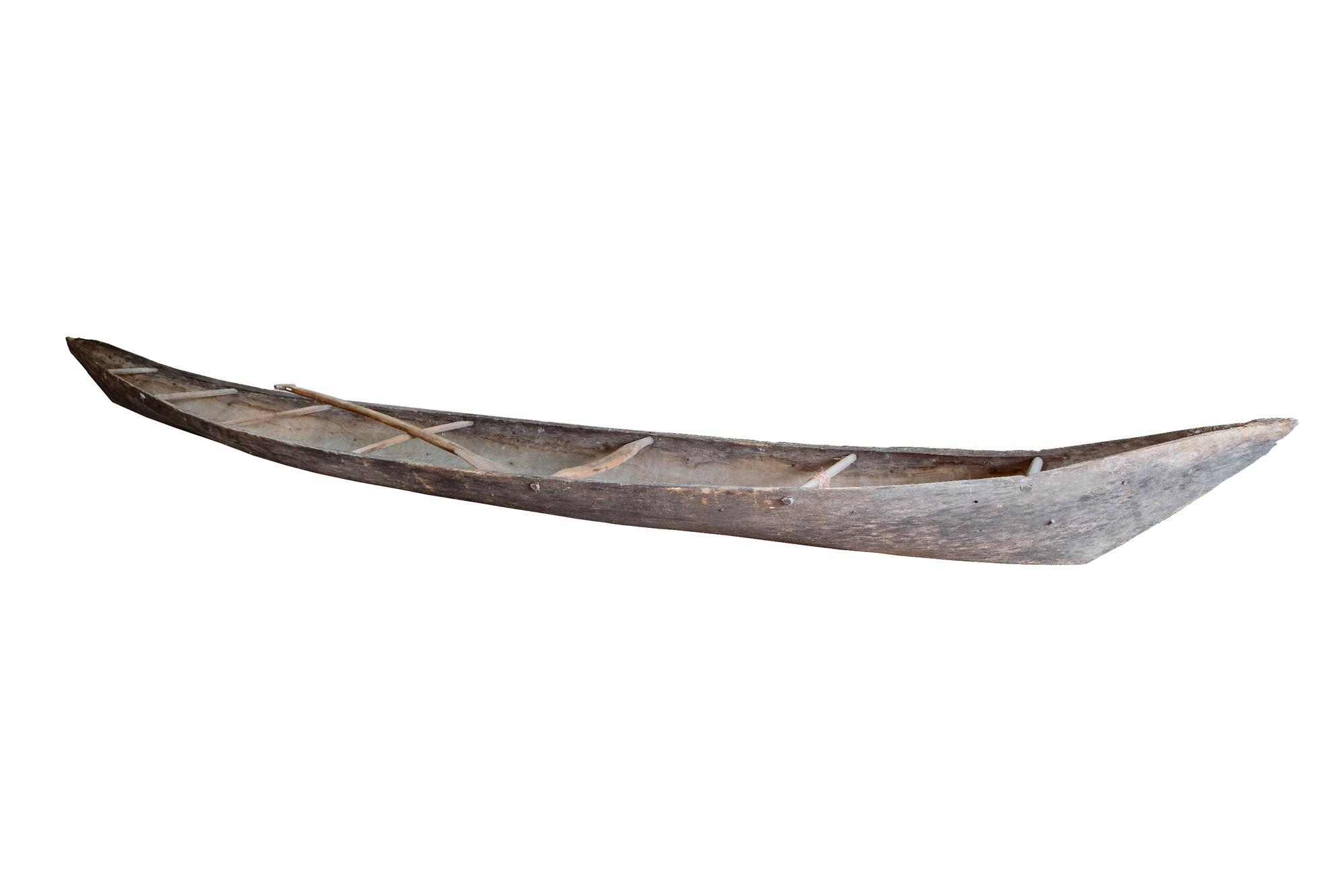


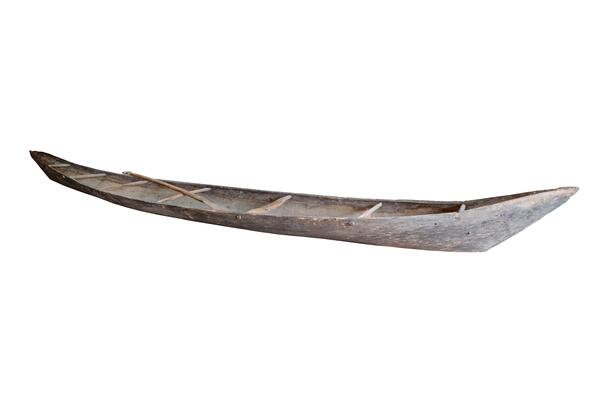
A dugout canoe also known as a long canoe was a boat made of a solid tree trunk. Its middle was hollowed out — hence the name of a boat.
Such boats are considered one of the earliest means of water transportation. They were light, suitable for river rapids and calm lake water. The oldest dugout was found in 1955 in the Netherlands, near the village Pesse. It is believed that this boat was made between the 8th and 7th centuries BC. The earliest detail of such a vessel was found in Staraya Ladoga — an old wooden boat bench from the middle of the 8th century.
For centuries, most boatmen kept the specifics of their work a secret. They were given only to trusted apprentices and only verbally. No records were kept. But in northern Russia, especially among the indigenous inhabitants of Siberia, this business was more widespread than in its central regions.
In Yugra, a traditional dugout canoe was called oblas. They were made individually for each person. The craftsmen took into consideration their weight, height, and purposes for which they planned to use the boat. The length of the oblas made for one rower was measured with two overarm strokes.
Woods for future boats were prepared in May. People chose slightly curved trunks if it was possible. Their convex side became the bottom. The best materials for dugouts were aspen, cedar, and poplar. The bark was removed from the trunk, and then, the core was hollowed or burned out. The master had to be sure that the thickness of the sides was the same everywhere. To do so, the holes of required depth were drilled from the outside of a trunk and one-side painted wooden pegs were inserted into holes. The wood was removed until the colored end of the peg became visible. All the work was done in the shade to protect the future boat from over drying in the sun and cracking.
To pull apart the sides of the boat, they were well steamed, and then, the wooden bars were inserted between the sides. The body of a boat was covered with tree resin or natural bitumen to make a boat leak proof and more durable.
Such boats are considered one of the earliest means of water transportation. They were light, suitable for river rapids and calm lake water. The oldest dugout was found in 1955 in the Netherlands, near the village Pesse. It is believed that this boat was made between the 8th and 7th centuries BC. The earliest detail of such a vessel was found in Staraya Ladoga — an old wooden boat bench from the middle of the 8th century.
For centuries, most boatmen kept the specifics of their work a secret. They were given only to trusted apprentices and only verbally. No records were kept. But in northern Russia, especially among the indigenous inhabitants of Siberia, this business was more widespread than in its central regions.
In Yugra, a traditional dugout canoe was called oblas. They were made individually for each person. The craftsmen took into consideration their weight, height, and purposes for which they planned to use the boat. The length of the oblas made for one rower was measured with two overarm strokes.
Woods for future boats were prepared in May. People chose slightly curved trunks if it was possible. Their convex side became the bottom. The best materials for dugouts were aspen, cedar, and poplar. The bark was removed from the trunk, and then, the core was hollowed or burned out. The master had to be sure that the thickness of the sides was the same everywhere. To do so, the holes of required depth were drilled from the outside of a trunk and one-side painted wooden pegs were inserted into holes. The wood was removed until the colored end of the peg became visible. All the work was done in the shade to protect the future boat from over drying in the sun and cracking.
To pull apart the sides of the boat, they were well steamed, and then, the wooden bars were inserted between the sides. The body of a boat was covered with tree resin or natural bitumen to make a boat leak proof and more durable.