

These days a chest is associated with folktales and songs. But in olden times, this item was one of the indispensable household utensils, was part of the bride’s dowry, and was considered an expensive gift.
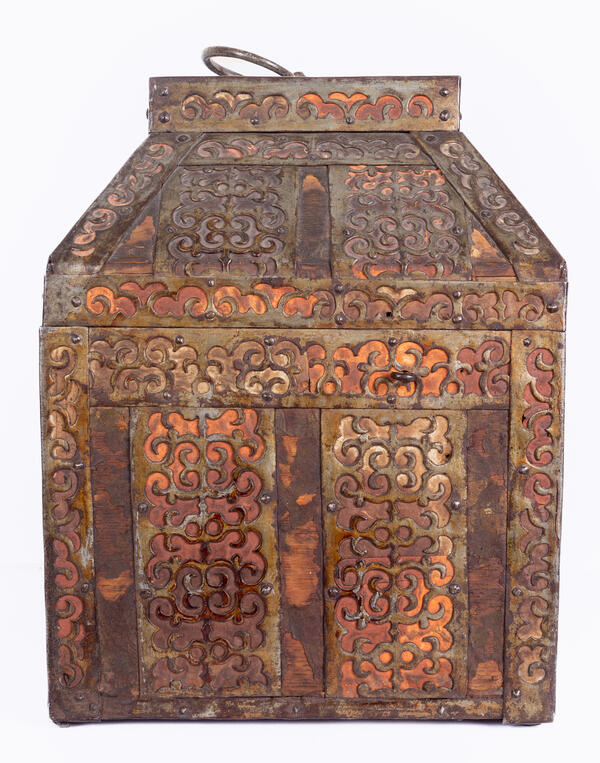
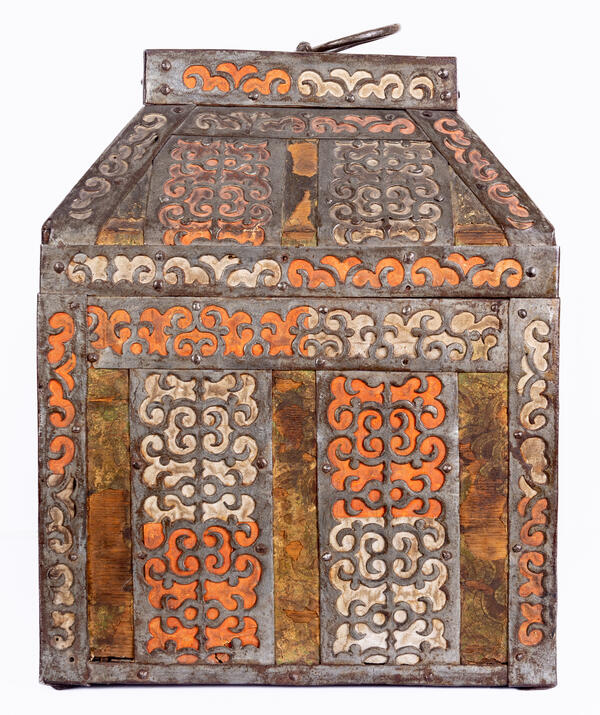
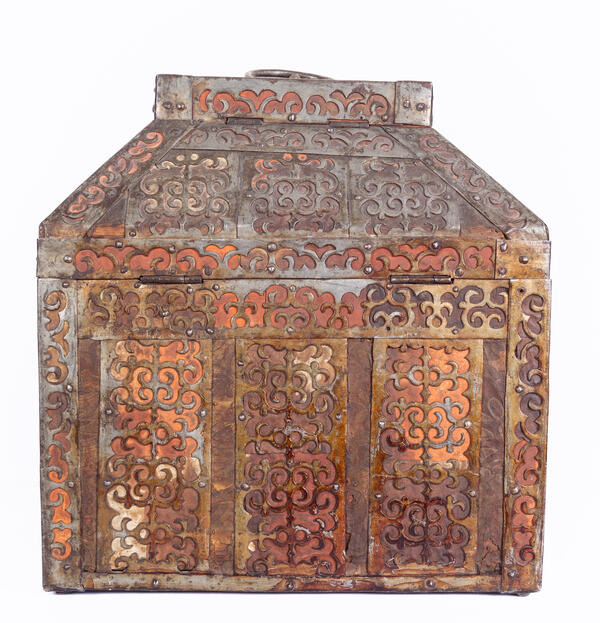
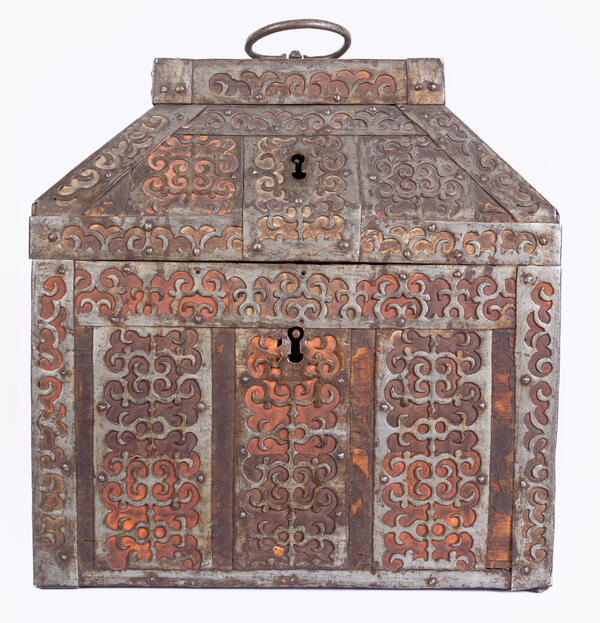
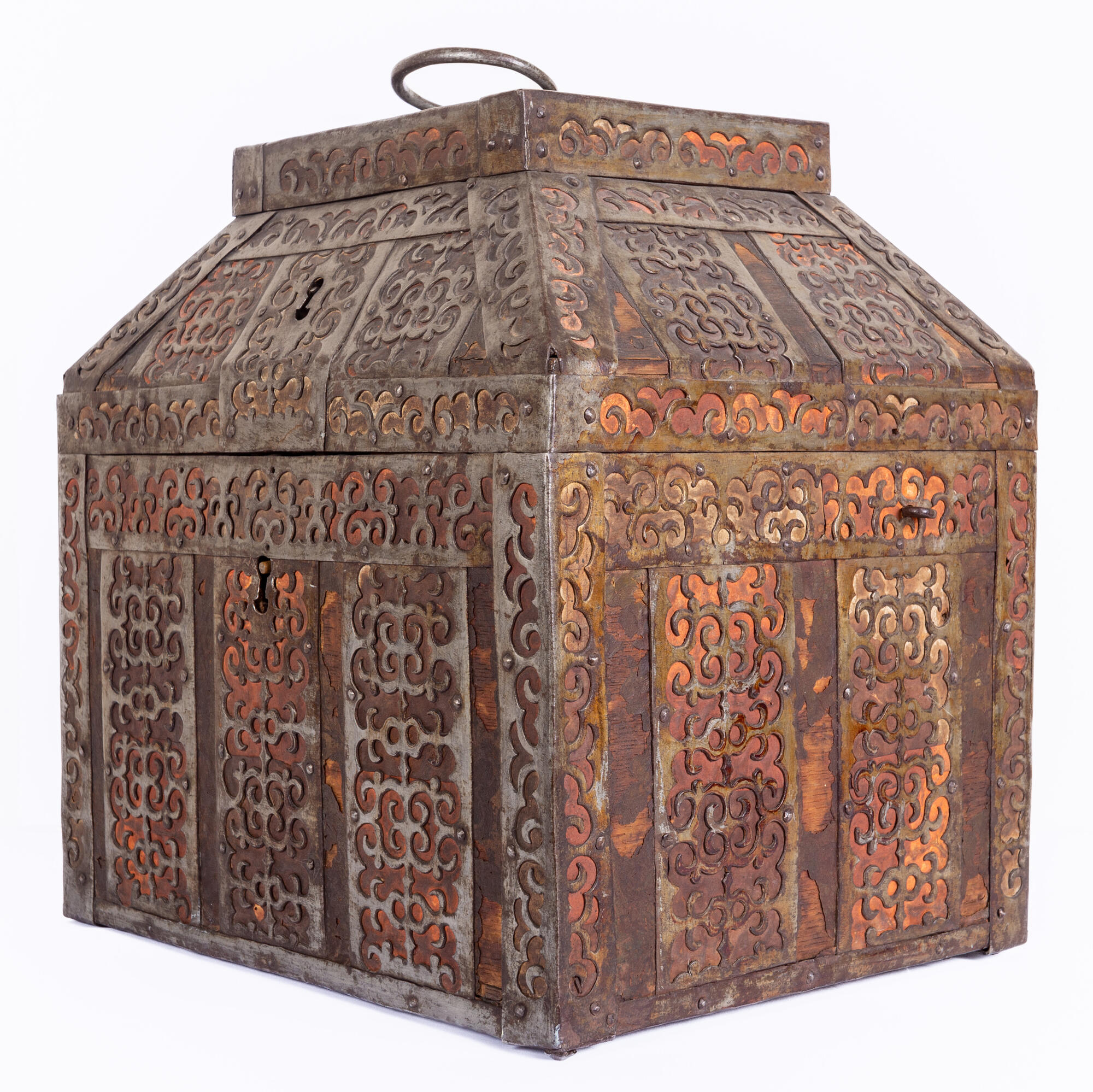
Unlike trunks, where clothes and fabrics were usually kept, chests were intended for storing less bulky, but more valuable things: money, documents and expensive jewelry. In the 17th–18th centuries, chests resembling small houses with hipped roofs with flat tops were popular.
Chests were usually made of oak, and their outer surface was decorated with strips of iron, which were attached parallel and perpendicular to each other. The ironwork was usually engraved or ornamented with openwork scrolls, floral motifs, diamond-shaped rosettes and ogee finials.
The surface of the chest under the iron bands was often painted, covered with paper, leather, cloth or colored mica. Expensive pieces were also decorated with enamels, bone plates, gilding and even semi-precious stones. As an indicator of family wealth, the chest stood in a prominent place, for example, on the bench.
Chests with hipped roofs (teremki) had two tiers, with a secret compartment. The secret compartment was under the high trapezoidal lid or formed the second bottom, hidden by a partition. A chest was locked with a reliable lock or several locks, and sometimes a mechanism was installed, the secret of which was revealed by a craftsman only to the customer.
In order not to lose the keys or have them stolen, the master or mistress wore them on their belt or on a cord around their necks.
The interior space of the chest was covered with leather, pasted with colored paper, drawings or covered with paintings depicting historical and epic stories with images of fantastic plants and animals or scenes from contemporary life.
Kholmogory and Veliky Ustyug were the main centers producing chests. From there “teremki” were taken to fairs, where they were sold for 1 to 10 rubles per piece, depending on how strong the material was, how sophisticated and numerous the locks and how rich the decorations were.