Coffee came to Europe from Ethiopia, where it has been known since the 9th century and where the saying “Coffee is our bread” is still in use. Initially, people ate red coffee berries whole or soaked them in water and made a drink from the pulp. Only in the Middle Ages they learned to dry and roast coffee beans. The Bedouin, nomadic Arab tribes, began to grind coffee using mortars. It was more convenient to transport and store coffee beans, so they were crushed only before brewing.
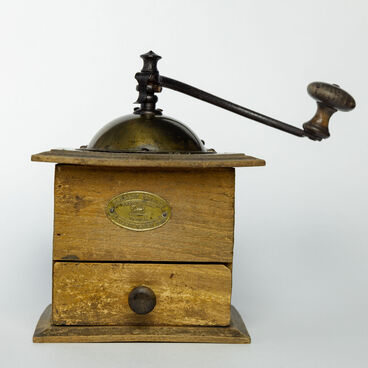
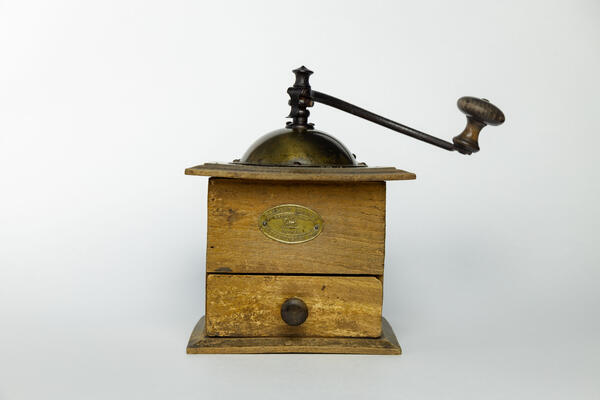
The first manual coffee grinders appeared in the 15th century. For five centuries, they used the same operating principle as the mill with grindstones that ground grain between the small gaps in the stones. When grinding coffee beans, the grindstones could be placed further apart to obtain a coarser grind, or they could be shifted closer together to get a fine powder. The grindstones were rotated using a handle, and the finished coffee powder was directed into a special drawer. The case of a simple coffee grinder was made of wood, while expensive grinders were painted with glaze and embellished with decorative elements.
In the 18th century, the first coffee shops opened in Europe, and coffee plantations were established in the European colonies — in Jamaica, Cuba and Brazil. The demand for manual coffee grinders was growing, and they were put into industrial production. The first factory for the production of coffee grinders was in France. That was the beginning of the Peugeot Citroën company, the second largest car manufacturer in Europe.
In 1810, the cousins Jean-Pierre and Jean-Frédéric Peugeot founded the Peugeot Frères company — the Brothers Peugeot. They turned a family grain mill in the east of France into their first foundry. The company started producing metal parts, work tools, spare parts, shredders for pepper, salt and coffee. Later, the Peugeot factory began to assemble bicycles and only then — cars.
The Peugeot brothers made minor changes to the working principle of the manual coffee grinder. Their devices were high-quality, ground quickly and produced different coffee grinds. The company offered a lifetime warranty for the steel mechanism, so the coffee grinder from the collection of the Glazov Museum of Local Lore can still be used for its intended purpose.
The first manual coffee grinders appeared in the 15th century. For five centuries, they used the same operating principle as the mill with grindstones that ground grain between the small gaps in the stones. When grinding coffee beans, the grindstones could be placed further apart to obtain a coarser grind, or they could be shifted closer together to get a fine powder. The grindstones were rotated using a handle, and the finished coffee powder was directed into a special drawer. The case of a simple coffee grinder was made of wood, while expensive grinders were painted with glaze and embellished with decorative elements.
In the 18th century, the first coffee shops opened in Europe, and coffee plantations were established in the European colonies — in Jamaica, Cuba and Brazil. The demand for manual coffee grinders was growing, and they were put into industrial production. The first factory for the production of coffee grinders was in France. That was the beginning of the Peugeot Citroën company, the second largest car manufacturer in Europe.
In 1810, the cousins Jean-Pierre and Jean-Frédéric Peugeot founded the Peugeot Frères company — the Brothers Peugeot. They turned a family grain mill in the east of France into their first foundry. The company started producing metal parts, work tools, spare parts, shredders for pepper, salt and coffee. Later, the Peugeot factory began to assemble bicycles and only then — cars.
The Peugeot brothers made minor changes to the working principle of the manual coffee grinder. Their devices were high-quality, ground quickly and produced different coffee grinds. The company offered a lifetime warranty for the steel mechanism, so the coffee grinder from the collection of the Glazov Museum of Local Lore can still be used for its intended purpose.