For many millennia, people have been lighting dwellings, yards and streets with a variety of devices: tallow, stearin and paraffin candles, rushlights and torches, as well as oil lamps. The lamps that burned kerosene, a flammable hydrocarbon liquid, which began to be produced from petroleum, did not appear until the mid-19th century.
In the early 1850s, the pharmacists Ignacy Łukasiewicz and Jan Zech in the city of Lviv were the first in the world to use kerosene for an oil lamp. The new lamps were many times more economical than candles, and the quality of lighting was better with kerosene burning.
From that time on, kerosene lamps became popular. In the early 1860s, they first appeared in Russia and soon spread throughout the country. By the end of the 19th century, there were already 38 enterprises engaged in the manufacture of kerosene lamps and glass for them.
There is an opinion that the increase in oil production in the world was directly related to the spread of kerosene lamps. At that time oil from Baku was transited through the city of Astrakhan, and from the early 1870s some Astrakhan merchants, including Grigory Vasilyevich Tetyushinov, started distilling oil and producing kerosene. Astrakhan also produced lamp glass — the so-called “chimney glass”. It was produced at the Sofiysky glass factory, established by merchant Alexei Nikolaevich Bekunov in 1886.
There were several types of kerosene lamps depending on their purpose and location: table lamps, wall lamps, pendant lamps, as well as those with reflectors, handles, on stands and others. Lamps of various shapes appeared, and they were made of metal, glass, porcelain, ceramics, polished rocks, such as marble or jasper.
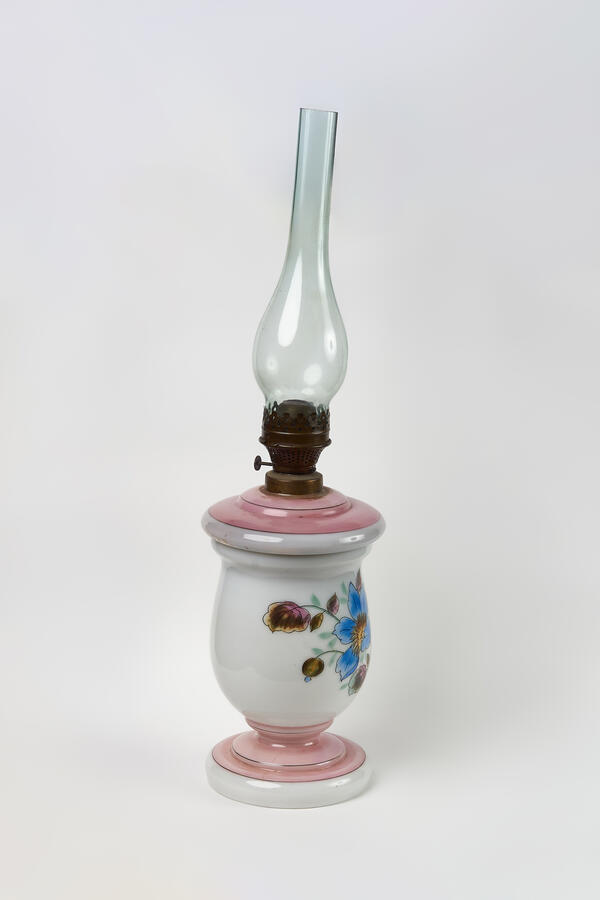
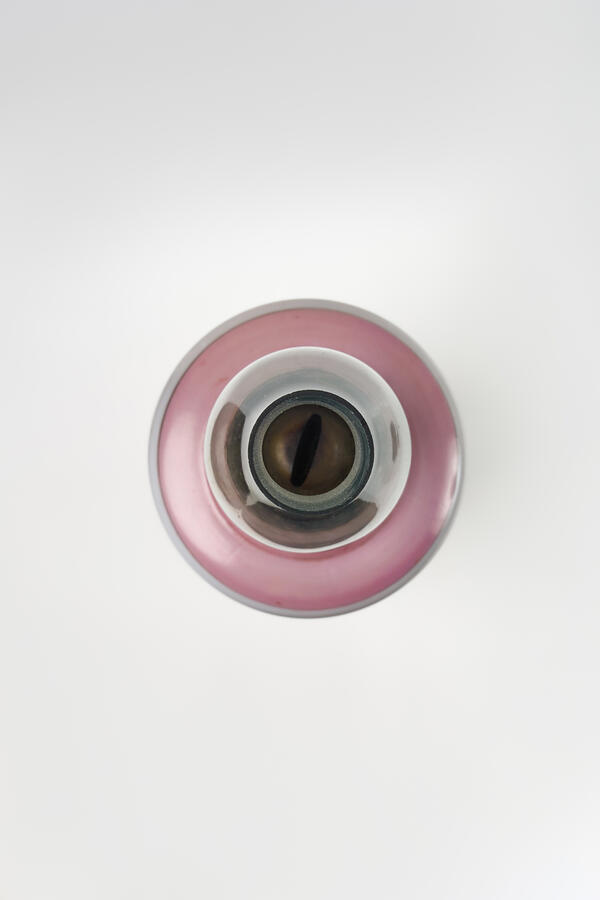
The kerosene lamp, which is presented in the
exhibition of the museum and cultural center “House of merchant Grigory
Tetyushinov” is a table lamp. Its decorative lampshade has not survived, but a
brass kerosene burner, a glass chimney, a kerosene reservoir and a