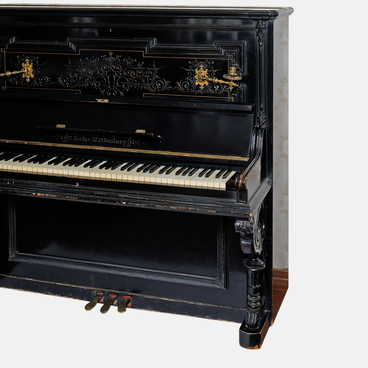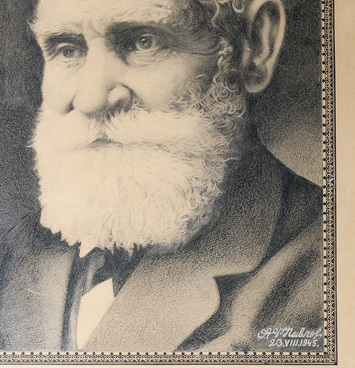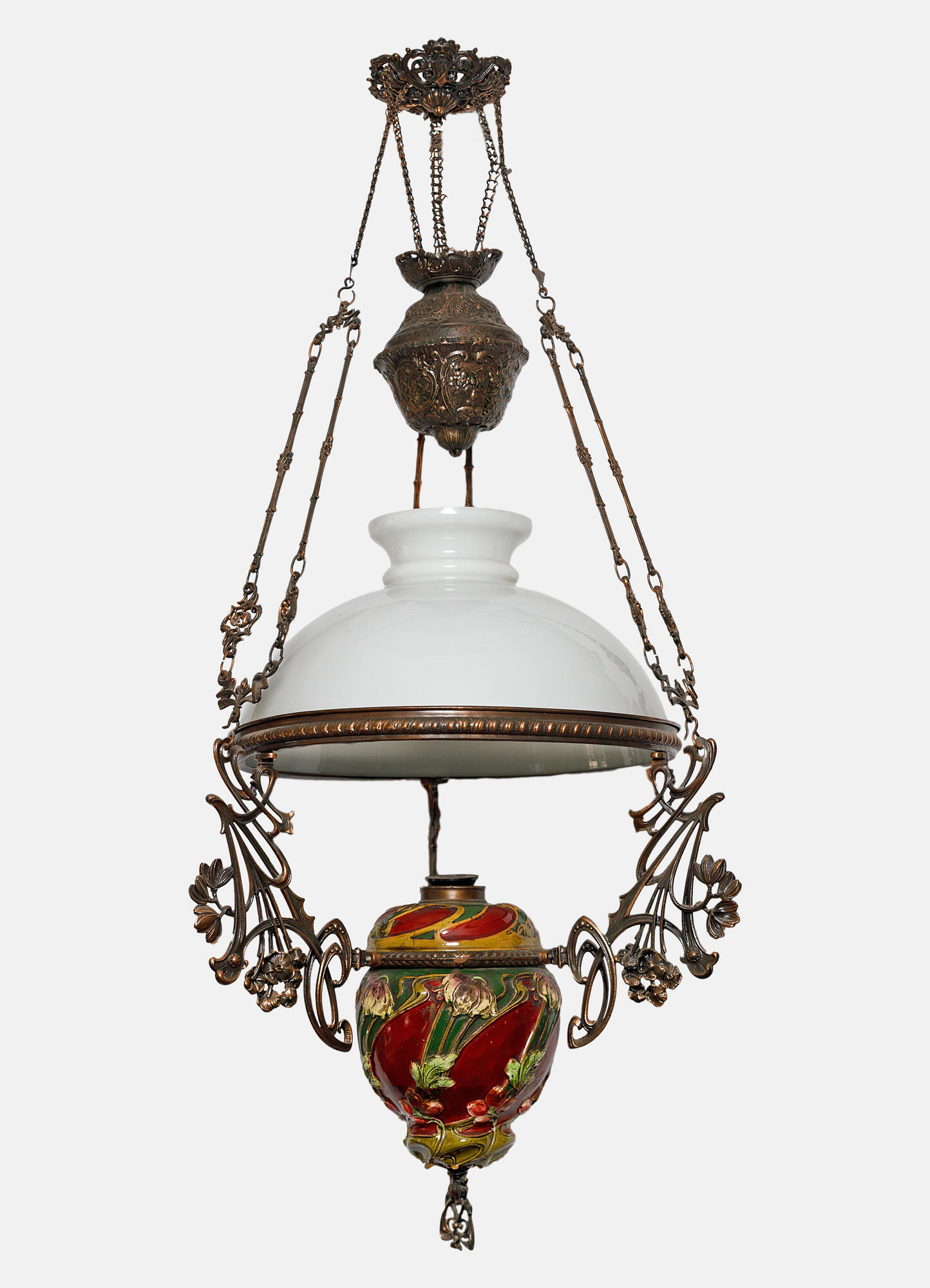


The living room in the Pavlov house was the main and most furnished room. All members of a large family gathered there in the evenings and received guests. It was furnished in the 19th-century fashion and had an oval table, a piano with candelabra, a cheval mirror, and a card table. A massive kerosene lamp, made in Art Nouveau style, added a certain touch of grandeur to the room. Bright in every respect, it always attracted everybody’s attention. The lamp illuminated the table, where the father Pyotr sat and read books to his five children and the mother Varvara was busy with needlework.
Like all illuminating devices at the turn of the 20th century, this lamp was fueled by kerosene. It was cheap, and its characteristic smell hardly ever left the house. Kerosene was poured into the lower section of the lamp, made in the form of a round jar. It was placed in a special fuel tank under a lampshade. It was shaped like a metal stand with a flat bottom and a decoration in the form of an openwork key. The dark cherry tank was metal and was embellished with a pattern: oblique dark green stripes with relief twigs, large white flowers and a rosette of leaves. The tank was closed with the lid, decorated in the same way, with a holder for a 0.7-inch wide wick.
A white frosted glass shade protected the bottom section of the lamp. The lamp was fixed to the ceiling with a special mount — a block that was connected to a figured weight. Three chains were going through it, which were also attached to the openwork plates of the frame below. This design ensured the mobility of the lamp: it could be adjusted higher toward the ceiling or lower toward the people sitting at the table. For this reason, the table was placed underneath the lamp in such a way that it illuminated its center.
The design of a kerosene lamp was quite simple, the light intensity could be changed by adjusting the thickness and length of the wick, and the glass shade made the lamp safe to use. Such thrifty lamps were very popular in Europe and Russia at the turn of the 20th century. They replaced candles and oil lamps, which produced too much smoke, were fire-hazardous and yet dim. In the first third of the 20th century, kerosene lamps were replaced by electric lighting, and the Primus stove, which is still used in hiking trips, adopted the principle of the kerosene lamp.
Like all illuminating devices at the turn of the 20th century, this lamp was fueled by kerosene. It was cheap, and its characteristic smell hardly ever left the house. Kerosene was poured into the lower section of the lamp, made in the form of a round jar. It was placed in a special fuel tank under a lampshade. It was shaped like a metal stand with a flat bottom and a decoration in the form of an openwork key. The dark cherry tank was metal and was embellished with a pattern: oblique dark green stripes with relief twigs, large white flowers and a rosette of leaves. The tank was closed with the lid, decorated in the same way, with a holder for a 0.7-inch wide wick.
A white frosted glass shade protected the bottom section of the lamp. The lamp was fixed to the ceiling with a special mount — a block that was connected to a figured weight. Three chains were going through it, which were also attached to the openwork plates of the frame below. This design ensured the mobility of the lamp: it could be adjusted higher toward the ceiling or lower toward the people sitting at the table. For this reason, the table was placed underneath the lamp in such a way that it illuminated its center.
The design of a kerosene lamp was quite simple, the light intensity could be changed by adjusting the thickness and length of the wick, and the glass shade made the lamp safe to use. Such thrifty lamps were very popular in Europe and Russia at the turn of the 20th century. They replaced candles and oil lamps, which produced too much smoke, were fire-hazardous and yet dim. In the first third of the 20th century, kerosene lamps were replaced by electric lighting, and the Primus stove, which is still used in hiking trips, adopted the principle of the kerosene lamp.