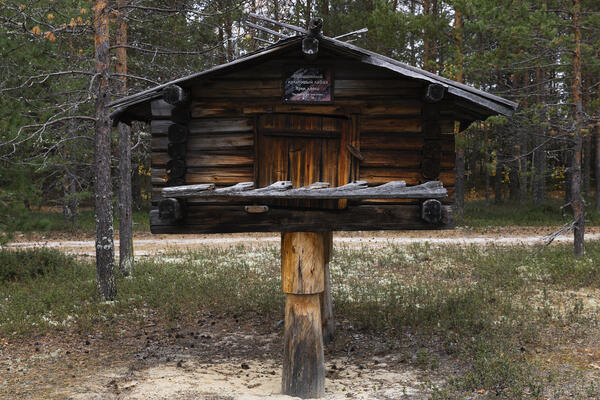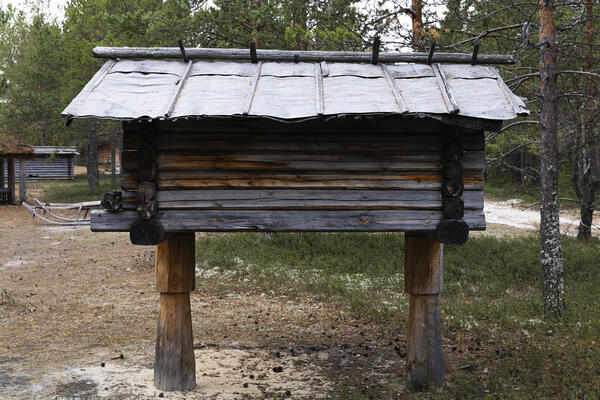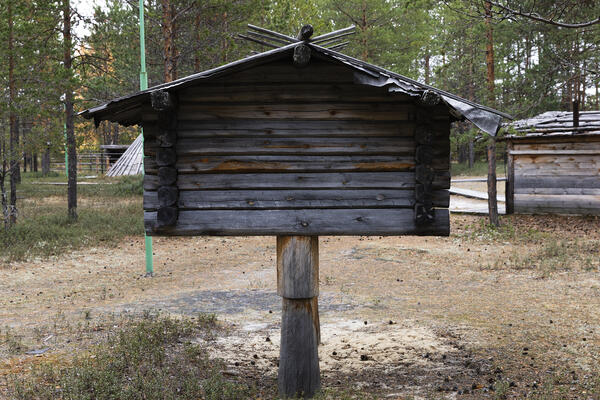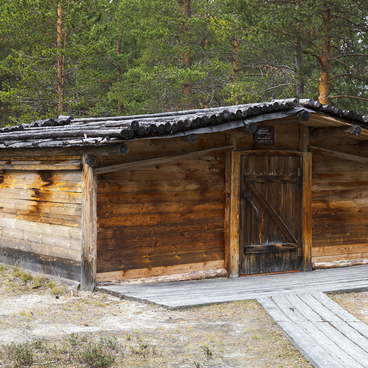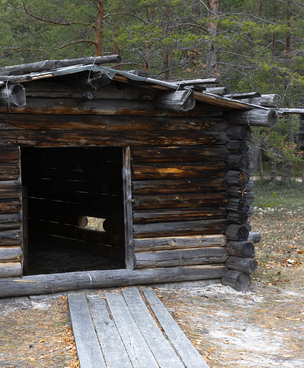


A labaz is a storehouse or barn of the indigenous peoples of the North. There are food storage, utility, and sacred storehouses. They are used to store food, spare equipment, personal belongings, winter and summer clothing, family heirlooms, and sacred objects. The walls of storehouses are not caulked ensuring the circulation of fresh air. This helps to protect the belongings stored inside the storehouse from deterioration.
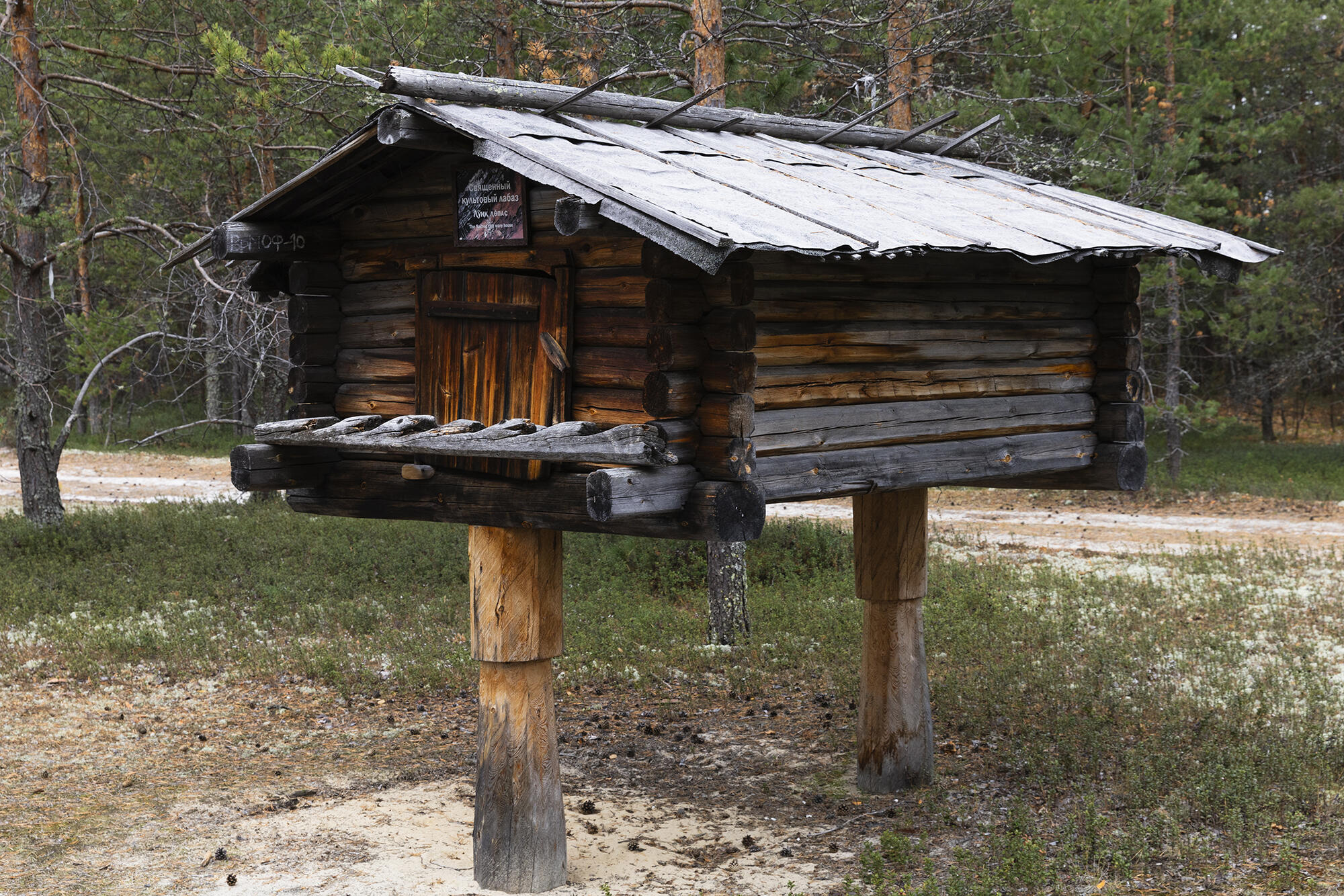
Special buildings for spirits worshiped by the Khanty are mentioned in the earliest written sources. The Ethnographic Park Museum of the Varyogan Village features a sacred storehouse of the Sardakov family.
Both before and after the Christianization of Siberia, the Khanty had special sanctuaries. A sacred labaz storehouse is a place where people worshiped pagan gods and observed the rites and rituals of their ancestors. They made sacrificial offerings, asking their ancestors for protection, love, health, and wealth.
A sacred storehouse was organized inside a camp or in a hard-to-reach area. It was used to store cult objects that were of great importance not only to the family but to the whole clan. These included bear skulls, skins of sacred animals, and figurines of family gods.
Sacred areas are usually identified by a shaman as an intermediary between humans and spirits. The main feature of a power place is beautiful, lush vegetation. The indigenous peoples of the North still strongly believe in the power of shamans. No economic activities are allowed in sacred areas because all plants and animals are considered the property of the local spirit.
When a sacred storehouse is constructed, special rites are observed. The construction can take place only on the growing moon, and the entrance is always arranged on the northern side so that people can bow to the south. Unlike utility storehouses, sacred ones can only be visited during the day, and women are not allowed inside.
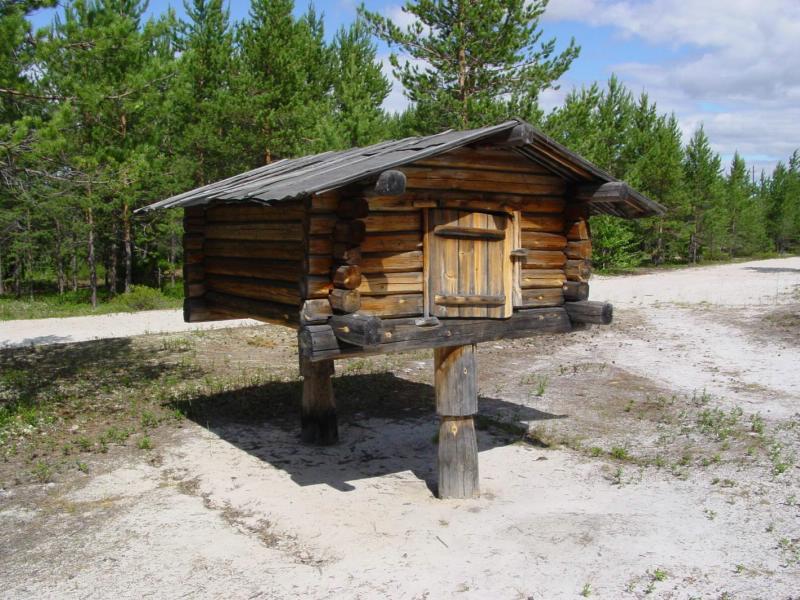
The walls of the storehouse are made of pine logs
according to ancient technology. They are joined at the corners using a “saddle
notch” technique. The barn is installed on two poles, which have a shaped ledge
with a notch cut to prevent rodents from climbing in. The gabled roof is
covered with split laths and roofing felt. The door is made of three boards.