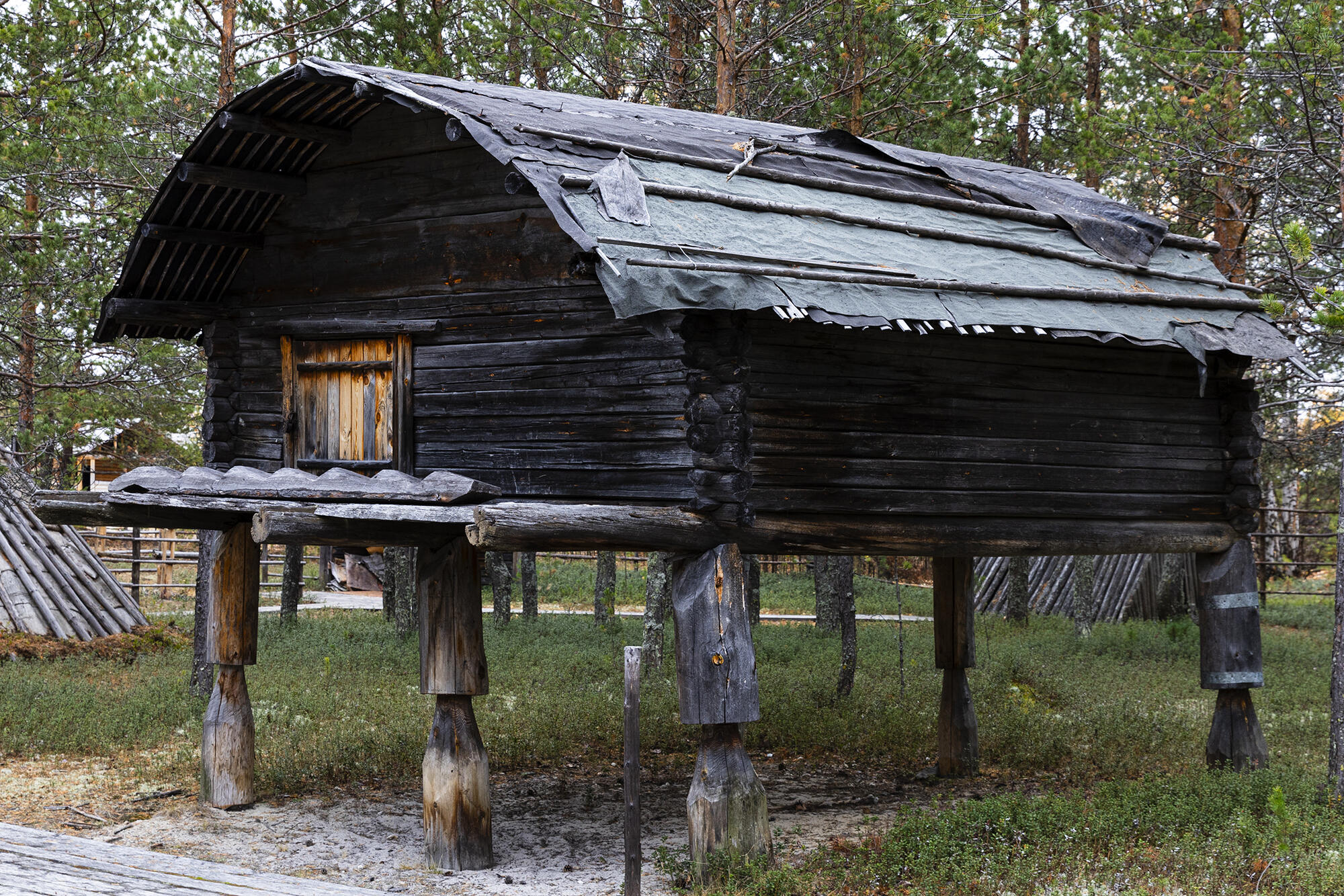


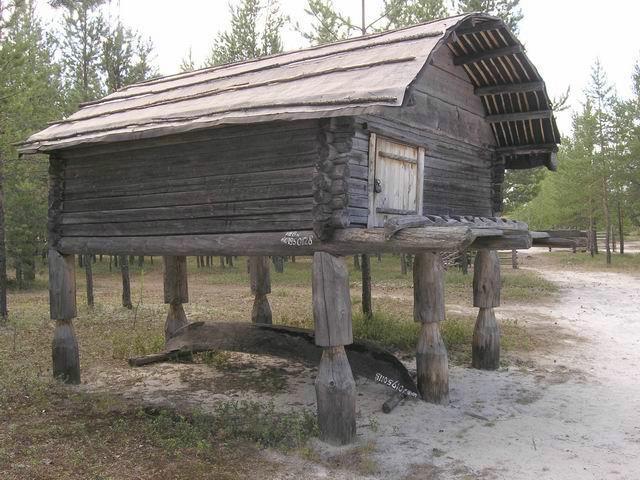
The indigenous peoples of the North, inhabitants of the taiga, lead a semi-sedentary lifestyle. It is largely determined by their subsistence activities — reindeer herding, hunting, and fishing. Each season, most families move from summer to winter camps. Khanty and Nenets camps feature unique types of buildings. One of them is the labaz storehouse.
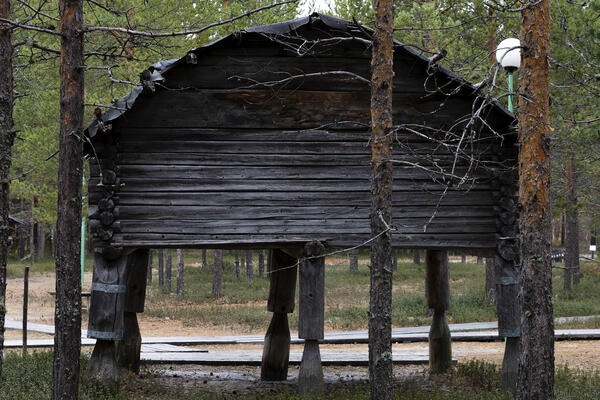
A storehouse (also called “labaz”) is a wooden cabin raised above the ground on poles. It is necessarily made of logs. There are food storage, utility, and sacred storehouses. They are used to store food, spare equipment, personal belongings, winter and summer clothing, family heirlooms, and valuable possessions. The walls of storehouses are not caulked ensuring the circulation of fresh air. This helps to protect the belongings stored inside the storehouse from deterioration.
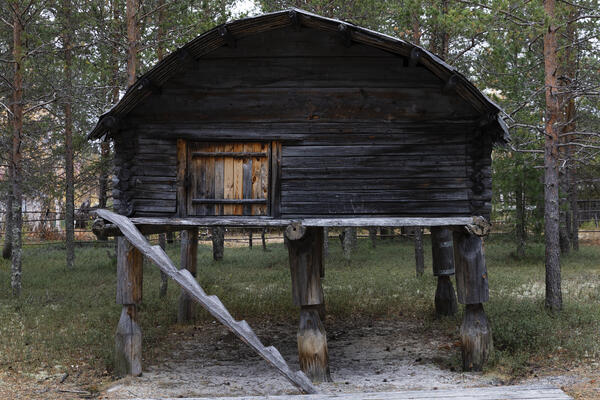
A storehouse can be installed on four or six supporting poles. Unlike the buildings standing on the ground, it never gets snowed under and can easily be entered in winter. There is always a wooden ladder with notches near the storehouse, which can be put up as needed. Sleds, hunting traps, fishing nets, boats, oars, and dugout canoes can be stored under high storehouses, protected from the elements.
When trade routes were established, storehouses served as places where goods could be exchanged. Merchants brought their goods by sled in winter and by boat in summer and stacked them in the spacious storehouse. The locals could arrive at the unguarded “self-service store” whenever it was convenient for them, take the necessary food or other products, and in return leave their furs in the storehouse. This trade, based on the mutual trust between Russian merchants and indigenous peoples, lasted until the establishment of the Soviet regime.
According to ancient technology, the Khanty
assembled their storehouses without a single nail. The storehouse on the
territory of the Ethnographic Park Museum of the Varyogan Village was built in
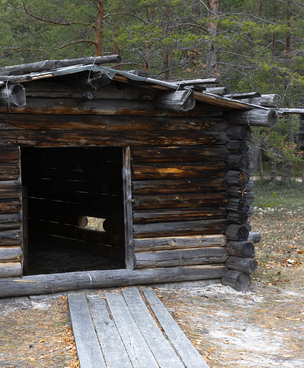
the same way. Its walls are made of logs which are connected using the scribes
at the ends. This technique is called “saddle notch”. The side walls are made
of eight rows of logs, and the front and back walls — of eleven rows. The
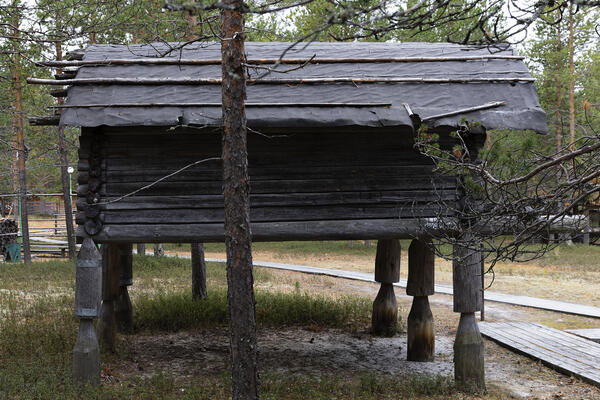
storehouse has a semicircular gabled roof with nine wooden poles. It is covered
with cherry wood split laths and roofing felt on top. The door is made of nine
boards. The storehouse stands on six poles.