

“You are greeted by your clothes” is an old proverb that is confirmed by ethnographers, because clothing immediately provides a lot of information about the wearer and their social and cultural background. National clothing is directly influenced by the traditions of the people, their beliefs, worldview, place of living, and arts and crafts.
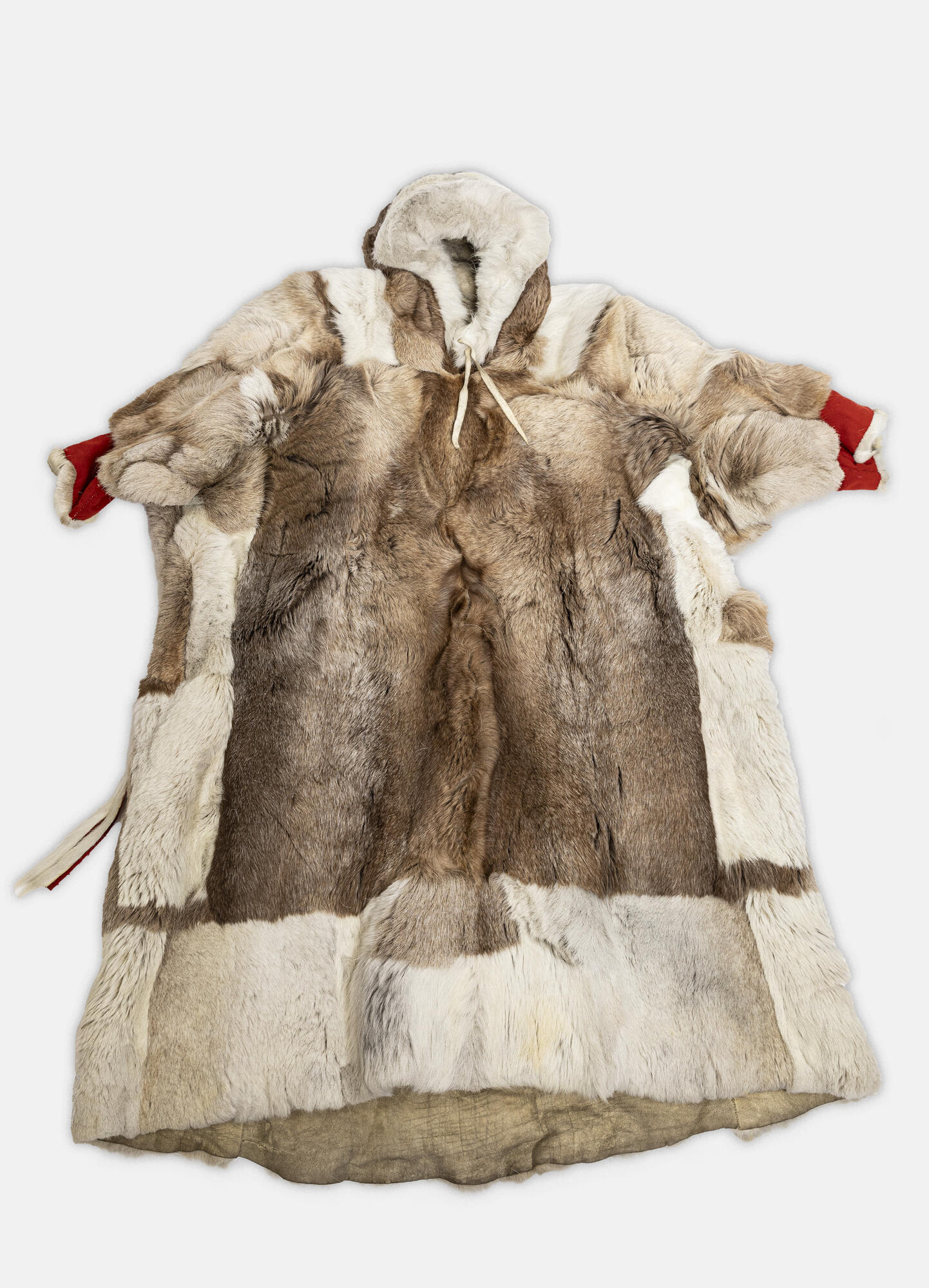
The kumysh, or the gus, is a traditional men’s outwear of the indigenous peoples of the North. It is a coat with a hood. It is put on over the head because it does not have a front opening, just like the outerwear of reindeer herders of other northern peoples. There are two types of fur clothes without an opening in the front — the malitsa and the kumysh. The former was worn with fur inward, and the kumysh — with fur outward. They were made from the hides of reindeer obtained in winter because the pile was thicker and longer than in summer. Khanty summer clothes had the same cut but were made of cloth or suede.
The malitsa could be worn every day, and the kumysh was worn over the malitsa when traveling, in frosts and snowstorms. Wearing such clothing, a person could endure a frost below -50°C for several hours. The cut of the kumysh is very similar to that of the malitsa, but the kumysh is much longer and wider. The back of the kumysh is cut together with the hood, and the mittens are not sewn to the coat. The hood is trimmed with Arctic fox tails or white deer fur which is also sewn at the bottom of the kumysh as a hem.
Clothes made of hides and furs were sewn with tendon threads which were very strong and durable. The kumysh is worn only outdoors and should never be brought inside the tent. In case of unplanned stops on the road, the kumysh can serve as a sleeping bag. Four hides from six-month-old deer and one from an adult reindeer are used to make a kumysh. The coat was typically decorated with tassels made of strips of fur and cloth sewn in a row on the back. A white kumysh was considered especially beautiful.
The kumysh from the collection of the Ethnographic
Museum of the Varyogan Village is made of reindeer fur with the pile outward,
the sleeves are trimmed with red cloth, and the hood is tied with a strap made
of rovduga — reindeer suede. On the back, the coat’s sides are decorated with six
pairs of fur straps.