#1
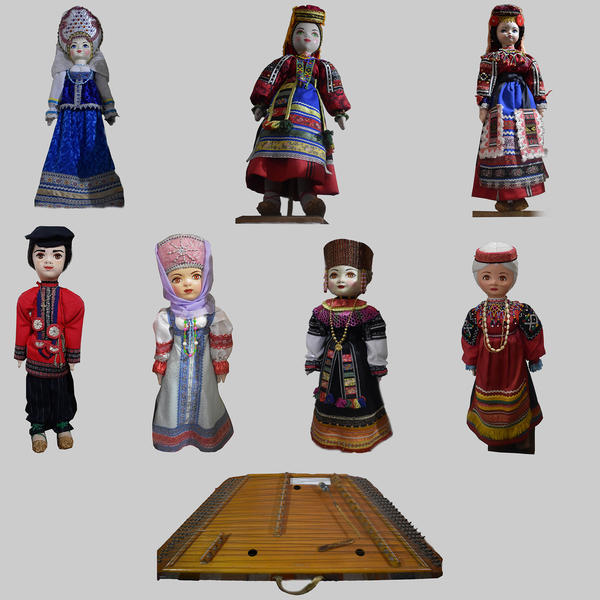
Dolls of Voronezh, Valdai, Gvazda, Puzevo, Klepovka, The hammered cymbal - a musical instrument
#2
#9
#10
The folk costume is an important component of Russian history. Each geographic area had its own individual characteristics, unique elements, vibrant motifs. Wedding dresses also varied in different governorates in colour palette, materials in use, decorations.
The traditional clothes artistic design retains ethnic features and evidence of interaction between different people. In the late 19th – early 20th centuries, within the Voronezh governorate territory, several types of traditional costumes appeared, each of them in its own way aesthetically expressive.
Depending on origin and customs, the materials' texture was different. The compositions of sewn and removable decoration are striking in variety. The colour scheme, technological and artistic techniques also differ. Decorative accessories at the same time preserved ancient traditions and incorporated new trends reflecting changes in peasant life.
The national costume formation in the Voronezh region was happening in the following way. Firstly, there were a lot of visiting people – peasants from the Tambov, Orel, Moscow governorates – they brought their own costume traditions. Secondly, in the 17th century a significant amount of Ukrainians moved to the Voronezh territory, and thus they also influenced the clothing style.
The Voronezh region women’s wedding wear was a white or red long shirt embroidered with woolen ornaments. Festive dresses were carefully whitened with ashes, and for everyday wear, they preferred to decorate clothes with embroidered patterns. A wedding shirt was often complemented with braids, fringes. A shirt with red flaps framed by beautiful ornaments was one of the most popular among local brides variants.
On festive days a ''kundya'' (a black vest) was worn over the shirt. It was also generously embroidered, and its sleeves were decorated with splendid rushing and red edge piping. Another key element of a costume was ponyova, a piece of clothes made of woven woolen fabric, usually black, reminiscent of a modern skirt. The bottom of ponyova was decorated with braids – i.e. with ribbons and multicoloured lacing.
Traditionally, all girls wore headscarves before marriage, while brides wore beautiful hats. In every district they differed, but one of the most common was a ''shlychka'' - a red hat that tightly pressed hair. It was worn over a hair bun. Another popular traditional headdress was a kokoshnik embroidered with beads.
Feet were shod in ''chuniki'' (wicker boots). The sole was made of wood or genuine leather so that it was wiped more slowly. Women wore knee-high socks, which they knitted themselves with colorful threads. A striking element of a women’s wedding attire was a breast ornament, usually made of voluminous beads. Often, girls weaved multi-tiered small beads necklaces and fixed them on a thin strip of fabric tied at the back of the neck. It was believed that such amulets would protect brides from evil forces and the evil eye.
On festive days a ''kundya'' (a black vest) was worn over the shirt. It was also generously embroidered, and its sleeves were decorated with splendid rushing and red edge piping. Another key element of a costume was ponyova, a piece of clothes made of woven woolen fabric, usually black, reminiscent of a modern skirt. The bottom of ponyova was decorated with braids – i.e. with ribbons and multicoloured lacing.
Traditionally, all girls wore headscarves before marriage, while brides wore beautiful hats. In every district they differed, but one of the most common was a ''shlychka'' - a red hat that tightly pressed hair. It was worn over a hair bun. Another popular traditional headdress was a kokoshnik embroidered with beads.
The traditional clothes artistic design retains ethnic features and evidence of interaction between different people. In the late 19th – early 20th centuries, within the Voronezh governorate territory, several types of traditional costumes appeared, each of them in its own way aesthetically expressive.
Depending on origin and customs, the materials' texture was different. The compositions of sewn and removable decoration are striking in variety. The colour scheme, technological and artistic techniques also differ. Decorative accessories at the same time preserved ancient traditions and incorporated new trends reflecting changes in peasant life.
The national costume formation in the Voronezh region was happening in the following way. Firstly, there were a lot of visiting people – peasants from the Tambov, Orel, Moscow governorates – they brought their own costume traditions. Secondly, in the 17th century a significant amount of Ukrainians moved to the Voronezh territory, and thus they also influenced the clothing style.
The Voronezh region women’s wedding wear was a white or red long shirt embroidered with woolen ornaments. Festive dresses were carefully whitened with ashes, and for everyday wear, they preferred to decorate clothes with embroidered patterns. A wedding shirt was often complemented with braids, fringes. A shirt with red flaps framed by beautiful ornaments was one of the most popular among local brides variants.
On festive days a ''kundya'' (a black vest) was worn over the shirt. It was also generously embroidered, and its sleeves were decorated with splendid rushing and red edge piping. Another key element of a costume was ponyova, a piece of clothes made of woven woolen fabric, usually black, reminiscent of a modern skirt. The bottom of ponyova was decorated with braids – i.e. with ribbons and multicoloured lacing.
Traditionally, all girls wore headscarves before marriage, while brides wore beautiful hats. In every district they differed, but one of the most common was a ''shlychka'' - a red hat that tightly pressed hair. It was worn over a hair bun. Another popular traditional headdress was a kokoshnik embroidered with beads.
Feet were shod in ''chuniki'' (wicker boots). The sole was made of wood or genuine leather so that it was wiped more slowly. Women wore knee-high socks, which they knitted themselves with colorful threads. A striking element of a women’s wedding attire was a breast ornament, usually made of voluminous beads. Often, girls weaved multi-tiered small beads necklaces and fixed them on a thin strip of fabric tied at the back of the neck. It was believed that such amulets would protect brides from evil forces and the evil eye.
On festive days a ''kundya'' (a black vest) was worn over the shirt. It was also generously embroidered, and its sleeves were decorated with splendid rushing and red edge piping. Another key element of a costume was ponyova, a piece of clothes made of woven woolen fabric, usually black, reminiscent of a modern skirt. The bottom of ponyova was decorated with braids – i.e. with ribbons and multicoloured lacing.
Traditionally, all girls wore headscarves before marriage, while brides wore beautiful hats. In every district they differed, but one of the most common was a ''shlychka'' - a red hat that tightly pressed hair. It was worn over a hair bun. Another popular traditional headdress was a kokoshnik embroidered with beads.
#11
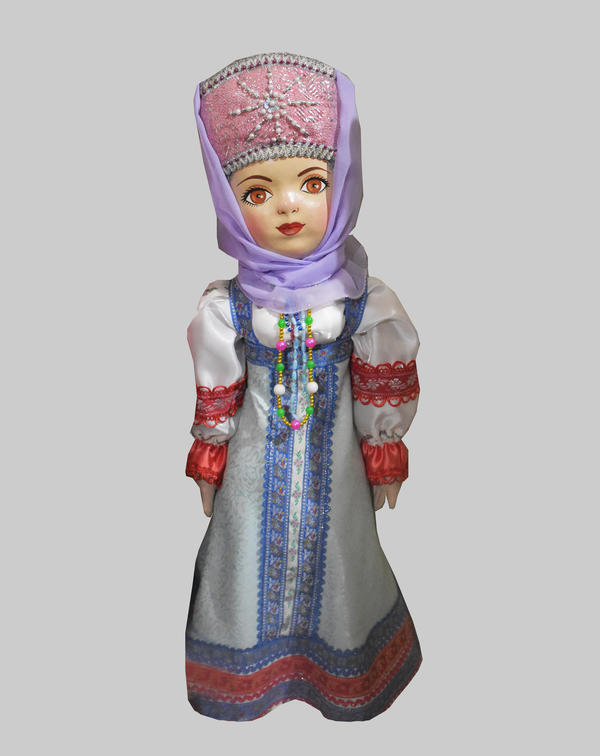
Full name: Doll in a Folk Costume The Girl of Marriageable Age
Author: Valentina Yakovlevna Gorbacheva
Date: the 20th century
Dimensions: 70 cm
Collection: Boguchar District Museum of Local History
Copyright: Boguchar District Museum of Local History
Goskatalog Number: 16046117
Author: Valentina Yakovlevna Gorbacheva
Date: the 20th century
Dimensions: 70 cm
Collection: Boguchar District Museum of Local History
Copyright: Boguchar District Museum of Local History
Goskatalog Number: 16046117
#3
Doll in old costume from village Gvazda
#12
#13
In every Russian region, the national costume has its own characteristics; the differences are in colour shades, structure, decor and ornament. The most radical differences have always been observed in the traditional clothing of the North and South of Russia. The Russian South is especially famous for its variety of folk costumes thanks to multinationality of these lands.
The region of Voronezh is the most prominent representative of Southern Russia, here folk costume’s peculiar features are the most visible. This is due to the regional settlement history. In the 16th century, servicemen, artisans, free Cossacks, immigrants from Ukrainian lands began to settle down on these boundless fertile territories. Numerous families migrated here from other regions. Every family brought its own customs to the land of Voronezh, including some national costume traditions. Two centuries later, Russian aristocracy and nobility from the capital started to receive allotments within this already inhabited land.
The Voronezh provincial costume was sewn from fabrics based on wool, nettle and hemp. Hemp flourished on ''chernozyom'' (literally, black soils) and was used not only in producing tissues, but also in cooking. Hemp oil came into use in Southern Russian regions much earlier than sunflower. Hemp seeds were ground into flour; later it was used in baking nutritious flatbread and making flour porridge called ''salamata''.
''Female'' hemp stems and leaves were more rigid, for this reason they were used for ropes and twine. Whereas thinner and more delicate “male” stems were used in weaving. In the old days, the choice of fabrics was narrow, so most of the national clothes were sewn from hemp cloths: shirts, zapans, aprons. Factory fabrics were considered a luxury, only wealthy families could afford them. Peasants wore homespun clothes. In everyday life, homespun canvases were called ''zamashkas''.
Embroidery with clear geometric patterns was characteristic of the province. A diamond-shaped ornament was especially popular among local embroiderers. Often during the embroidering process rhombus sides were continued with straight lines crossing at peaks. This pattern was called a ''burr'' and considered a symbol of life and fertility.
Each Voronezh village had its own peculiarities in clothing. The Buturlinovsky district traditional women’s costume had its own nuances and unique details which were not characteristic of clothing from other areas. Women’s costumes included a shirt, a ponyova, a zapan, an apron, a corset (fitted blouse), a tanned fur coat, bast shoes or boots, monists and beads, earrings or ''yantariki ''(amber). As a headdress, they wore a ''kichka'' or ''soroka'' (magpie), a kokoshnik, a scarf and a shawl.
The folk costume of Buturlinovsky district absorbed South Russian and Ryazan clothing traditions, as some villages, such as Klepovka and Gvazda, were founded by immigrants from the Ryazan region. We can trace connection between inhabitants of the Buturlinovsky villages and the Ryazan province traditions by speech nuances, similarity of weaving techniques and decorating costumes, producing goods for home use.
The region of Voronezh is the most prominent representative of Southern Russia, here folk costume’s peculiar features are the most visible. This is due to the regional settlement history. In the 16th century, servicemen, artisans, free Cossacks, immigrants from Ukrainian lands began to settle down on these boundless fertile territories. Numerous families migrated here from other regions. Every family brought its own customs to the land of Voronezh, including some national costume traditions. Two centuries later, Russian aristocracy and nobility from the capital started to receive allotments within this already inhabited land.
The Voronezh provincial costume was sewn from fabrics based on wool, nettle and hemp. Hemp flourished on ''chernozyom'' (literally, black soils) and was used not only in producing tissues, but also in cooking. Hemp oil came into use in Southern Russian regions much earlier than sunflower. Hemp seeds were ground into flour; later it was used in baking nutritious flatbread and making flour porridge called ''salamata''.
''Female'' hemp stems and leaves were more rigid, for this reason they were used for ropes and twine. Whereas thinner and more delicate “male” stems were used in weaving. In the old days, the choice of fabrics was narrow, so most of the national clothes were sewn from hemp cloths: shirts, zapans, aprons. Factory fabrics were considered a luxury, only wealthy families could afford them. Peasants wore homespun clothes. In everyday life, homespun canvases were called ''zamashkas''.
Embroidery with clear geometric patterns was characteristic of the province. A diamond-shaped ornament was especially popular among local embroiderers. Often during the embroidering process rhombus sides were continued with straight lines crossing at peaks. This pattern was called a ''burr'' and considered a symbol of life and fertility.
Each Voronezh village had its own peculiarities in clothing. The Buturlinovsky district traditional women’s costume had its own nuances and unique details which were not characteristic of clothing from other areas. Women’s costumes included a shirt, a ponyova, a zapan, an apron, a corset (fitted blouse), a tanned fur coat, bast shoes or boots, monists and beads, earrings or ''yantariki ''(amber). As a headdress, they wore a ''kichka'' or ''soroka'' (magpie), a kokoshnik, a scarf and a shawl.
The folk costume of Buturlinovsky district absorbed South Russian and Ryazan clothing traditions, as some villages, such as Klepovka and Gvazda, were founded by immigrants from the Ryazan region. We can trace connection between inhabitants of the Buturlinovsky villages and the Ryazan province traditions by speech nuances, similarity of weaving techniques and decorating costumes, producing goods for home use.
#14
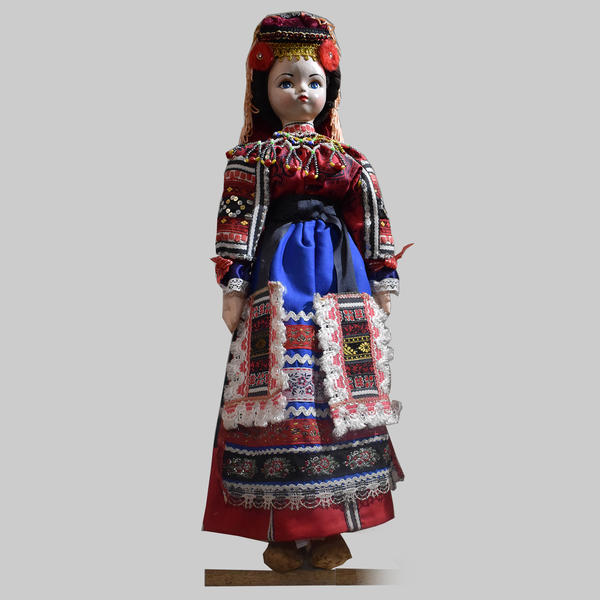
Full name: Doll in old costume from village Gvazda of Buturlinovsky district
Author: Valentina Yakovlevna Gorbacheva
Date: the 20th century
Dimensions: 58 cm
Collection: Boguchar District Museum of Local History
Copyright: Boguchar District Museum of Local History
Goskatalog Number: 16046111
Author: Valentina Yakovlevna Gorbacheva
Date: the 20th century
Dimensions: 58 cm
Collection: Boguchar District Museum of Local History
Copyright: Boguchar District Museum of Local History
Goskatalog Number: 16046111
#4
Doll in Gvazda Village Traditional Costume
#15
#16
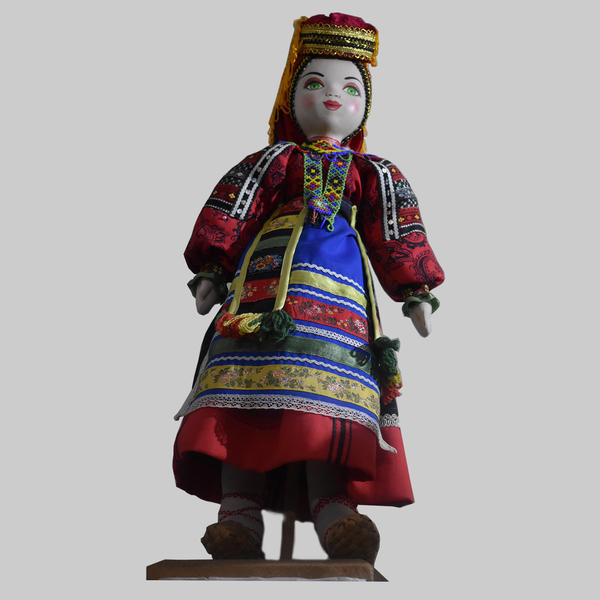
The doll in traditional costume of the Buturlino District Gvazda Village as if takes us back to the late 19th – early 20th centuries, to the time when, by the woman’s clothes, one could say a lot about her social status, age, mood, and the territory where she lived.
As the common folk say, Gvazda Village derived its name from the word gvozd (“nail”). They made nails for vessels here; in the nearby village of Puzevo, hulls were made, and in Klepovka, hulls were plated. Peter the First visited these parts, and even, in his own person, gave the name to the nearby Shipov Forest (from the word “ship, vessel”). But there is an opinion that Gvazda got its name much earlier and it has nothing to do with nails. In Dal’s dictionary, this word means ‘mud, swampland’.
The Buturlino District traditional costume combines elements of South Russian and Ryazan garments. Women wore a shirt and poneva – homespun woolen skirt from medley representing a piece of cloth tied at the waist. On top of the poneva, an apron was worn. Women decorated themselves with a few layers of beads and earrings, putting on the head a kichka, soroka, or shawl, and, on holidays, quite often, a richly embroidered kokoshnik which could be passed from one generation over to another. In the winter, a fur coat or a shawl was added to this set.
Unlike many other regions where women’s shirts were usually white, in Buturlino District, people were keen on the red color. Very often, shirts were made from the red cloth, this color was associated with beauty. Another color mandatorily present in each traditional costume was black – the color of the earth and fertility.
In all cases, garments were decorated, the shirt sleeves and poneva were ornamented with embroidery, with absolutely different meanings encoded in different embroidered symbols. Thus, a rhomb is an ancient symbol of the sun, a sign of strength and power. A cross in a circle is another symbol of the sun which can protect from evil. A wavy line is a symbol of water, a grid – a symbol of fire.
The doll in the traditional costume is created by Valentina Y. Gorbacheva specifically for the Boguchar District Museum of Local History. The collection of authentic traditional costumes of the Voronezh Province formed the basis for the doll creation. Boguchar dolls were exhibited in the Central Exhibition Hall of Applied Arts, in the Olympic Sports Complex in Moscow, are kept in museums and private collections of different countries.
As the common folk say, Gvazda Village derived its name from the word gvozd (“nail”). They made nails for vessels here; in the nearby village of Puzevo, hulls were made, and in Klepovka, hulls were plated. Peter the First visited these parts, and even, in his own person, gave the name to the nearby Shipov Forest (from the word “ship, vessel”). But there is an opinion that Gvazda got its name much earlier and it has nothing to do with nails. In Dal’s dictionary, this word means ‘mud, swampland’.
The Buturlino District traditional costume combines elements of South Russian and Ryazan garments. Women wore a shirt and poneva – homespun woolen skirt from medley representing a piece of cloth tied at the waist. On top of the poneva, an apron was worn. Women decorated themselves with a few layers of beads and earrings, putting on the head a kichka, soroka, or shawl, and, on holidays, quite often, a richly embroidered kokoshnik which could be passed from one generation over to another. In the winter, a fur coat or a shawl was added to this set.
Unlike many other regions where women’s shirts were usually white, in Buturlino District, people were keen on the red color. Very often, shirts were made from the red cloth, this color was associated with beauty. Another color mandatorily present in each traditional costume was black – the color of the earth and fertility.
In all cases, garments were decorated, the shirt sleeves and poneva were ornamented with embroidery, with absolutely different meanings encoded in different embroidered symbols. Thus, a rhomb is an ancient symbol of the sun, a sign of strength and power. A cross in a circle is another symbol of the sun which can protect from evil. A wavy line is a symbol of water, a grid – a symbol of fire.
The doll in the traditional costume is created by Valentina Y. Gorbacheva specifically for the Boguchar District Museum of Local History. The collection of authentic traditional costumes of the Voronezh Province formed the basis for the doll creation. Boguchar dolls were exhibited in the Central Exhibition Hall of Applied Arts, in the Olympic Sports Complex in Moscow, are kept in museums and private collections of different countries.
#17
Full name: Doll in Traditional Costume of the Voronezh Province Buturlino District Gvazda Village
Author: Valentina Yakovlevna Gorbacheva
Date: 20th century
Dimensions: 62 cm
Collection: Boguchar District Museum of Local History
Copyright: Boguchar District Museum of Local History
Goskatalog Number: 16046127
Author: Valentina Yakovlevna Gorbacheva
Date: 20th century
Dimensions: 62 cm
Collection: Boguchar District Museum of Local History
Copyright: Boguchar District Museum of Local History
Goskatalog Number: 16046127
#5
Philipp Doll
#18
#19
The specific feature of the Voronezh Province folk costume is that, due to the large influx of newcomers, it was repeatedly modified. Peasants from the Tambov, Oryol and Moscow lands came to the Voronezh Province, and many Ukrainians settled there in the 17th century. Each ethnic group brought its own traditions and introduced new elements into the Voronezh folk costume.
Men’s and women’s peasant clothes were made of natural plant fibers and fabrics manufactured from processed raw animal materials, the most popular ones for making clothing fabrics were wool, nettle and hemp. The colors of clothes were of major importance, as they reflected both aesthetic preferences and the peasants’ way of life. Three colors dominated the Voronezh costume - black, white and red. Black - the color of black soil - symbolized mother earth. So in the Voronezh Province it meant peace and joy at home as well as prosperity of the family and household. White color was a symbol of purity, renewal and victory of the spirit over the flesh; red meant beauty, love and fullness of life.
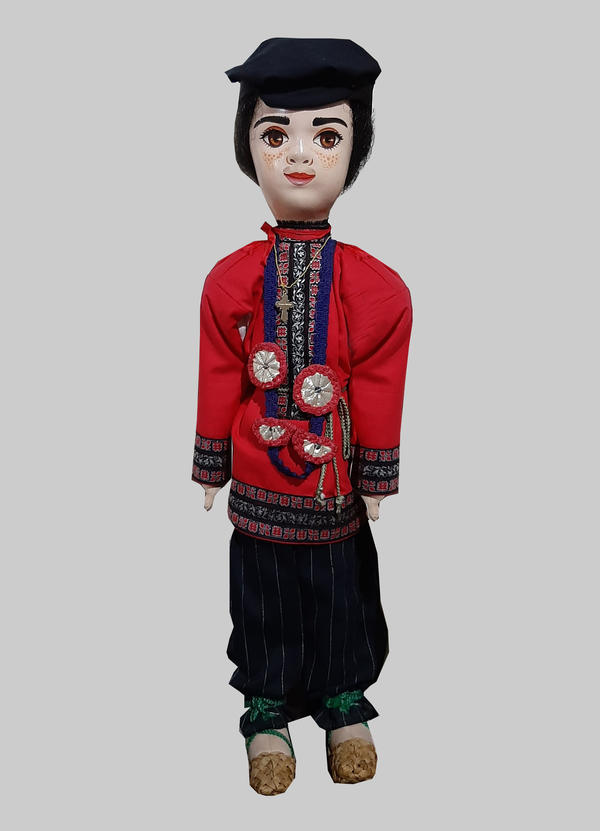
In contrast to the women’s outfits, the men’s peasant costume was quite simple; it consisted of black trousers, a shirt and a belt. The shirt had an angled collar line; it was made of a strong fabric of blue or red color, and was belted. The belt became an integral part of the men’s outfit in the 19th century. The removal of the belt meant the loss of honor. In addition to basic clothing, the peasant’s costume included high boots and headgear.
Men’s hats in the 19th century were made of different materials and came in various shapes. The ‘valenka’, which was made by wool milling, became widespread in the rural areas. The ‘valenka’ had a conical shape and a semi-circular top. In addition to valenkas, the peasants wore woolen hats, called ‘greshneviks’ in the off-season. During the holidays, villagers wore small hats of black color, which were decorated with golden and silver threads, bright ribbons or flowers.
In the summer, the Russian and Ukrainian peasants covered their heads with broad-rimmed hats straw called ‘bryly’. In winter, rural men wore ‘treukhas’ - three-flapped woolen hats insulated with fur. Knitted woolen hats of conical shape were popular in the Russian villages. The Ukrainians preferred to wear tall sheepskin hats called ‘kouchmas’.
At the beginning of the 19th century, a factory-made visored cap appeared in the villages, which by the end of the century gradually replaced the traditional hat. The cloth cap replaced the visored cap in the beginning of the 20th century.
Men’s and women’s peasant clothes were made of natural plant fibers and fabrics manufactured from processed raw animal materials, the most popular ones for making clothing fabrics were wool, nettle and hemp. The colors of clothes were of major importance, as they reflected both aesthetic preferences and the peasants’ way of life. Three colors dominated the Voronezh costume - black, white and red. Black - the color of black soil - symbolized mother earth. So in the Voronezh Province it meant peace and joy at home as well as prosperity of the family and household. White color was a symbol of purity, renewal and victory of the spirit over the flesh; red meant beauty, love and fullness of life.
In contrast to the women’s outfits, the men’s peasant costume was quite simple; it consisted of black trousers, a shirt and a belt. The shirt had an angled collar line; it was made of a strong fabric of blue or red color, and was belted. The belt became an integral part of the men’s outfit in the 19th century. The removal of the belt meant the loss of honor. In addition to basic clothing, the peasant’s costume included high boots and headgear.
Men’s hats in the 19th century were made of different materials and came in various shapes. The ‘valenka’, which was made by wool milling, became widespread in the rural areas. The ‘valenka’ had a conical shape and a semi-circular top. In addition to valenkas, the peasants wore woolen hats, called ‘greshneviks’ in the off-season. During the holidays, villagers wore small hats of black color, which were decorated with golden and silver threads, bright ribbons or flowers.
In the summer, the Russian and Ukrainian peasants covered their heads with broad-rimmed hats straw called ‘bryly’. In winter, rural men wore ‘treukhas’ - three-flapped woolen hats insulated with fur. Knitted woolen hats of conical shape were popular in the Russian villages. The Ukrainians preferred to wear tall sheepskin hats called ‘kouchmas’.
At the beginning of the 19th century, a factory-made visored cap appeared in the villages, which by the end of the century gradually replaced the traditional hat. The cloth cap replaced the visored cap in the beginning of the 20th century.
#20
Full name: Philipp Doll
Author: Valentina Yakovlevna Gorbacheva
Date: the 20th century
Dimensions: 80 cm
Collection: Boguchar District Museum of Local History
Copyright: Boguchar District Museum of Local History
Goskatalog Number: 16046118
Author: Valentina Yakovlevna Gorbacheva
Date: the 20th century
Dimensions: 80 cm
Collection: Boguchar District Museum of Local History
Copyright: Boguchar District Museum of Local History
Goskatalog Number: 16046118
#6
Doll in Wedding Valdai Costume
#21
#22
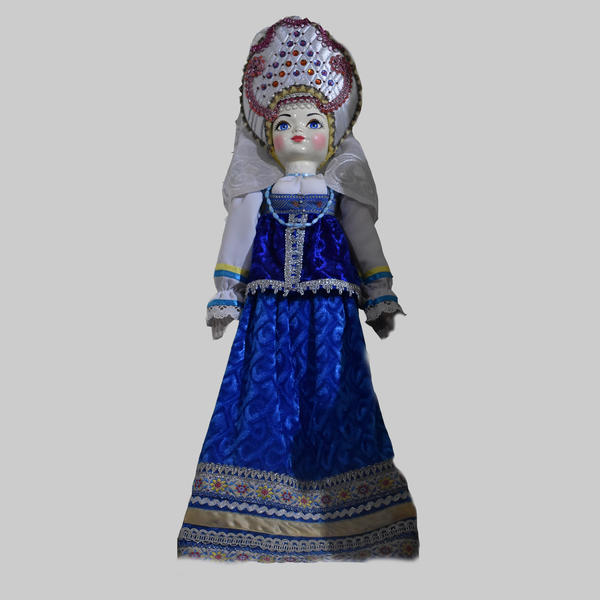
A doll in Valdai wedding costume stands out from other exhibits for the richness and luxury of its gown. In every girl’s life wedding is a special day, and regardless of the locality, social status and family wealth, a special gown was selected to celebrate it even at those times. Wedding dresses in the northern and southern regions of the country differed in details, but they were united by one thing - the abundance of jewelry even on the least expensive sarafans (sundresses).
A sarafan and a shirt formed the basis of a female wedding dress. A shirt was most often sewn of natural linen, its sleeves were richly embroidered with multi-coloured threads. Each embroidery element had its own meaning, for example, a star meant grace from heavenly forces, and the “tree of life” symbol emphasized the importance of starting new life, creating a new family. The front and back of a shirt were covered with a sundress and might not have been embroidered.
A sundress was made of a thicker heavier fabric. In a wealthy family, it could be velvet or brocade, and in a poor family, it could be linen or wool. Its free cut did not emphasize the figure of the bride. The clothes were decorated with embroidery, beads, lacing, pearls, fur. In cold weather, they put on a ''dushegreya'' (a female sleeveless jacket usually padded or fur-lined).
Petticoats were worn under sundresses to give them additional volume. In this piece of clothing, a bride could go to bed on her first wedding night. The wedding petticoat was not allowed to be longer than the sundress by more than 15 cm.
A belt was not a mandatory component of the wedding dress, but if it was used, it was not to emphasize the waist, but simply to maintain the outfit. Sometimes there were several belts. Of course, each of them was richly embroidered.
An apron could be one more detail. Sometimes it was short with ties behind the back, or it was long and worn over the neck. The apron was not as richly decorated as the sundress. Its main goal was to demonstrate the future housewife in the best possible way.
Other accessories, beads, earrings, bracelets, were rarely used in a wedding dress. They were simply unnecessary because of the richness and beauty of other elements!
Girls wore bast shoes, leather sandals, and ''valenki'' (felt boots) in winter. On the head, depending on the region, they wore a kokoshnik, a ''soroka'' (literally a magpie, a small local hat), and a ''kosnik'' (a bandage with pendants).
A sarafan and a shirt formed the basis of a female wedding dress. A shirt was most often sewn of natural linen, its sleeves were richly embroidered with multi-coloured threads. Each embroidery element had its own meaning, for example, a star meant grace from heavenly forces, and the “tree of life” symbol emphasized the importance of starting new life, creating a new family. The front and back of a shirt were covered with a sundress and might not have been embroidered.
A sundress was made of a thicker heavier fabric. In a wealthy family, it could be velvet or brocade, and in a poor family, it could be linen or wool. Its free cut did not emphasize the figure of the bride. The clothes were decorated with embroidery, beads, lacing, pearls, fur. In cold weather, they put on a ''dushegreya'' (a female sleeveless jacket usually padded or fur-lined).
Petticoats were worn under sundresses to give them additional volume. In this piece of clothing, a bride could go to bed on her first wedding night. The wedding petticoat was not allowed to be longer than the sundress by more than 15 cm.
A belt was not a mandatory component of the wedding dress, but if it was used, it was not to emphasize the waist, but simply to maintain the outfit. Sometimes there were several belts. Of course, each of them was richly embroidered.
An apron could be one more detail. Sometimes it was short with ties behind the back, or it was long and worn over the neck. The apron was not as richly decorated as the sundress. Its main goal was to demonstrate the future housewife in the best possible way.
Other accessories, beads, earrings, bracelets, were rarely used in a wedding dress. They were simply unnecessary because of the richness and beauty of other elements!
Girls wore bast shoes, leather sandals, and ''valenki'' (felt boots) in winter. On the head, depending on the region, they wore a kokoshnik, a ''soroka'' (literally a magpie, a small local hat), and a ''kosnik'' (a bandage with pendants).
#23
Full name: Doll in Traditional Wedding Costume from Valdai
Author: Valentina Yakovlevna Gorbacheva
Date: 20 century
Dimensions: 66 cm
Collection: Boguchar District Museum of Local History
Copyright: Boguchar District Museum of Local History
Goskatalog Number: 16046116
Author: Valentina Yakovlevna Gorbacheva
Date: 20 century
Dimensions: 66 cm
Collection: Boguchar District Museum of Local History
Copyright: Boguchar District Museum of Local History
Goskatalog Number: 16046116
#7
Doll in a vintage costume of Klepovka village
#24
#25
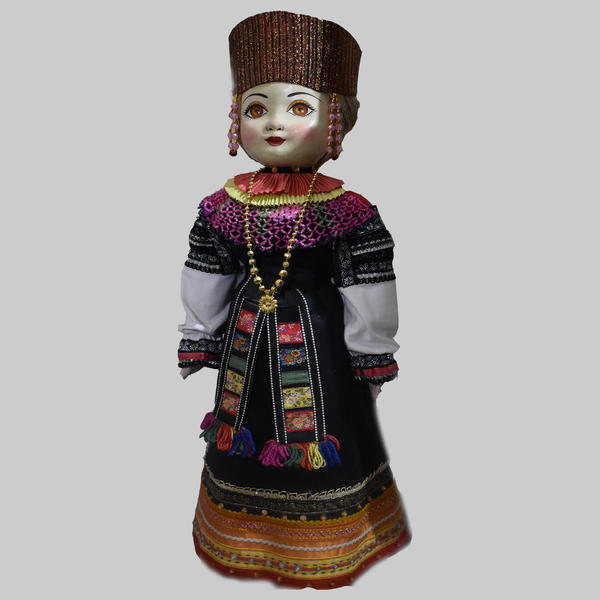
Men’s and women’s costumes in Klepovka village, Buturlinovsky district of the Voronezh region, were made using a unique technique. Special manufacturing methods were implemented while polychromic embroidery with a ‘carpet’ pattern, different kinds of décor (sequins, beads, golden threads), authentic colors were used in the costume design.
The costume was decorated in a sophisticated manner that is not common for Southern Russian culture. The embroidery was dominated by geometric elements. The main fabric colors are black, red, white, pink, orange, dark blue, light blue, and green.
A men’s shirt was made of a 40-cm wide piece of linen fabric. Its fit resembled a gored tunic. The shirt bottom was decorated with a woven band featuring one-sided hardanger embroidery and a pattern. Thanks to diamond-shaped gores stitched on under the sleeves, the shirt was loose and allowed raising arms easily. The shirt elements were sewn together manually or with a lock-stitch. The neck was always decorated with a woven band.
The shirts featured elements that are unique to the local cultural. Women’s shirts with straight poliks, or shoulder pads, were made of calico fabrics and were always decorated with a belt – a separate accessory with an ornament that was sewn to the shoulder and the beginning of the sleeve. The embroidery on the belt was also decorated with fancy sequins on top. When girls went to different celebrations and festivities, they put on a talisman-accessory: a beaded collar (round monisto) or beaded pendants (pendant monisto).
People in the village made clothes following their traditions. For example, a women’s costume from Klepovka, Gvazda, Puzevo villages included the following elements: a shirt, a poneva, a zapan (apron), a valance, worsted decorations, a monisto, a string of beads, earrings, headwear (kichka, soroka, kokoshnik), several scarves, a shawl, a kerchief under a shawl, a fur coat, several pairs of shoes.
The Voronezh region was populated by people from different territories that is why you could see various costumes there. Women’s and men’s folk costumes from Klepovka, Gvazda, Puzevo villages in the Buturlinovsky district united the heritage of Southern Russian and Ryazan clothing. Klepovka village and the surrounding settlements were founded by people from Skopin city of Ryazan Governorate. Similar costumes, ornaments and some speech patterns can help trace back the connection between Klepovka and Ryazan inhabitants.
The costume was decorated in a sophisticated manner that is not common for Southern Russian culture. The embroidery was dominated by geometric elements. The main fabric colors are black, red, white, pink, orange, dark blue, light blue, and green.
A men’s shirt was made of a 40-cm wide piece of linen fabric. Its fit resembled a gored tunic. The shirt bottom was decorated with a woven band featuring one-sided hardanger embroidery and a pattern. Thanks to diamond-shaped gores stitched on under the sleeves, the shirt was loose and allowed raising arms easily. The shirt elements were sewn together manually or with a lock-stitch. The neck was always decorated with a woven band.
The shirts featured elements that are unique to the local cultural. Women’s shirts with straight poliks, or shoulder pads, were made of calico fabrics and were always decorated with a belt – a separate accessory with an ornament that was sewn to the shoulder and the beginning of the sleeve. The embroidery on the belt was also decorated with fancy sequins on top. When girls went to different celebrations and festivities, they put on a talisman-accessory: a beaded collar (round monisto) or beaded pendants (pendant monisto).
People in the village made clothes following their traditions. For example, a women’s costume from Klepovka, Gvazda, Puzevo villages included the following elements: a shirt, a poneva, a zapan (apron), a valance, worsted decorations, a monisto, a string of beads, earrings, headwear (kichka, soroka, kokoshnik), several scarves, a shawl, a kerchief under a shawl, a fur coat, several pairs of shoes.
The Voronezh region was populated by people from different territories that is why you could see various costumes there. Women’s and men’s folk costumes from Klepovka, Gvazda, Puzevo villages in the Buturlinovsky district united the heritage of Southern Russian and Ryazan clothing. Klepovka village and the surrounding settlements were founded by people from Skopin city of Ryazan Governorate. Similar costumes, ornaments and some speech patterns can help trace back the connection between Klepovka and Ryazan inhabitants.
#26
Full name: Doll in a vintage costume of Klepovka village, Buturlinovsky district
Author: Valentina Yakovlevna Gorbacheva
Date: the 20th century
Dimensions: 75 cm
Collection: Boguchar District Museum of Local History
Copyright: Boguchar District Museum of Local History
Goskatalog Number: 16046130
Author: Valentina Yakovlevna Gorbacheva
Date: the 20th century
Dimensions: 75 cm
Collection: Boguchar District Museum of Local History
Copyright: Boguchar District Museum of Local History
Goskatalog Number: 16046130
#8
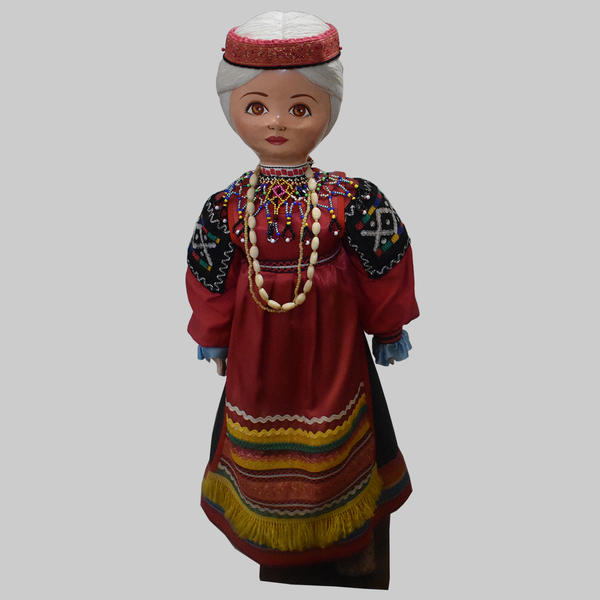
Doll in old folk costume from Puzevo village
#27
#28
The village of Puzevo, which is located in the Buturlinovsky district of the Voronezh region, was founded around 1755. The settlement’s name comes from the name of the nearby tract Puz. The tract itself owes its name to the craftsmen who plastered ship bottoms (“belly”) in it.
Puzevo women wore clothes including all typical Russian female costume elements. Long embroidered shirts formed the basis, they were covered with a ponyova, a zapon, an apron, or a ''curtain''. As accessories, Puzevo female inhabitants used monists or several rows of beads, and, of course, earrings - ''guns'' or amber. They covered their heads with headdresses named ''kichka'', ''soroka'' (magpie), kokoshnik. Also they kept in their wardrobes scarfs, shawls and under-shawls, tanned or covered fur coats for the cold season, and, of course, shoes.
Puzevo traditions and crafts left their mark on female everyday and festive costume. In the local version, the traditional Russian kichka with a trim included embroidered and woven ornaments typical for the area, bead weaving, and other decorative elements.
Puzevskaya kichka also differed from others in colour and design. As it was multi-component, significant experience was required to put together all its elements correctly. A kichka included a cap, a kichka itself, a wing, an ear and a trim.
The solid frontal part — the kichka in essence — could be made in one of three ways. Applying the first method, Puzevo residents took a 20-centimeter piece of hemp canvas, then soaked it, carefully soaped and made several rollers of different lengths. Then the rollers were dried, decorated (covered) with fabric and sewn into a single structure.
Another method was more economical: two rollers made of dry canvas were used for the top of the headdress, the basis was a tightly knocked bunch of straw covered with fabric. Then all elements were stitched together.
The listed technologies are traditional. Later, Puzevo people began to use a different technique. In this case they tore four osier twigs on the river banks and ''packed'' each of them with a dense fabric cover. Parts of the base were sewn together, and the ones intended for the top were bent and sewn to the bottom.
The trim was made of red cotton fabric. They took a rectangular piece of chintz about 60 centimeters long and 30-40 centimeters wide. The belt holding the headdress on the head had a decoration in the frontal part. For its creation, they sewed down a braided cord in three rows and closed the aisles with metal circles. Multi-coloured rectangles and sequins were stitched along the upper part. The lower part was trimmed with “eyebrows” - fluffy brushes of woolen thread, and later - of faux fur.
Puzevo women wore clothes including all typical Russian female costume elements. Long embroidered shirts formed the basis, they were covered with a ponyova, a zapon, an apron, or a ''curtain''. As accessories, Puzevo female inhabitants used monists or several rows of beads, and, of course, earrings - ''guns'' or amber. They covered their heads with headdresses named ''kichka'', ''soroka'' (magpie), kokoshnik. Also they kept in their wardrobes scarfs, shawls and under-shawls, tanned or covered fur coats for the cold season, and, of course, shoes.
Puzevo traditions and crafts left their mark on female everyday and festive costume. In the local version, the traditional Russian kichka with a trim included embroidered and woven ornaments typical for the area, bead weaving, and other decorative elements.
Puzevskaya kichka also differed from others in colour and design. As it was multi-component, significant experience was required to put together all its elements correctly. A kichka included a cap, a kichka itself, a wing, an ear and a trim.
The solid frontal part — the kichka in essence — could be made in one of three ways. Applying the first method, Puzevo residents took a 20-centimeter piece of hemp canvas, then soaked it, carefully soaped and made several rollers of different lengths. Then the rollers were dried, decorated (covered) with fabric and sewn into a single structure.
Another method was more economical: two rollers made of dry canvas were used for the top of the headdress, the basis was a tightly knocked bunch of straw covered with fabric. Then all elements were stitched together.
The listed technologies are traditional. Later, Puzevo people began to use a different technique. In this case they tore four osier twigs on the river banks and ''packed'' each of them with a dense fabric cover. Parts of the base were sewn together, and the ones intended for the top were bent and sewn to the bottom.
The trim was made of red cotton fabric. They took a rectangular piece of chintz about 60 centimeters long and 30-40 centimeters wide. The belt holding the headdress on the head had a decoration in the frontal part. For its creation, they sewed down a braided cord in three rows and closed the aisles with metal circles. Multi-coloured rectangles and sequins were stitched along the upper part. The lower part was trimmed with “eyebrows” - fluffy brushes of woolen thread, and later - of faux fur.
#29
Full name: Doll in old folk costume from Puzevo village of Buturlinovsky district
Author: Valentina Yakovlevna Gorbacheva
Date: the 20th century
Dimensions: 73 cm
Collection: Boguchar District Museum of Local History
Copyright: Boguchar District Museum of Local History
Goskatalog Number: 16046115
Author: Valentina Yakovlevna Gorbacheva
Date: the 20th century
Dimensions: 73 cm
Collection: Boguchar District Museum of Local History
Copyright: Boguchar District Museum of Local History
Goskatalog Number: 16046115
#30
The hammered cymbal - a musical instrument
#31
#32
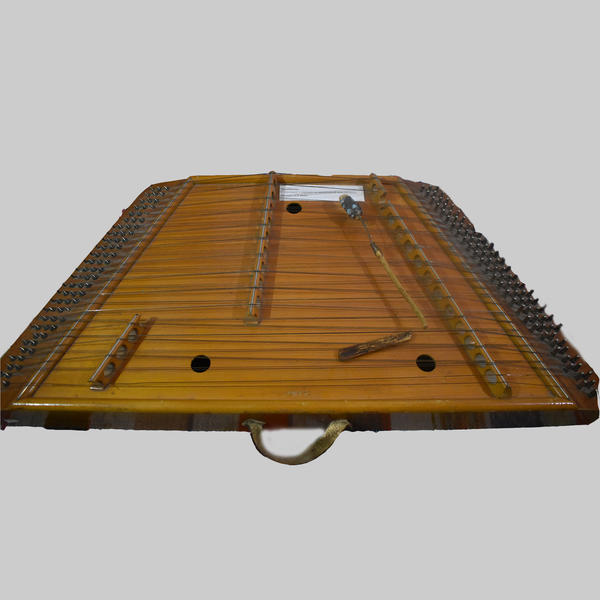
The cymbal is a stringed percussion musical instrument of a trapezoid shape. To extract sound, the performer hits the strings with wooden sticks with wide flat tips.
The cymbal is a very ancient instrument. Images of its predecessor, the chordophone were found on a Sumerian amphora dating back to 4th-3rd century BC. A drawing of a similar musical instrument was discovered by archaeologists on a bas-relief from the 9th century B.C.
Instruments similar to cymbals were found among different peoples. Thus, the Assyrians played the triganon - a nine-stringed musical instrument of a triangular shape, the ancient Greeks - the monochord and the Chinese played the chia. The santur was popular with the Indians - its strings were made from the munjdz grass and sticks made of bamboo were used to play it. According to Russian music historian Nikolai Fyodorovich Findeisen, the instrument came to Europe from India, where the Gypsies brought in the 5th century.
As the instrument continued to spread, the design of the cymbal got improved: the shape and size of the instrument, the quantity and quality of strings were changed. Until the 9th century, the strings were made of animal veins or intestines, and then the makers gradually switched to a copper alloy and metal wire.
The cymbal became incredibly popular with the nobles in the 14th century. All ladies of high society dreamed of playing the instrument in medieval Europe. Pantaleon Hebenstreit - a famous German musician of the time, made the instrument even more popular. Thanks to Louis XIV, the cymbal got a new European name of the Pantaleon. Composers began to write dedicated pieces for the cymbal in the 18th century and incorporate the instrument into the opera orchestra. One could hear them in the works of Ferenc Erkel and Ferenc Lehar.
The cymbal appeared in Russia at the end of the 15th century, when British Queen Elizabeth gave the instrument to the Russian tsarina. Irina Fyodorovna liked the gift so much that the cymbal began to sound constantly in the royal chambers and at princely feasts. The cymbal became widespread in Ukraine, becoming a truly popular instrument.
There are two types of cymbal today: the concert-academic one and the folk versions. They differ in the size of the body and design. Folk cymbals are smaller; they usually come with a strap to mount the instrument on the shoulder or the neck. The body of the concert-academic cymbal is much larger: the lower base can reach 115 cm in length and the upper one - 94 cm. In addition, the concert-academic cymbals have legs and a pedal to deaden the sound.
The cymbal is a very ancient instrument. Images of its predecessor, the chordophone were found on a Sumerian amphora dating back to 4th-3rd century BC. A drawing of a similar musical instrument was discovered by archaeologists on a bas-relief from the 9th century B.C.
Instruments similar to cymbals were found among different peoples. Thus, the Assyrians played the triganon - a nine-stringed musical instrument of a triangular shape, the ancient Greeks - the monochord and the Chinese played the chia. The santur was popular with the Indians - its strings were made from the munjdz grass and sticks made of bamboo were used to play it. According to Russian music historian Nikolai Fyodorovich Findeisen, the instrument came to Europe from India, where the Gypsies brought in the 5th century.
As the instrument continued to spread, the design of the cymbal got improved: the shape and size of the instrument, the quantity and quality of strings were changed. Until the 9th century, the strings were made of animal veins or intestines, and then the makers gradually switched to a copper alloy and metal wire.
The cymbal became incredibly popular with the nobles in the 14th century. All ladies of high society dreamed of playing the instrument in medieval Europe. Pantaleon Hebenstreit - a famous German musician of the time, made the instrument even more popular. Thanks to Louis XIV, the cymbal got a new European name of the Pantaleon. Composers began to write dedicated pieces for the cymbal in the 18th century and incorporate the instrument into the opera orchestra. One could hear them in the works of Ferenc Erkel and Ferenc Lehar.
The cymbal appeared in Russia at the end of the 15th century, when British Queen Elizabeth gave the instrument to the Russian tsarina. Irina Fyodorovna liked the gift so much that the cymbal began to sound constantly in the royal chambers and at princely feasts. The cymbal became widespread in Ukraine, becoming a truly popular instrument.
There are two types of cymbal today: the concert-academic one and the folk versions. They differ in the size of the body and design. Folk cymbals are smaller; they usually come with a strap to mount the instrument on the shoulder or the neck. The body of the concert-academic cymbal is much larger: the lower base can reach 115 cm in length and the upper one - 94 cm. In addition, the concert-academic cymbals have legs and a pedal to deaden the sound.
#33
Full name: The hammered cymbal - a musical instrument
Author: unknown
Date: early 20th century
Dimensions: 101×50×10.5 cm
Collection: Boguchar District Museum of Local History
Copyright: Boguchar District Museum of Local History
Goskatalog Number: 18286751
Author: unknown
Date: early 20th century
Dimensions: 101×50×10.5 cm
Collection: Boguchar District Museum of Local History
Copyright: Boguchar District Museum of Local History
Goskatalog Number: 18286751
read morehide
00:00
00:00
1x
Dolls of Voronezh, Valdai, Gvazda, Puzevo, Klepo
Exhibition
0
 Point your smartphone camera to open in the app
Open in app
Share