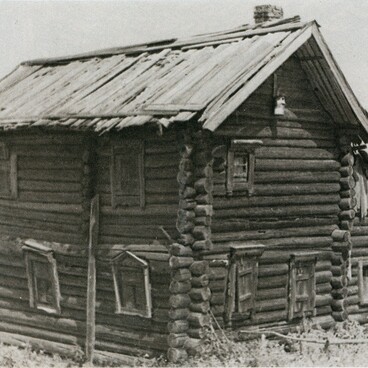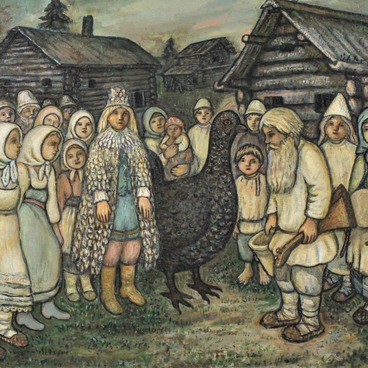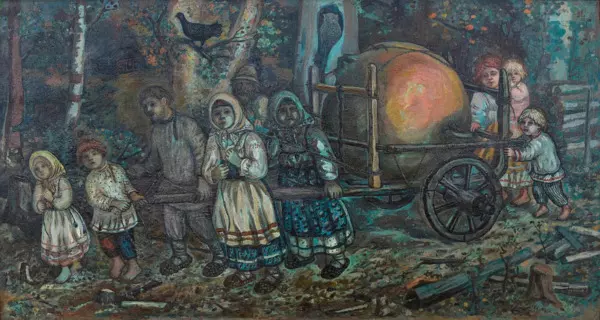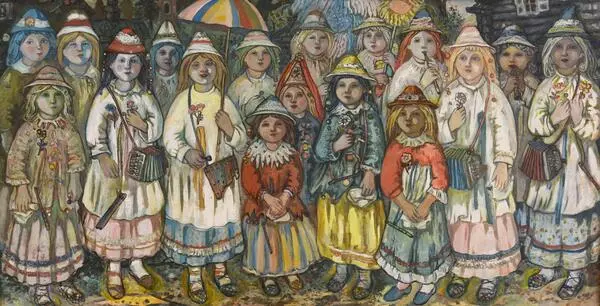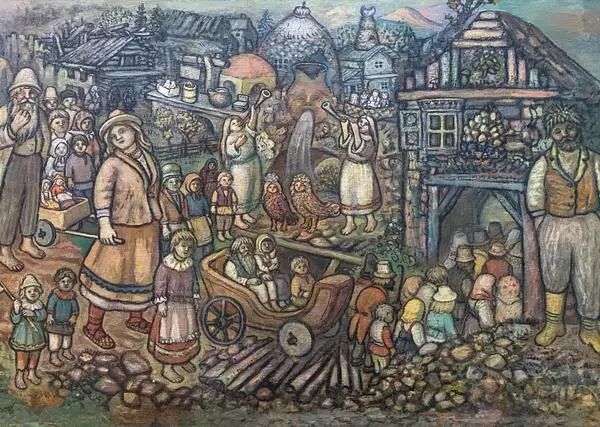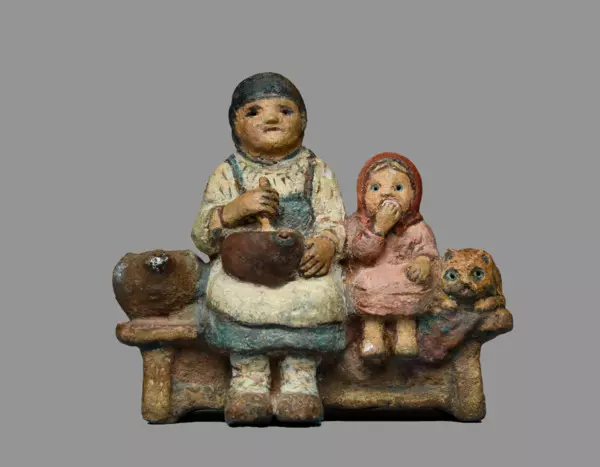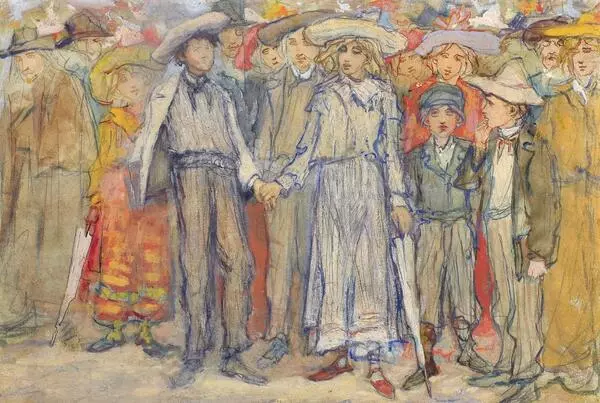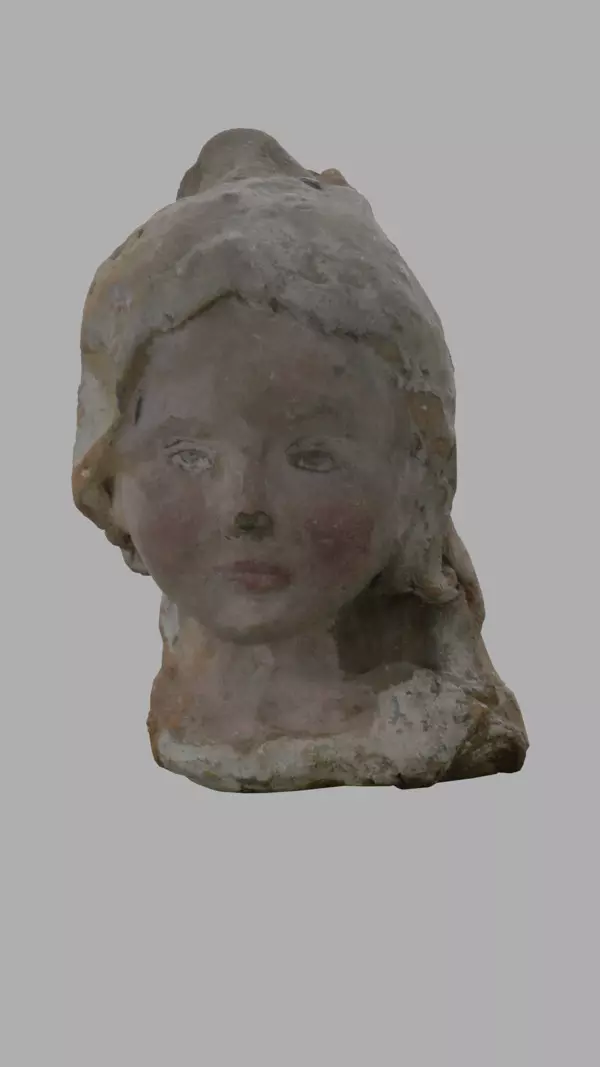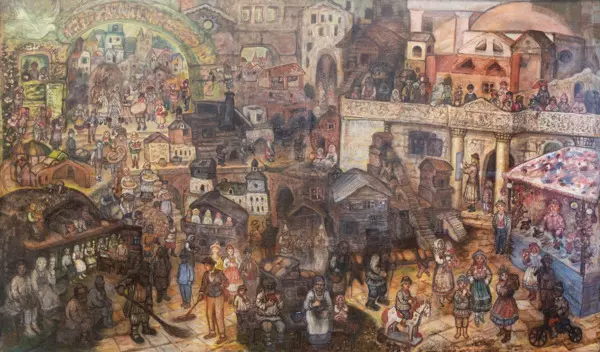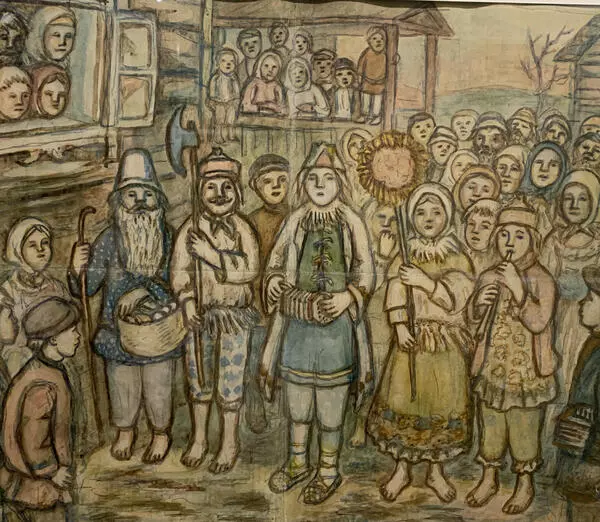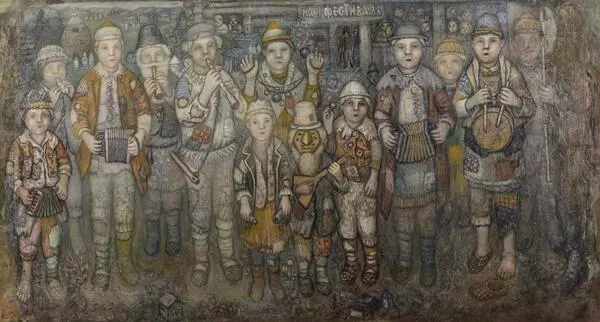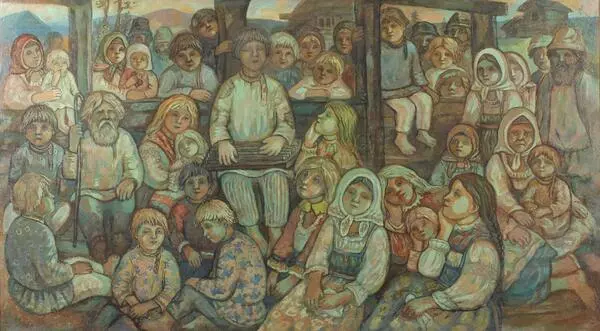
In one of his hand-written books, Yefim Chestnyakov wrote ‘Art conquers all. I studied and now live at home… And I think “Yefim, light that rushlight! “.” After the artist returned to Shablovo from Saint Petersburg, he did not stop creating and instead chose to dedicate his works of art to a Russian village, its daily life and folk culture, so rich in spirit. Having mastered the complex discipline of fine arts, Yefim Chestnyakov sought to find his own unique painting style that would be comprehensible and accessible to village inhabitants.
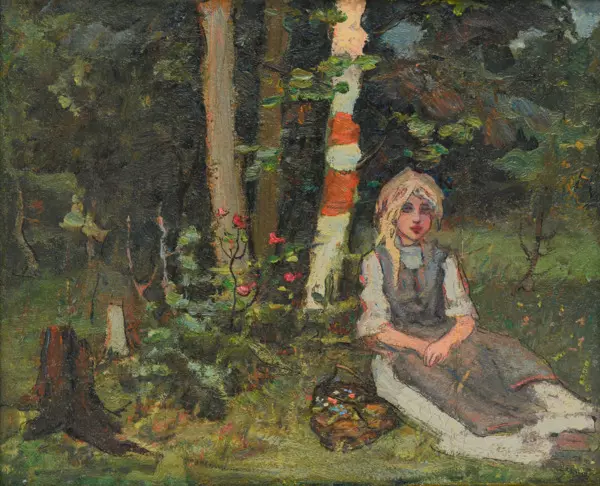
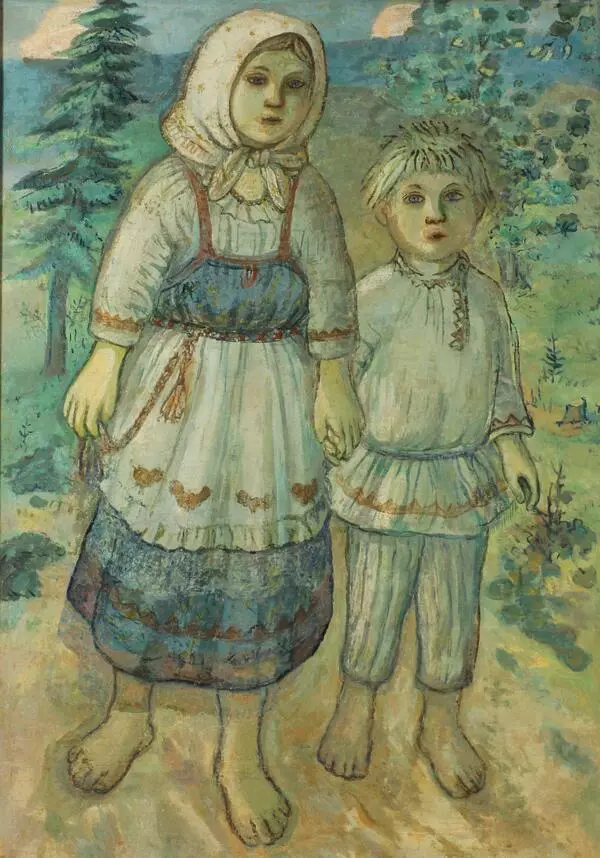
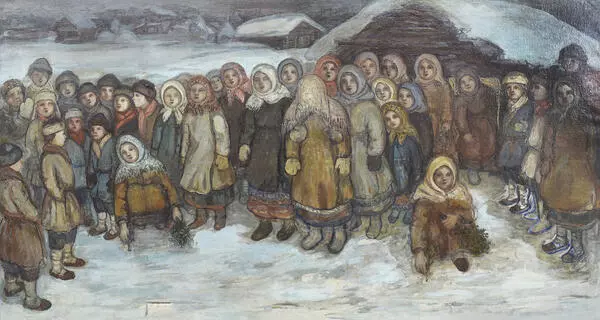
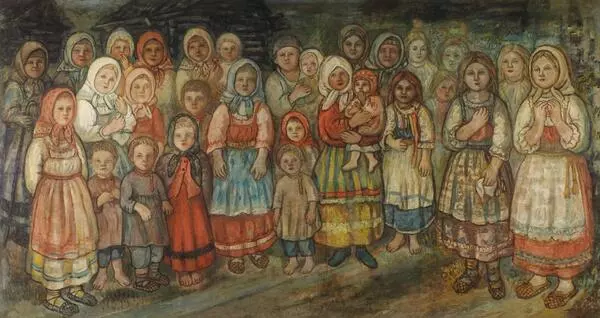
Since his birth, Yefim Chestnyakov knew and understood the way of life of Russian peasants. In fact, life in the village was a constant source of inspiration to him. During the years immediately following his studies at the Academy of Arts, Yefim Chestnyakov adhered to the traditions of naturalism in art. At the time, he depicted scenes from the daily life of village inhabitants in his works of art. Everything in them was true to life and easily understandable to viewers. Peasants, and first and foremost children, around Yefim Chestnyakov became his main subjects.
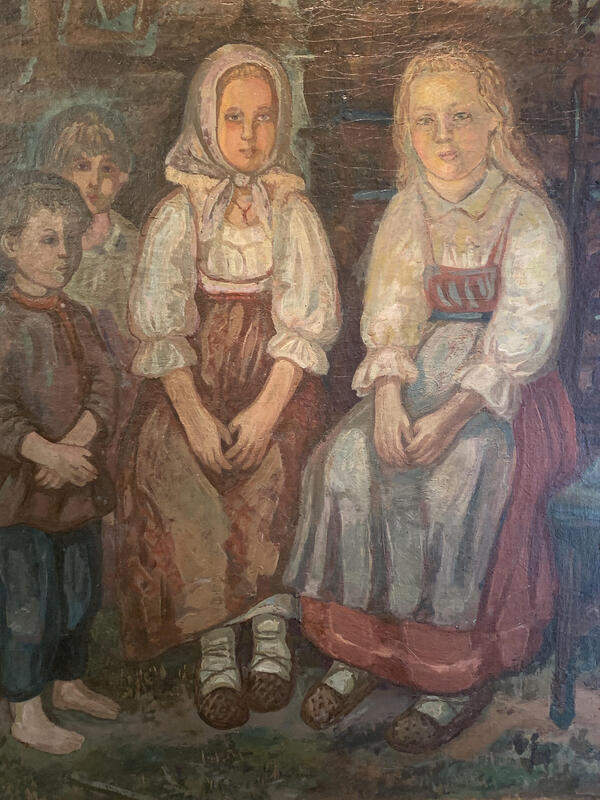
The subject matter of the painting “Peasant children” is not complex and yet there is something mysterious about it. It is set in a village street. Two peasant girls are sitting on a bench near a log house, and two small boys are standing next to them. In all likelihood, the painting depicts a summer evening and the children have gathered near the village’s outermost house to wait for the cows. Even very young children were not allowed to be idle in this world of peasants. Yefim Chestnyakov observed such scenes from daily life on more than one occasion and the artist often sketched what he saw in front of him. His young friends and neighbors - the girls and boys - were happy to pose for him.
The two girls, wearing traditional peasant pinafores and blouses as well as bast shoes on their feet, are at the center of the composition. The boy with bare feet is dressed in homemade clothes. Still, they look so beautiful and festive on account of their simple and open nature. The artist depicted one of the girls with her golden-colored hair loose although it was not customary for a teenage girl to go outside with her head uncovered. Yefim Chestnyakov also brought his own poetic view of peasant children’s beauty to the work. Although the girls’ and boys’ poses seem static, their faces are very expressive, reflecting their quiet inner struggles, as evidenced by their calmly folded hands. Their tranquil state is further accentuated by the painting’s measured tones. The work of art is not colorful. The spots of red, blue and white of the children’s clothing look subdued but still stand out against the modest-looking landscape. Yefim Chestnyakov drew and painted peasant children with a lot of love and generosity of spirit, hence his creations look beautiful and sincere.
Since his birth, Yefim Chestnyakov knew and understood the way of life of Russian peasants. In fact, life in the village was a constant source of inspiration to him. During the years immediately following his studies at the Academy of Arts, Yefim Chestnyakov adhered to the traditions of naturalism in art. At the time, he depicted scenes from the daily life of village inhabitants in his works of art. Everything in them was true to life and easily understandable to viewers. Peasants, and first and foremost children, around Yefim Chestnyakov became his main subjects.
The subject matter of the painting “Peasant children” is not complex and yet there is something mysterious about it. It is set in a village street. Two peasant girls are sitting on a bench near a log house, and two small boys are standing next to them. In all likelihood, the painting depicts a summer evening and the children have gathered near the village’s outermost house to wait for the cows. Even very young children were not allowed to be idle in this world of peasants. Yefim Chestnyakov observed such scenes from daily life on more than one occasion and the artist often sketched what he saw in front of him. His young friends and neighbors - the girls and boys - were happy to pose for him.
The two girls, wearing traditional peasant pinafores and blouses as well as bast shoes on their feet, are at the center of the composition. The boy with bare feet is dressed in homemade clothes. Still, they look so beautiful and festive on account of their simple and open nature. The artist depicted one of the girls with her golden-colored hair loose although it was not customary for a teenage girl to go outside with her head uncovered. Yefim Chestnyakov also brought his own poetic view of peasant children’s beauty to the work. Although the girls’ and boys’ poses seem static, their faces are very expressive, reflecting their quiet inner struggles, as evidenced by their calmly folded hands. Their tranquil state is further accentuated by the painting’s measured tones. The work of art is not colorful. The spots of red, blue and white of the children’s clothing look subdued but still stand out against the modest-looking landscape. Yefim Chestnyakov drew and painted peasant children with a lot of love and generosity of spirit, hence his creations look beautiful and sincere.