An encolpion — a small rectangular box with the monogram of Christ or an image of the cross — is considered to be the predecessor of the pectoral cross, worn under or over a robe. An encolpion was worn around the neck, with relics or sacred texts inside. Encolpions appeared no later than the 4th century.
Until the 18th century, in the Russian Orthodox Church, pectoral crosses were only worn by bishops; under Empress Elizabeth Petrovna, they were a distinguishing feature of archimandrites. Paul I adopted the pectoral cross as a mark of honor of the 4th class after the nabedrennik (a piece of cloth worn at the hip), skufia (a small cap) and kamilavka (a headdress). In the 19th century, this mark of distinction was granted to priests who served at the court or in Orthodox churches abroad, as well as to those who had a doctorate or participated in military operations.
In 1853, the Ottoman Empire, backed by the Kingdom of Sardinia and the British and French Empires, declared war on the Russian Empire. This war was called the Russo-Turkish or Eastern War, and in the end, it became known as the Crimean War.
The beginning of the war for the Russian Empire was marked by a series of victories both on land and at sea, but the active involvement of the French and British made the position of the Russians more vulnerable. The main battles took place in Crimea; Russia’s most important Black Sea base — Sevastopol — was under attack.
The medal with the corresponding inscription was approved for awarding all secular participants in the events of 1853–1856, including civilians. Special pectoral crosses were issued for representatives of the clergy, priests and metropolitans who served in the battlefields and in the rear.
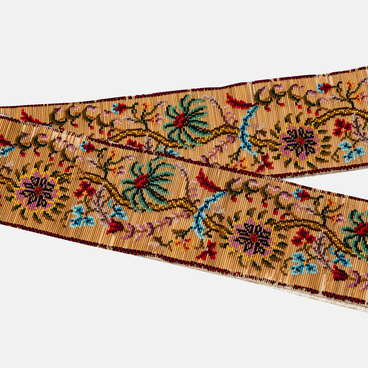
The award was established on August 26, 1856; earlier, on June 21, Emperor Alexander II personally approved its design. The dark bronze cross was to be worn around the neck on a silk black and red Vladimir ribbon.
Crosses were produced at the St. Petersburg Mint
until 1860. Perhaps all the monks of the Transfiguration Monastery received
this award. The museum received five such artifacts of the same type from the
monastery.