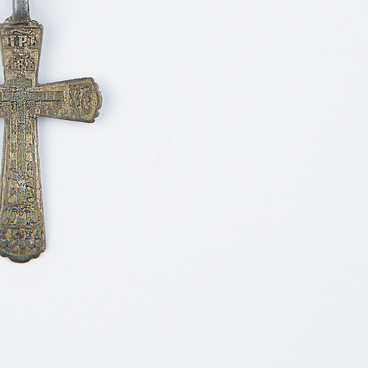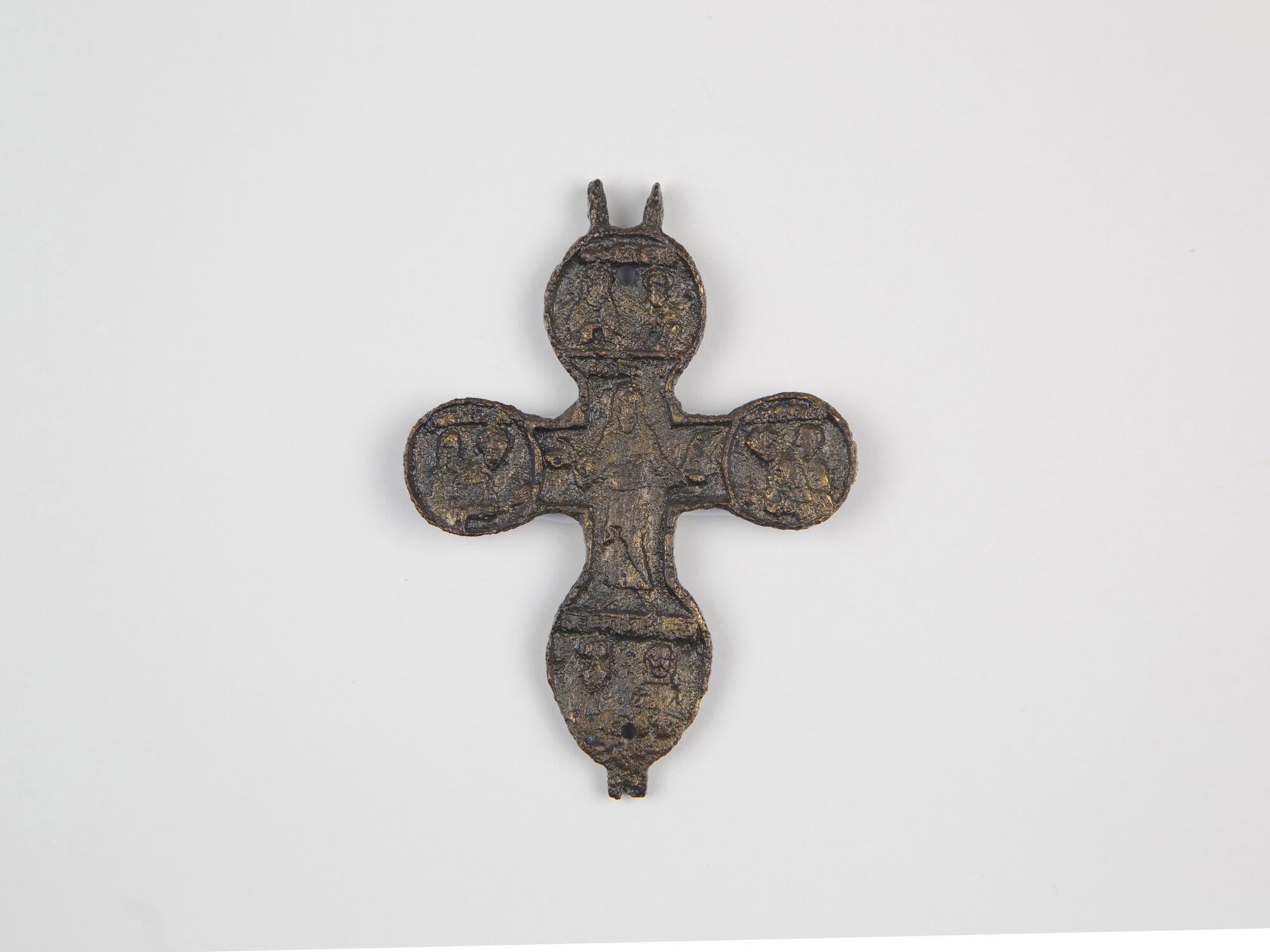


An engolpion (from the ancient Greek word ἐγ-κόλπιο(ς) — “breastplate”) is a small medallion of a rounded or cruciform shape with the image of Jesus Christ or saints. Often double-leaf crosses of the pre-Mongol period that contain relics are also called engolpions (in the Russian scientific tradition crosses of the later period are called diptychs or “mosheviki”).
Pieces of consecrated prosphora bread or relics of saints were placed inside the engolpion to protect the wearer from various misfortunes, especially on long journeys and travels. It is believed that the first engolpions were created in monasteries in Asia Minor, the Balkans and the Danube region around the 6th–7th centuries. With the adoption of Christianity and other religious objects from the Byzantine Empire, the tradition of making and wearing engolpions was also established in Rus. From the 14th century, crosses have been used to store relics. Engolpions originally had the form of a four-sided rounded or cruciform box, empty inside, quite often with a movable bail. Later engolpions had a rather extensive variety of shapes, sizes and biblical narratives depicted on them. Clergymen ordained to the position of bishop received engolpions as gifts. Saints in icons were often depicted holding engolpions in their hands.
The first engolpions, that can now be seen in museums, were collected in the 19th century. However scientists of the 19th 20th centuries were not that interested in studying things stored in the engolpions — instead they opted for studying the objects themselves, their artistic features to trace their origin and distribution across Rus. The range of objects that were placed inside the reliquarium was very wide. It would take several lines of text just to list all the items housed inside the chasse of Saint Dionyssius of Suzdal. The altar cross of Euphrosyne of Polotsk and the communion cross of Sophia of Novgorod had parts from the Cross of Golgotha.
Until recent years, it was unknown what the regular people put inside their crosses. When analyzing the contents of engolpions, researchers found incense, a mixture of wax and frankincense wrapped in linen cloth, fragments of linen, silk, hemp fabric, the remains of a herbaceous plant that could not be identified.