

Dice were used back in the Bronze Age. They were even mentioned in the ancient Indian epic “Mahabharata” and found all over the Old World from Ireland to Japan. The earliest dice were discovered during excavations in the city of Shahr-i Sokhta in Iran, along with a backgammon set. This find is about 5,200 years old.
The Russian word for dice literally translates as “bones” and is derived from knucklebones — a game that uses the astragalus (a bone in the ankle, or hock) of a sheep. Dice games were frowned upon in society since they caused gambling addiction. Like other addictions (including smoking and alcohol), dice games were always practiced illegally when banned. As a rule, adults played dice exclusively in drinking establishments, so alcohol, tobacco and gambling became inseparable companions.
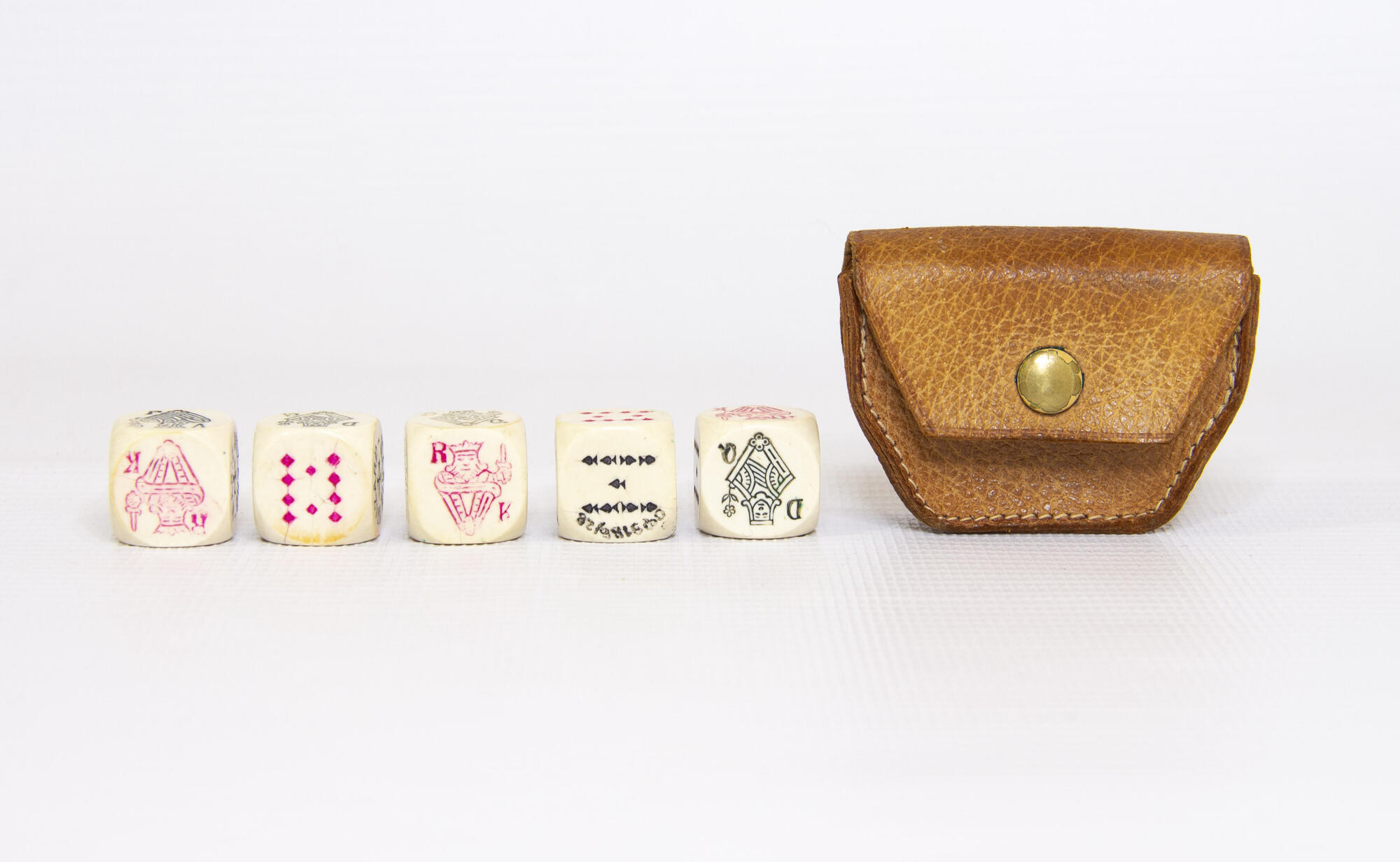
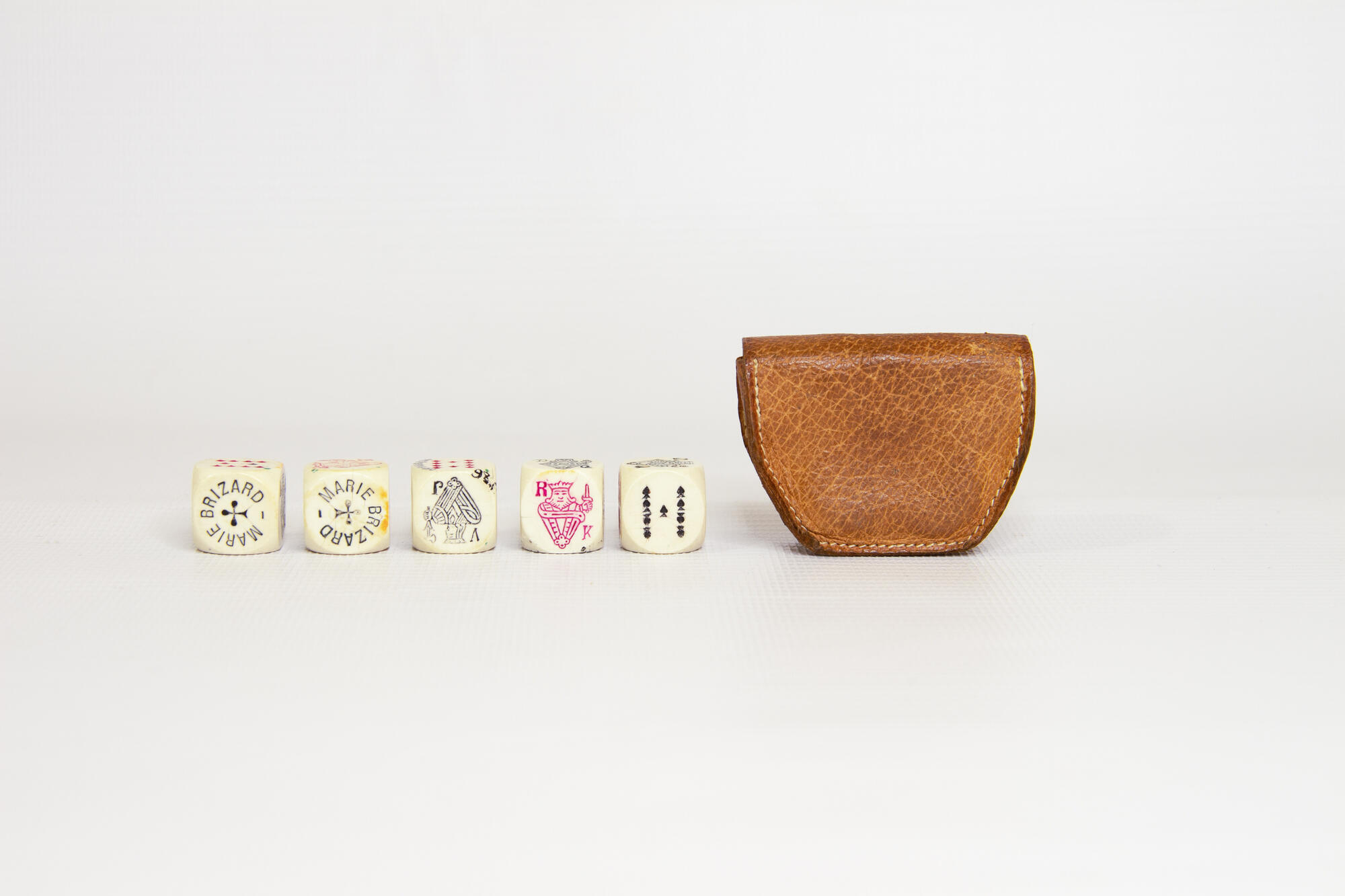
These dice were made of white Bakelite and purchased in one of the antique shops in St. Petersburg.
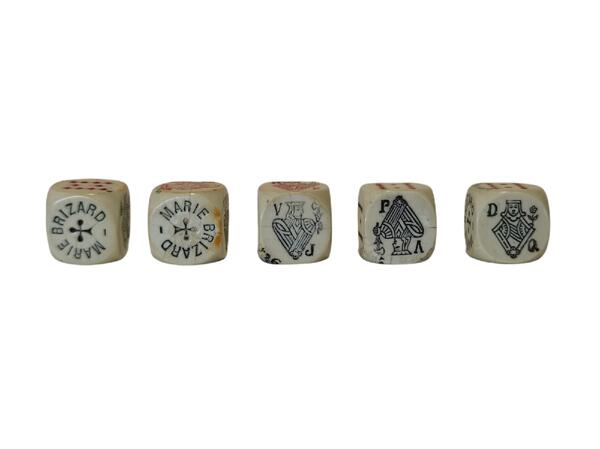
With the rapid development of advertising in the mid-20th century, tobacco factories and breweries began to use dice for advertising. These dice, for example, advertise one of the most famous and oldest liqueur producers in the world — Marie Brizard.
The company was founded in the 18th century by the hereditary winemaker Marie Brizard (1714–1801). She was born in Bordeaux, France, into the family of Pierre Brizard, a cooper and winemaker. She was the third child in a family of 15 people. Taking the reins of the family business into her own hands, Marie not only carried on her father’s business, but also opened a new line — the production of liqueur wines, as well as various sweet and spicy spirits. In addition, Maria was one of the first in Europe to start mass production of an anise-flavored spirit, which is known in France as pastis, in Italy as sambuca, in Asia Minor and the Balkans as raki, and in Russia as anise vodka. Marie Brizard cared about the liqueur’s image and therefore invested huge money in advertising. The founders of advertising design Leonetto Cappiello and Jules Chéret created the posters. The brand was also depicted on jugs, playing cards and key rings.
The Russian word for dice literally translates as “bones” and is derived from knucklebones — a game that uses the astragalus (a bone in the ankle, or hock) of a sheep. Dice games were frowned upon in society since they caused gambling addiction. Like other addictions (including smoking and alcohol), dice games were always practiced illegally when banned. As a rule, adults played dice exclusively in drinking establishments, so alcohol, tobacco and gambling became inseparable companions.
These dice were made of white Bakelite and purchased in one of the antique shops in St. Petersburg.
With the rapid development of advertising in the mid-20th century, tobacco factories and breweries began to use dice for advertising. These dice, for example, advertise one of the most famous and oldest liqueur producers in the world — Marie Brizard.
The company was founded in the 18th century by the hereditary winemaker Marie Brizard (1714–1801). She was born in Bordeaux, France, into the family of Pierre Brizard, a cooper and winemaker. She was the third child in a family of 15 people. Taking the reins of the family business into her own hands, Marie not only carried on her father’s business, but also opened a new line — the production of liqueur wines, as well as various sweet and spicy spirits. In addition, Maria was one of the first in Europe to start mass production of an anise-flavored spirit, which is known in France as pastis, in Italy as sambuca, in Asia Minor and the Balkans as raki, and in Russia as anise vodka. Marie Brizard cared about the liqueur’s image and therefore invested huge money in advertising. The founders of advertising design Leonetto Cappiello and Jules Chéret created the posters. The brand was also depicted on jugs, playing cards and key rings.