The indigenous peoples of the North, the inhabitants of the taiga, lead a semi-sedentary lifestyle. Their way of life is determined by their economic activities — reindeer herding, hunting, and fishing. Since most families move between summer and winter camps each season, their household goods are well adapted to this.
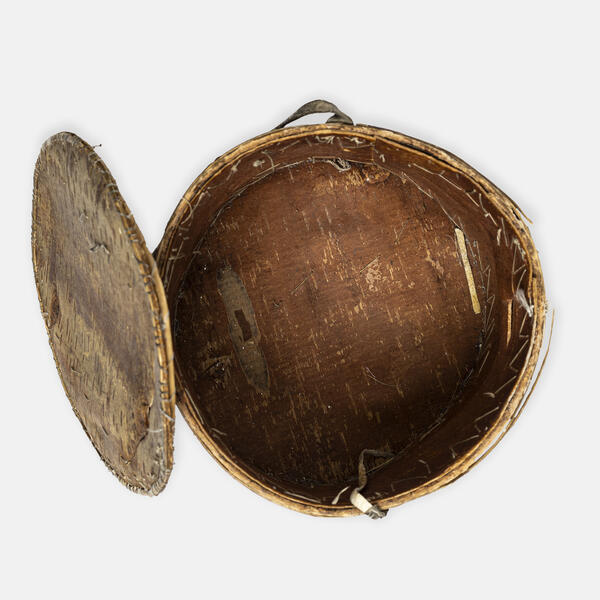
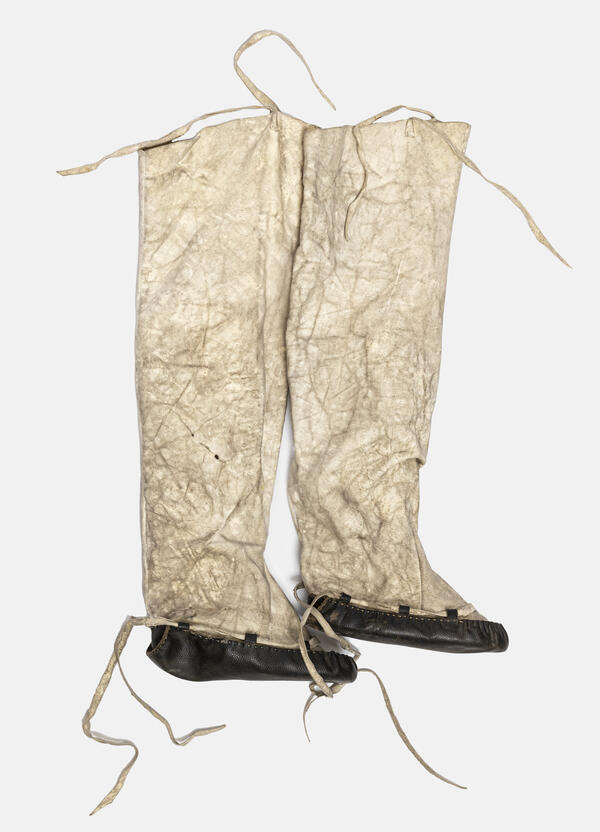
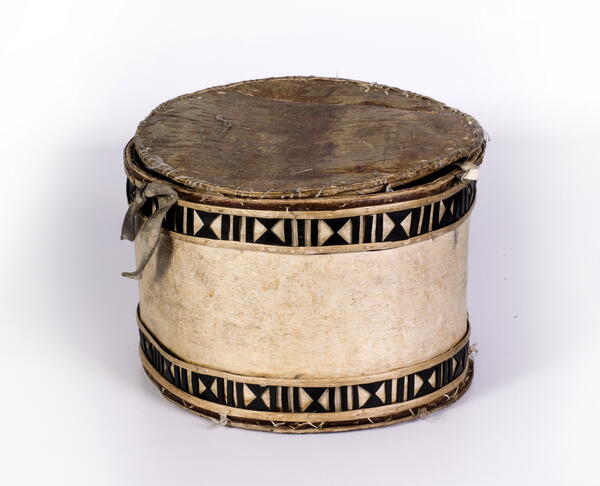
Housekeeping requires a lot of various containers, including baskets, birch bark containers, and boxes. They are used to store and transport all the essential belongings, including tools, equipment, clothes, utensils, leather, furs, children’s toys, food, and ritual objects. An example of a practical household container is a small box made of fir and birch bark. It could be used for small items, tea, salt, and cereal.
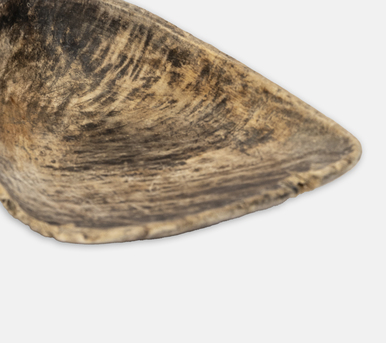
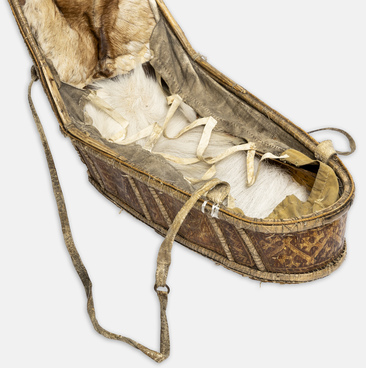
Fir bark boxes come in different sizes and shapes — they can be round or oval. Round boxes are usually equipped with flat lids, while oval boxes have a lid with side walls. In both cases, the goal is to seal the container and protect the contents. Fir bark is used only for the container’s walls, while its bottom and lid are made of birch bark. Birch bark is also used to make tuyes boxes, baskets, cradles, and pack baskets for carrying children, while cedar bark is used to make large and small wicker chests, traditional Khanty kornevatik baskets.
The Khanty often decorate their fir bark products. Usually, they apply a linear decorative pattern with its outline scratched or drawn with a pencil and then filled with paint. Traditionally, the Khanty used natural dyes obtained from birch and bird cherry trees. Birch contains this substance in the leaves, young bark, and fungus, and bird cherry — in the bark. The dyes are collected in early summer, and the colors can range from light yellow to dark brown. Since the mid-20thcentury, watercolors are more often used in décor.
The fir bark for making such utensils is harvested
in mid-May, before the sap begins to flow, or in early June, when the sap stops.
The movement of sap gives the bark a red color: during this time, the tree is
considered alive, and its wood cannot be used. Fir bark is believed to purify
the area around it, which is why it is an essential element of fumigation rituals.