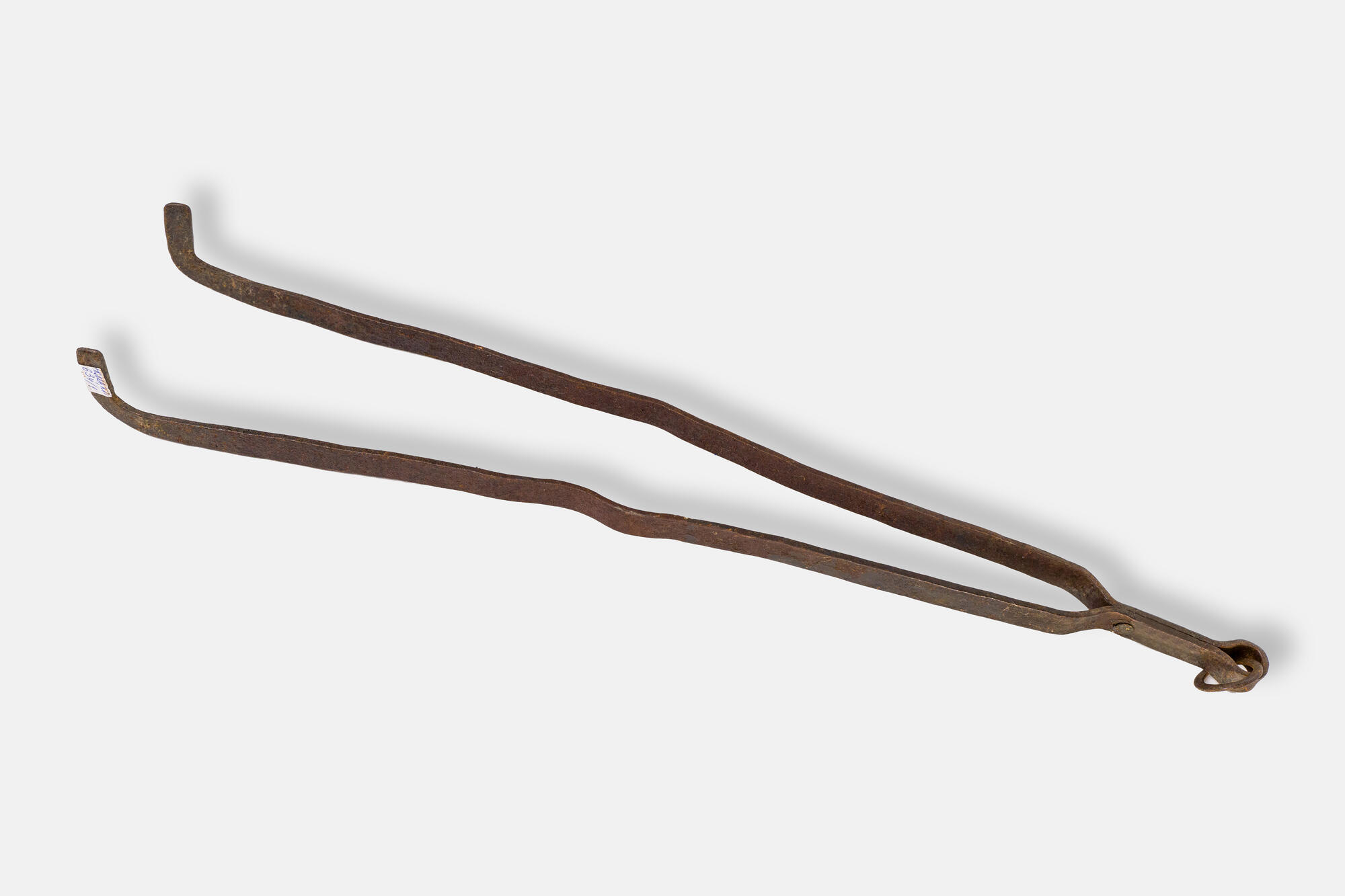


A fire iron is usually about a meter long and bent at the end at a right angle. It can have a wooden handle. The fire iron, presented in the exposition of the Adygeisk Museum of Local Lore, is a metal rod folded in half. In 2010, this fire iron was given to the museum by Khuade Nuriyet Luhovna, a resident of the Gatlukai village of the Republic of Adygea.
Since ancient times, the Adyghe people saw the fire iron as a useful and irreplaceable item. It was used to move wood around to make it burn better, stir embers, remove ashes and open the hot door of the stove. That is what the saying: “The fire iron in the oven is the mistress”, refers to. In everyday life, the fire iron was one of the symbols of the household. It brought food, warmth, and was paramount for the family’s well-being. It’s hard to imagine how an oven can be heated and a meal cooked without using a fire iron. While the furnace was being heated, the fire iron worked tirelessly.
The Adyghe household had a wall-mounted fireplace-type hearth (“dzhenyk”) with a chimney-smoker (onjack) for cooking food.
Among the peoples of Tibet, it was believed that happiness enters the house through the chimney of the hearth. Among the peoples of the Caucasus, the hearth was a symbol of life, the center of the household, the link between heaven and earth. The hearth was a sacred place in the house of the Adyghe people. The fire in it never went out. Keeping the fire burning was a woman’s job. The hearth was always kept clean, garbage was never put in it and water wasn’t poured inside it. The hearth had its patron goddess Jagupatha (from the Adyghe “zhegu” — hearth, “pe” — before, “tkhye” — god).
The Adyghe have many customs associated with the hearth. When moving to a new place, the Adyghe take coals from the hearth and the trammel chain with them. On the second day after the wedding, the bride was brought into the groom’s house and introduced to the hearth. The young woman was brought to the older women from the husband’s family while ritual songs were sung. One of them showered the girl with coins and millet, which symbolized the wish of prosperity, abundance and offspring to the new family. All the gifts that fell on the floor were collected by children. After the wedding, the groom’s mother gave him some burning coals from the family hearth. In doing so, she gave her blessing to her son.