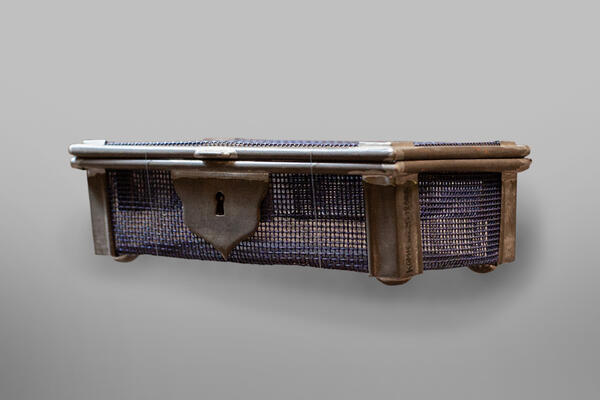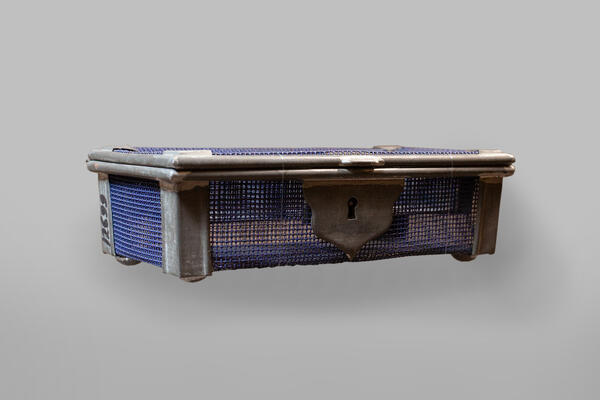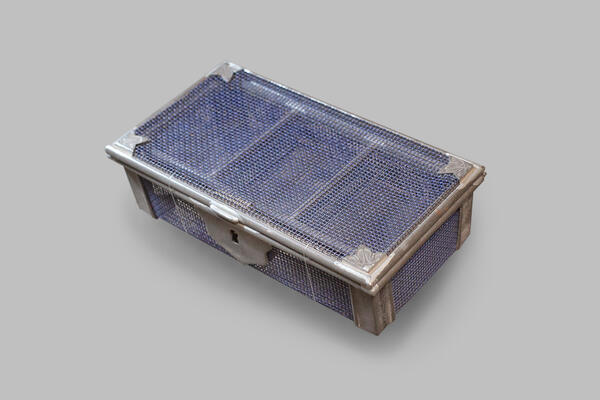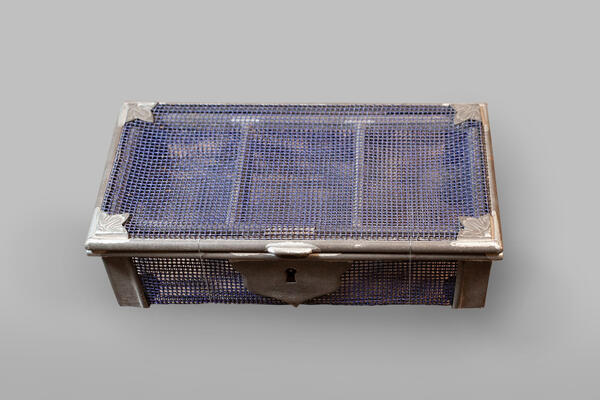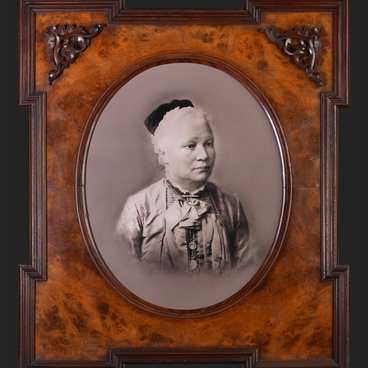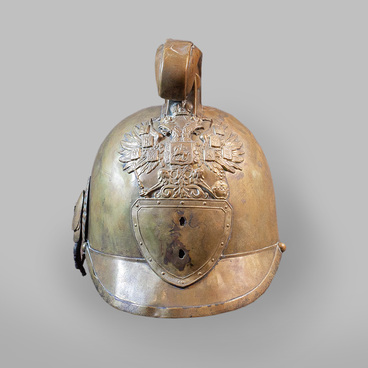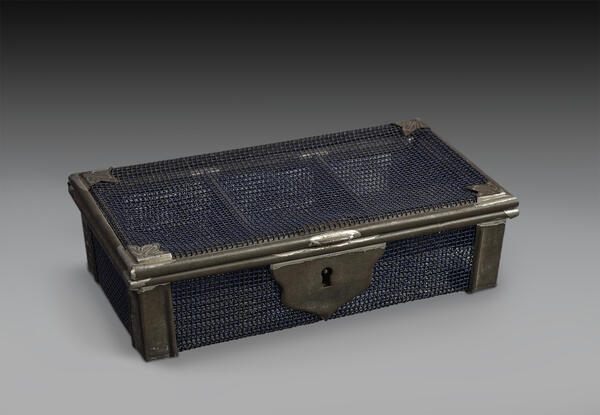
The cash register for small coins, presented in the Diorama Museum and Exhibition Center, belonged to the first public bank of the Vyatka Governorate. It was opened in the town of Slobodskoy by Xenofont Alexeyevich Anfilatov who believed that it was impossible to develop trade and maintain crafts without opening public banks in towns.
Xenofont Anfilatov was a well-known merchant from the town of Slobodskoy, Vyatka Governorate. When he was a young boy, he started participating in the business of his father and uncle. Already at a young age, he showed perseverance, vigor, and a quick mind for business. Having gained experience in commercial affairs in the Vyatka region, Xenofont Anfilatov moved to Arkhangelsk where he acquired his first sea-going vessel and started trading with Western European countries, increasing the turnover every year. He began sending vessels with goods to England, the Netherlands, Bremen, and Hamburg. However, the Napoleonic Wars were going on in Europe, and countries constantly switched between different coalitions. Under these conditions, Xenofont Anfilatov decided to look for new markets and to organize trade across the Atlantic Ocean with the United States of America.
In 1806, Emperor Alexander I signed a decree that exempted Anfilatov’s ships from tax duties. To organize a trading expedition to the United States, the merchant received a loan from the state treasury in the amount of 200,000 rubles “without any bond or guarantee”. The same year, he sent the first ships to America: “Johann Baptist” from Arkhangelsk to New York and “Erzengel Michael” from St. Petersburg to Boston. From the United States, Anfilatov delivered granulated sugar, coffee, cocoa, chocolate, nutmeg, cloves, pepper, sandalwood, rum, paints, and other goods. From the first expeditions, Xenofont Anfilatov received an enormous profit of 1,148,913 rubles.
Soon after the return of the ships from the United States, Xenofont Anfilatov started thinking about establishing a public bank in the town of Slobodskoy “to benefit the citizens in need.” Taking care of the prosperity of his fellow countrymen, in 1809, he developed the charter of a public bank, which was personally approved by Emperor Alexander I, and successfully passed the tests at every stage.
Xenofont Anfilatov was a well-known merchant from the town of Slobodskoy, Vyatka Governorate. When he was a young boy, he started participating in the business of his father and uncle. Already at a young age, he showed perseverance, vigor, and a quick mind for business. Having gained experience in commercial affairs in the Vyatka region, Xenofont Anfilatov moved to Arkhangelsk where he acquired his first sea-going vessel and started trading with Western European countries, increasing the turnover every year. He began sending vessels with goods to England, the Netherlands, Bremen, and Hamburg. However, the Napoleonic Wars were going on in Europe, and countries constantly switched between different coalitions. Under these conditions, Xenofont Anfilatov decided to look for new markets and to organize trade across the Atlantic Ocean with the United States of America.
In 1806, Emperor Alexander I signed a decree that exempted Anfilatov’s ships from tax duties. To organize a trading expedition to the United States, the merchant received a loan from the state treasury in the amount of 200,000 rubles “without any bond or guarantee”. The same year, he sent the first ships to America: “Johann Baptist” from Arkhangelsk to New York and “Erzengel Michael” from St. Petersburg to Boston. From the United States, Anfilatov delivered granulated sugar, coffee, cocoa, chocolate, nutmeg, cloves, pepper, sandalwood, rum, paints, and other goods. From the first expeditions, Xenofont Anfilatov received an enormous profit of 1,148,913 rubles.
Soon after the return of the ships from the United States, Xenofont Anfilatov started thinking about establishing a public bank in the town of Slobodskoy “to benefit the citizens in need.” Taking care of the prosperity of his fellow countrymen, in 1809, he developed the charter of a public bank, which was personally approved by Emperor Alexander I, and successfully passed the tests at every stage.