The Museum of Intelligence Officer Nikolai Ivanovich Kuznetsov in the village of Zyryanka displays the painting “The Village of Zyryanka. The 1920s–1930s”, created by the Soviet artist Boris Alexandrovich Semyonov.
Boris Semyonov (1917–1991) is best known for his cycles of urban landscapes, portraits of industrial workers and leaders, and canvases centered on industrial themes. His art reflects a deep attachment to four cities: Leningrad, where he grew up; Riga, home to his relatives; Moscow, with its historic monuments; and Sverdlovsk, where he lived and worked for most of his life.
The village of Zyryanka — Nikolai Kuznetsov’s birthplace — was situated along the small Beryozovka River, which formed three small ponds thanks to a series of dams. Opposite the middle pond stood the Kuznetsovs’ house, where the future legendary spy and partisan lived and grew up. This very house appears in the foreground of Semyonov’s painting. The work was created based on the recollections of Nikolai Kuznetsov’s elder sister, Agafya Ivanovna.
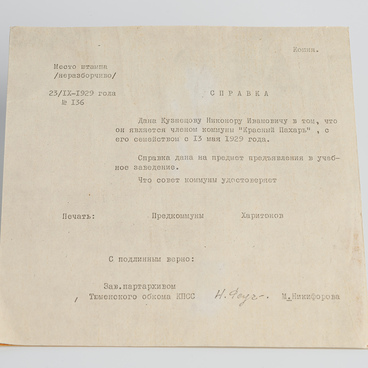
The original Kuznetsov house has not survived. On May 5, 1929, after Nika persuaded his mother to join the “Red Ploughman” commune, Anna Petrovna Kuznetsova, together with her sons Nikanor and Viktor, transferred all their property — farm tools, livestock, and horses — to the commune’s common fund. Their house was dismantled, moved to the center of the village, and converted into a public bakery.
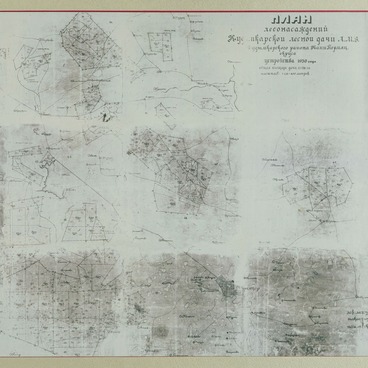
The 1930s brought sweeping changes to Zyryanka. The “Red Ploughman” commune in the Talitsky District operated until 1930, when it was reorganized into a collective farm named after Stalin. In 1934, it was merged into the larger Krasnaya Zvezda (“Red Star”) collective farm.
The Kuznetsov family eventually chose to leave the village. While still living in Sverdlovsk, Nikanor wrote to his brother Viktor: