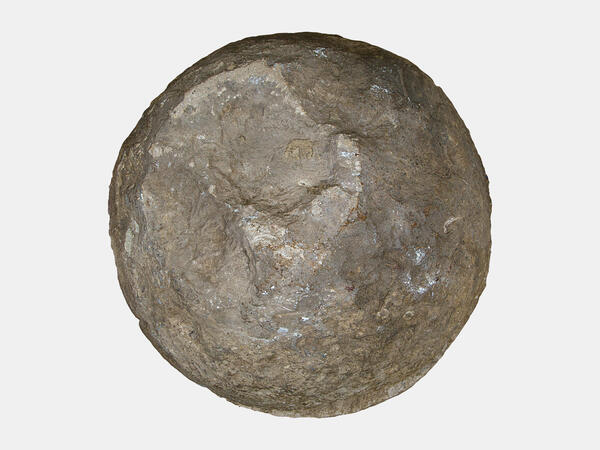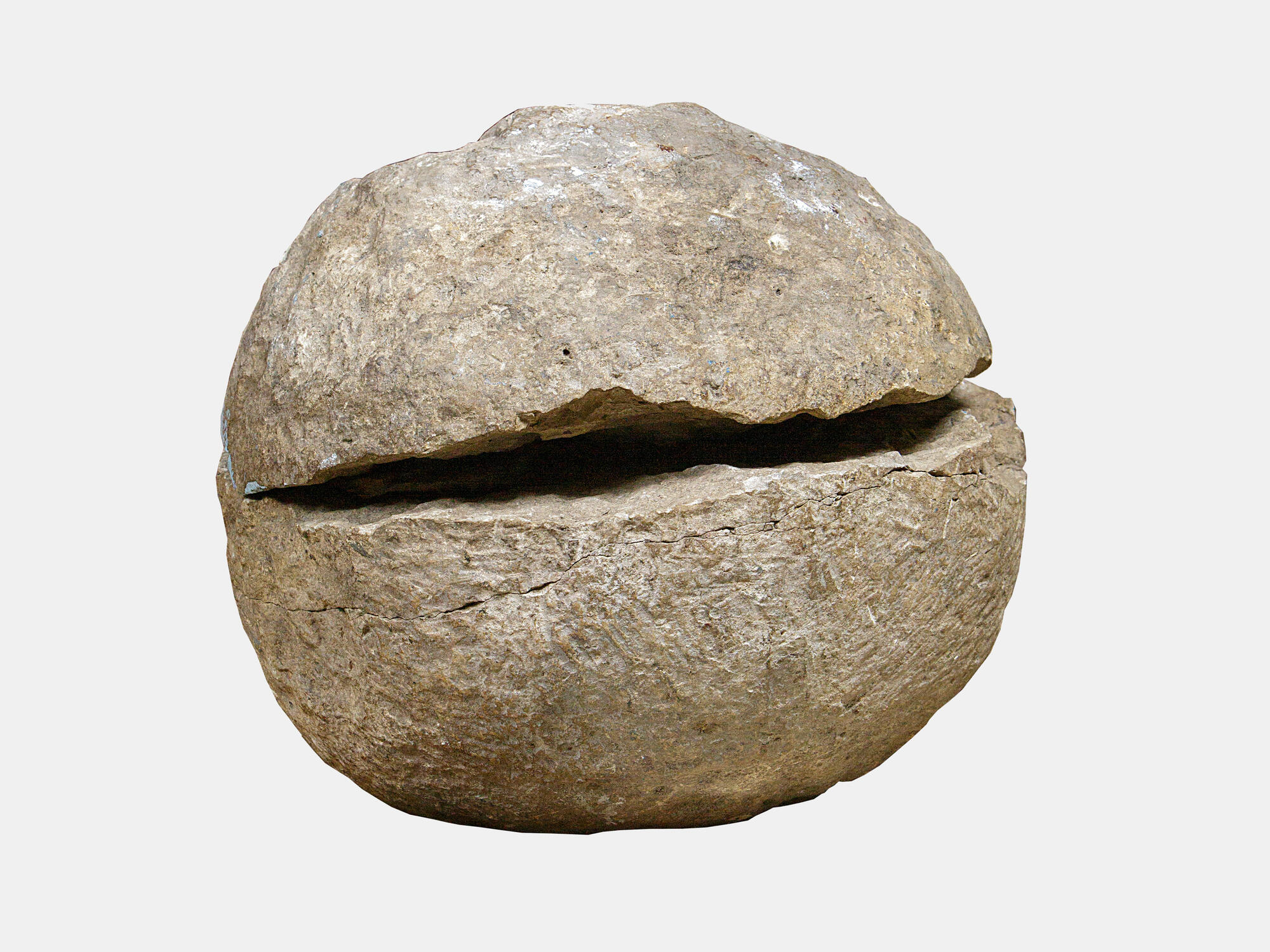


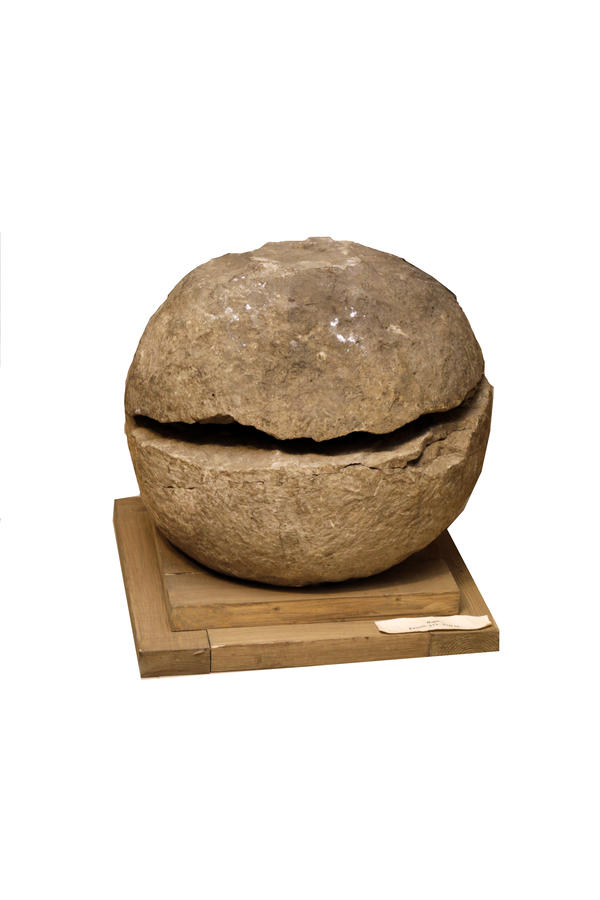
The stone cannonball is the earliest type of artillery projectile. It was used for firing from the first stone-throwing machines, and later from bombards, howitzers, and cannons. Stone cannonballs were used in the gunpowder artillery of European armies until the end of the 15th century, when they were replaced by cast iron counterparts.
The first stone cannonballs appeared in ancient Greece about 2,500 years ago, with the invention of the catapult. The name of the weapon literally translates as “against the shield”: the catapult was stronger than all previously known military devices. The restraining rope, which was part of the catapult trigger mechanism, was woven from horse and women’s hair. Catapults could throw cannonballs weighing from 500 grams to 80 kilograms.
Craftsmen hollowed out and polished cannonballs from hard rocks. Sometimes, to make the cannonball even stronger, it was bound crosswise with two iron hoops. The caliber of gunpowder guns was determined by the weight of the stone cannonballs they could fire.
Cast iron is almost three times denser than stone, so the stone cannonball of the same weight was significantly larger in diameter. Because of this, the stone lost speed faster and was inferior to cast iron cannonballs in flight range. In addition, the strength of the stone cannonball was comparable to a fortress wall, so the projectile could break against it or get stuck without causing damage.
On the other hand, a stone cannonball needed less gunpowder charge than a cast iron one of the same size. This not only saved gunpowder, but also made it possible to make the walls of the gun thinner and the gun itself lighter. The thin-walled weapon could use an analogue of buckshot, which made it useful in close combat. This is why stone-shooting mechanisms were still used in the 16th century as anti-assault weapons.
A similar cannonball was fired, presumably from a mortar, at the Tula Kremlin at the beginning of the 17th century. This happened during the siege of Tula by the troops of Vasily Shuisky from June to October 1607. The Siege of Tula was the final stage of the Peasant Revolt of Ivan Bolotnikov, which raised more than 70 Russian cities, but was suppressed. The fall of Tula stopped the advance of the troops of False Dmitry II.