


Evenki residents — hunters, fishermen, and reindeer herders. The struggle for survival in harsh climatic conditions and the peculiarities of fishing have formed their exceptional observation skills. The old Evenki calendar can serve as a proof of this.
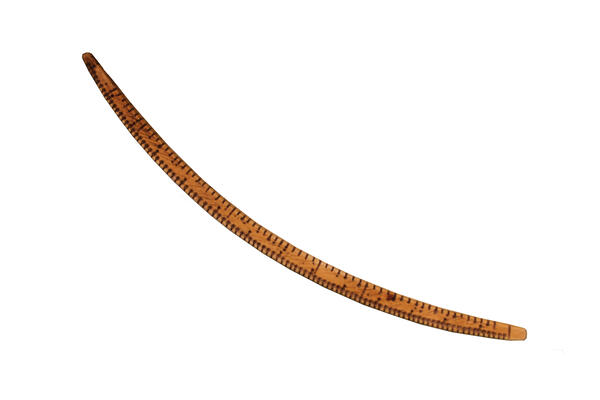
The arched bone plate, which was presented to the Museum in 1883 by Ivan Yachmenev, was hand made by an Evenk master. On it are holes at a certain distance. Several groups of notches with something in common are also clearly distinguishable. The year in the traditional representation of the Evenks is divided into two separate periods — summer and winter. The names of the months reflect seasonal changes in nature or related activities and changes in the life of the Evenks.
Freezing January is called mire, which means ‘shoulder month’: at this time, the sun in the taiga rises above the horizon almost to the level of human growth. February is called giravun, that is, ‘step month’: the sun at this time of year rises above the horizon higher than in January, and nature takes a step towards warmth, towards spring.
The Evenk name for March sounds like ektengkire, which translates as ‘month of growing horns’: at this time, antlers begin to grow on the male reindeers — they are covered with a skin on the outside with a short thick, dense hair that resembles velvet. April — Turan, the ‘month of the crow’: the time when these birds begin to hatch their eggs. May is called sonkan, that is, ‘month of calves’: at this time taiga people are delighted with the cries of newborn reindeer calves — a good herald of the arrival of spring and prosperity.
June — muchun, ‘month of greenery’. July is call chorilin because it is ‘month of the sun’. August — Irkin, ‘month of cleaning the antlers’: reindeers stop growing antlers, and their velvety skin begins to peel off, exposing the hornbone. September — syrudyan, the ‘beginning of reindeer games’. October — ugun, and this is the ‘month of freezing water’. November — hugdarpi, which means ‘month of the deep snow’. December — hegdyh, which means ‘the longest’. Nomads of the taiga in this harsh month are almost constantly at camp areas. Time passes slowly, so December seems to be longer than other months.
The arched bone plate, which was presented to the Museum in 1883 by Ivan Yachmenev, was hand made by an Evenk master. On it are holes at a certain distance. Several groups of notches with something in common are also clearly distinguishable. The year in the traditional representation of the Evenks is divided into two separate periods — summer and winter. The names of the months reflect seasonal changes in nature or related activities and changes in the life of the Evenks.
Freezing January is called mire, which means ‘shoulder month’: at this time, the sun in the taiga rises above the horizon almost to the level of human growth. February is called giravun, that is, ‘step month’: the sun at this time of year rises above the horizon higher than in January, and nature takes a step towards warmth, towards spring.
The Evenk name for March sounds like ektengkire, which translates as ‘month of growing horns’: at this time, antlers begin to grow on the male reindeers — they are covered with a skin on the outside with a short thick, dense hair that resembles velvet. April — Turan, the ‘month of the crow’: the time when these birds begin to hatch their eggs. May is called sonkan, that is, ‘month of calves’: at this time taiga people are delighted with the cries of newborn reindeer calves — a good herald of the arrival of spring and prosperity.
June — muchun, ‘month of greenery’. July is call chorilin because it is ‘month of the sun’. August — Irkin, ‘month of cleaning the antlers’: reindeers stop growing antlers, and their velvety skin begins to peel off, exposing the hornbone. September — syrudyan, the ‘beginning of reindeer games’. October — ugun, and this is the ‘month of freezing water’. November — hugdarpi, which means ‘month of the deep snow’. December — hegdyh, which means ‘the longest’. Nomads of the taiga in this harsh month are almost constantly at camp areas. Time passes slowly, so December seems to be longer than other months.

