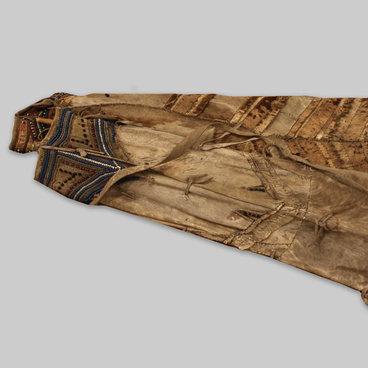
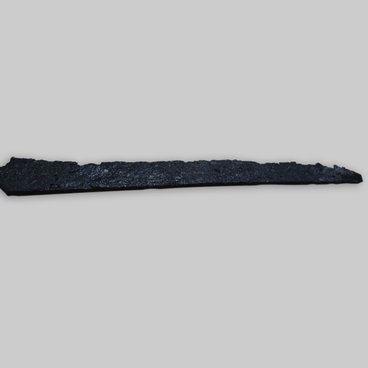
The wooden idol depicting a Loon is a ritual shamanic device. The Evenks, like many other people, have unique features of spiritual and material culture — they created their folklore genre and ornaments on the basis of long-term observations of nature and animals.
Birds and animals in fairy tales are anthropomorphic: they have the gift of human speech, they are characterized by human actions and feelings. The most popular characters in the world of birds are the loons and swans — they symbolize the heavenly world of the Evenks and are the leading characters in shamanic mythology. Flying birds in the form of a shoal were depicted on shamanic poles, and this shoal was headed by swans, loons and eagles. They were always followed by ducks, and then by titmice and other small birds, which denoted enslaved people. When flying, the loons and swans occupied one of the first places in the troop, and also flew higher than most other birds, since their main task is to drive away evil spirits from the shaman’s soul.
The loon also acted as an assistant in the creation of the earth. God of the upper world, Heveki asked it to bring a piece of land from the sea: it brought it, but did not give it away, since it wanted to be the creator of the world itself. Then Heveki sent it away and gave it another mission — to be the bearer of shamanic soul of water elements. There was also a story where the loon was created by the evil spirit of Harga.
The skin of the loon was used in sacred amulets. The Evenks chose this bird as an intermediary between the lower world and the human world, because it swims and dives perfectly, thoroughly submerging in water. Also, the loon is very watchful, and its dark color symbolizes the connection with the world of shadows.
A symbol of a loon was used by the Evenks in decorative and applied arts. For example, clothing with an embroidered loon had wonderful properties: it provided protection from evil spirits and attracted good luck in fishing.
In general, the ornithological symbolism of the Evenks reflected archaic layers in their culture: everyone wanted to be different, to be special in this world, and birds occupied an important place in this worldview model, were the main link in the shamanic ritual, images of birds played the role of a talisman.
Birds and animals in fairy tales are anthropomorphic: they have the gift of human speech, they are characterized by human actions and feelings. The most popular characters in the world of birds are the loons and swans — they symbolize the heavenly world of the Evenks and are the leading characters in shamanic mythology. Flying birds in the form of a shoal were depicted on shamanic poles, and this shoal was headed by swans, loons and eagles. They were always followed by ducks, and then by titmice and other small birds, which denoted enslaved people. When flying, the loons and swans occupied one of the first places in the troop, and also flew higher than most other birds, since their main task is to drive away evil spirits from the shaman’s soul.
The loon also acted as an assistant in the creation of the earth. God of the upper world, Heveki asked it to bring a piece of land from the sea: it brought it, but did not give it away, since it wanted to be the creator of the world itself. Then Heveki sent it away and gave it another mission — to be the bearer of shamanic soul of water elements. There was also a story where the loon was created by the evil spirit of Harga.
The skin of the loon was used in sacred amulets. The Evenks chose this bird as an intermediary between the lower world and the human world, because it swims and dives perfectly, thoroughly submerging in water. Also, the loon is very watchful, and its dark color symbolizes the connection with the world of shadows.
A symbol of a loon was used by the Evenks in decorative and applied arts. For example, clothing with an embroidered loon had wonderful properties: it provided protection from evil spirits and attracted good luck in fishing.
In general, the ornithological symbolism of the Evenks reflected archaic layers in their culture: everyone wanted to be different, to be special in this world, and birds occupied an important place in this worldview model, were the main link in the shamanic ritual, images of birds played the role of a talisman.