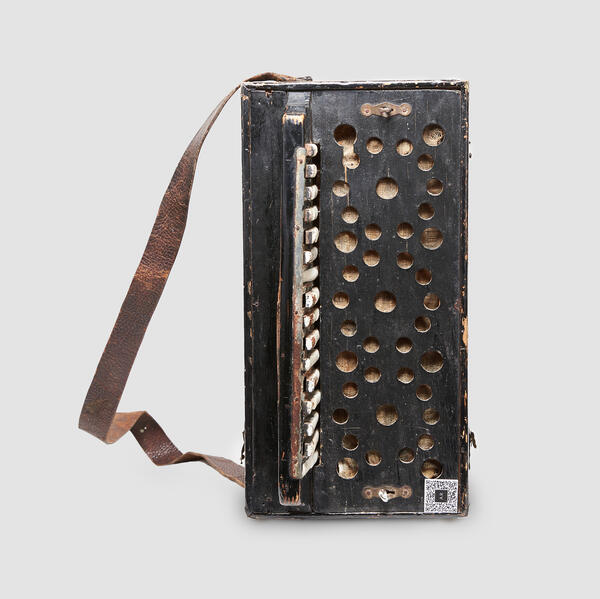
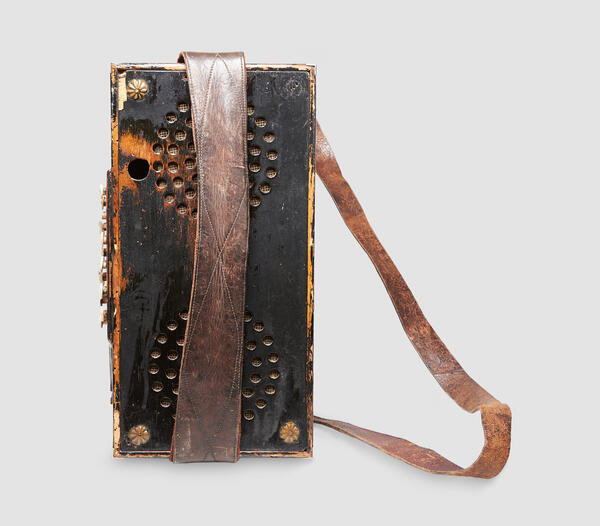
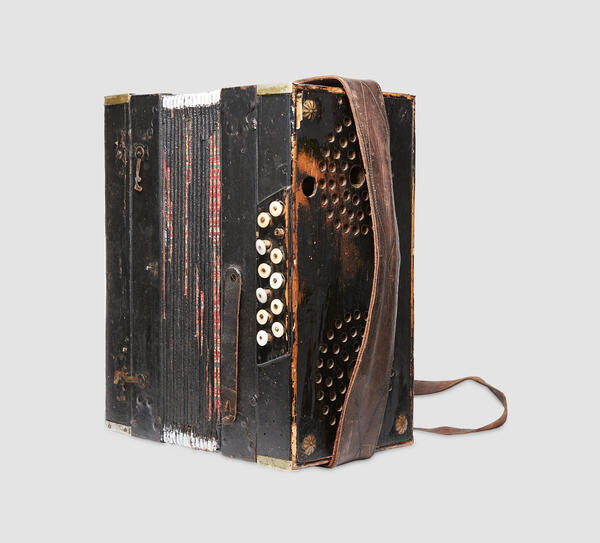
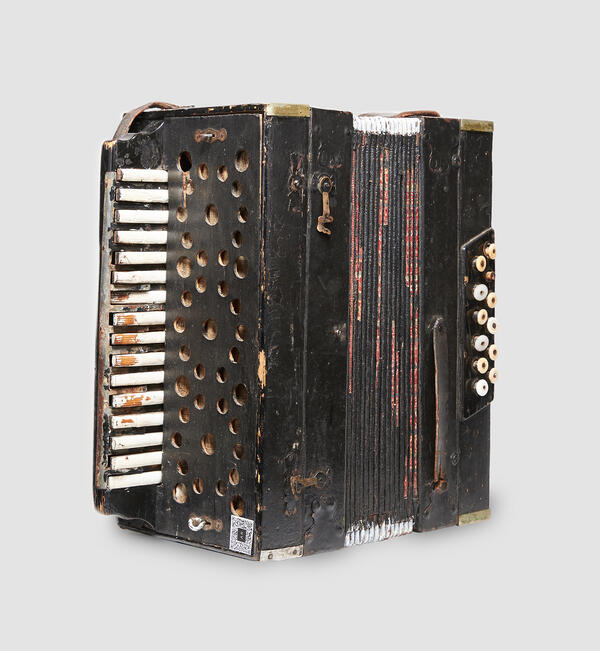
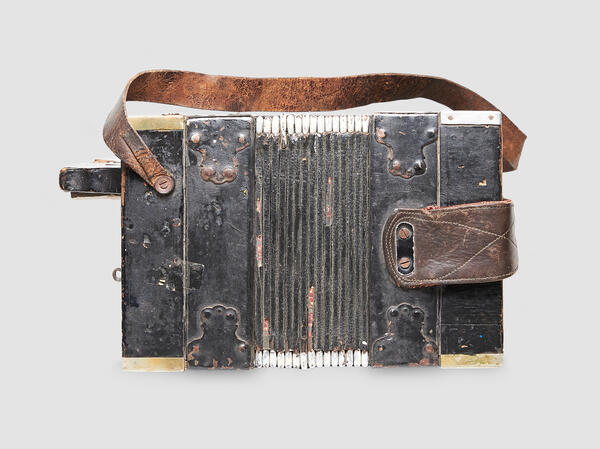
The accordion is a free reed aerophone type keyboard instrument. It has a belt for controlling the bellows, which connect both parts of the accordion. By opening and closing the bellows, the metal reeds vibrate and produce sounds. It has not been established where exactly the accordion was first invented: some researchers believe its homeland to be England, others — Germany.
Alfred Martinovich Mirek (founder of the Russian Accordion Museum) believed that the instrument was invented in the 18th century in St. Petersburg thanks to the Czech craftsman František Kiršnik who specialized in pipe organs. Before settling in Russia, the master traveled a lot in Europe, lived in Denmark and Germany, improving his skills.
The first squeezebox, which was presented to the St. Petersburg public in 1783, was rather difficult to handle: the musician sat down to it as to a piano, operating the bellows with one hand and pressing the keys with the other to achieve a clear and deep sound. Unlike other popular keyboard instruments (for example, the clavichord and harpsichord), the novelty did not require tuning.
In 1822, an accordion was developed in Germany on the basis of the table squeezebox, which allowed the instrument to leave the confined space of the salons and be played on the streets and fairs. In 1830, this new model appeared in Russia. The Tula gunsmith Ivan Sizov took an interest in it: after carefully examining the device, he built a replica of it, and then set up mass production. Timofey Vorontsov continued the work of Sizov and made his own improvements to the design.
In the early 20th century, artisans manufactured accordions; after the Russian Civil War, entire artels were established, and in the 1930s — state-run factories.
The Russian term “garmon” (accordion) is used only in Russia: in other countries, the term “accordion” covers a wide range of instruments that use the same principle of operation. One of them is a talianka accordion, especially popular in the 19th century in the north of Russia and in the Volga region: it has 12–15 elongated keys and 3–6 buttons. The sound of a talianka resembles the ringing of bells. By opening and closing the bellows, the musician can change the pitch and tone of the sound.