


Ostrog (Fortress) — a temporary or permanent fortification structure surrounded by a palisade of pointed logs 4-6 m high. Initially, the fortress itself was called the fence of sharp trunks and wattle, it was arranged during the siege of enemy cities.
The first ostrogs appeared in Russia at the turn of the XI-XII centuries for protection against nomad raids. Starting from the XIII century, such structures consisted of Tynа logs (series of stakes) and the so-called Taras, that is, log crowns. The fence of the ostrog was installed on a flat area or on the top of a small earthen rampart and surrounded from the outside by a moat. Ostrog most often had the shape of a quadrangle with towers at the corners. Passerby towers were used to communicate with the field.
In the XIV–XVII centuries, such fortifications have already spread to the southern borders of the Russian lands (for example, Samara, Tsaritsyn and Saratov). Inside, there were huts, outside the walls — settlement. The ostrog was managed by a mandated governor.
At the same time, ostrogs began to be built in Siberia. Here they served as administrative centers for collecting yasak (kind of tax, mainly in the form of furs) and fortified points that provided protection for the first Russian settlers.
According to the long established practice of Russian fortification construction, a place near the mouth of a small river flowing into the Yenisey was made a site for the placement of the first Yeniseysk ostrog buildings. Thus, the Yeniseysk ostrog received additional defensive lines of natural origin — they made it difficult for a potential enemy to approach from the eastern and northern sides. The first fortress had three towers and three walls, the fourth side was adjacent to the banks of the Yenisey.
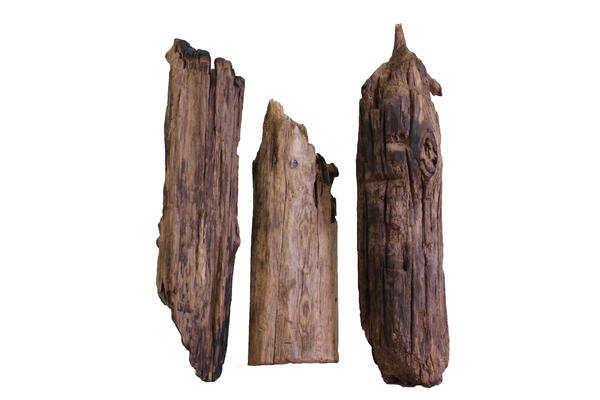
The fragment of the larch wall presented at the exhibition belonged to the log wall, which was the southern barrier of the Yeniseysk ostrog. It was discovered at a depth of four meters on the territory Of the Department of social protection of the people of Yeniseysk city during archaeological excavations in 2014. The exhibit was given to the Museum by the Krasnoyarsk geoarchaeology company.
The first ostrogs appeared in Russia at the turn of the XI-XII centuries for protection against nomad raids. Starting from the XIII century, such structures consisted of Tynа logs (series of stakes) and the so-called Taras, that is, log crowns. The fence of the ostrog was installed on a flat area or on the top of a small earthen rampart and surrounded from the outside by a moat. Ostrog most often had the shape of a quadrangle with towers at the corners. Passerby towers were used to communicate with the field.
In the XIV–XVII centuries, such fortifications have already spread to the southern borders of the Russian lands (for example, Samara, Tsaritsyn and Saratov). Inside, there were huts, outside the walls — settlement. The ostrog was managed by a mandated governor.
At the same time, ostrogs began to be built in Siberia. Here they served as administrative centers for collecting yasak (kind of tax, mainly in the form of furs) and fortified points that provided protection for the first Russian settlers.
According to the long established practice of Russian fortification construction, a place near the mouth of a small river flowing into the Yenisey was made a site for the placement of the first Yeniseysk ostrog buildings. Thus, the Yeniseysk ostrog received additional defensive lines of natural origin — they made it difficult for a potential enemy to approach from the eastern and northern sides. The first fortress had three towers and three walls, the fourth side was adjacent to the banks of the Yenisey.
The fragment of the larch wall presented at the exhibition belonged to the log wall, which was the southern barrier of the Yeniseysk ostrog. It was discovered at a depth of four meters on the territory Of the Department of social protection of the people of Yeniseysk city during archaeological excavations in 2014. The exhibit was given to the Museum by the Krasnoyarsk geoarchaeology company.


