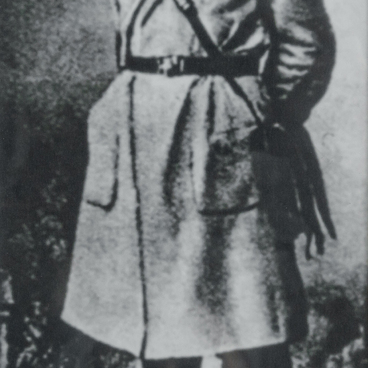
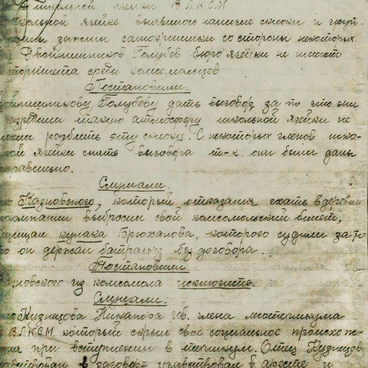
The Museum of Intelligence Officer Nikolai Kuznetsov in the village of Zyryanka features a copy of a photograph depicting the victims of the White Terror in the village of Balair, Talitsky District — the victims of a mass execution carried out on July 12, 1918.
The Russian Revolution in the Urals unfolded amid fierce class struggle. The Soviet government had not yet consolidated its authority when counterrevolutionary uprisings — spearheaded by kulaks (wealthy peasants) and the bourgeoisie — erupted across the region. In mid-November 1917, Ataman Dutov launched his rebellion; by May 1918, the Czechoslovak Corps had risen in revolt. Despite determined resistance from workers and the poorest peasants, the White Guards, supported by foreign interventionists, seized control of much of the Urals. A counterrevolutionary “Provisional Regional Government of the Urals” was installed in Yekaterinburg, and by November 1918, Admiral Kolchak had established his dictatorship.
These tragic events reached even the most remote corners of the Trans-Urals. In the summer of 1918, acting on denunciations by local kulaks, a punitive detachment of White Cossacks executed six rural activists in Balair — men who had fought to establish Soviet power. Among the dead was Iosif Vasilyevich Deryabin, husband of Anna Petrovna Kuznetsova’s aunt and the maternal uncle of Nikolai Kuznetsov, known affectionately in the village as “Uncle Osya”.
Nikolai Kuznetsov was still a child at the time. Lidia Bryukhanova and Viktor Kuznetsov recount this harrowing episode in their book “Intelligence Officer Nikolai Kuznetsov”: