Pocket lanterns were first used on a large scale by the German Army during the First World War. Their primary functions were to illuminate the immediate area at night and to transmit coded light signals for coordination between units in conditions of poor visibility.
By the outbreak of the Second World War, every Wehrmacht soldier was issued a flashlight. However, as Germany’s wartime economy deteriorated, distribution became selective — flashlights were allocated based on specific combat roles and environmental conditions.
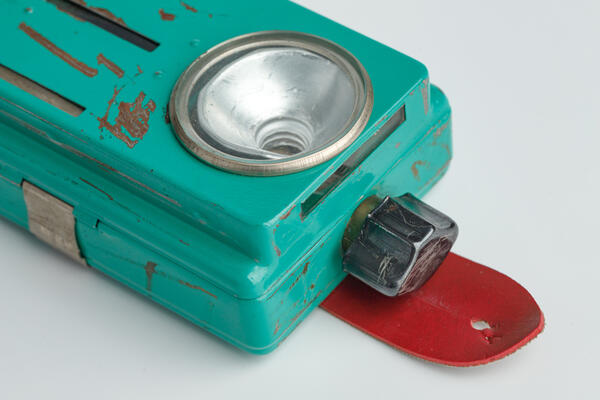
The standard issue field lamp, known as the Feldtaschenlampe, formed part of the Wehrmacht’s mandatory gear. It featured a compact, rectangular, flat metal body with a round lens at the bottom. Above the lens were three slots for interchangeable colored filters — blue, red, and green — used for signaling. These filters were extended or retracted using sliding pins that matched the corresponding color.
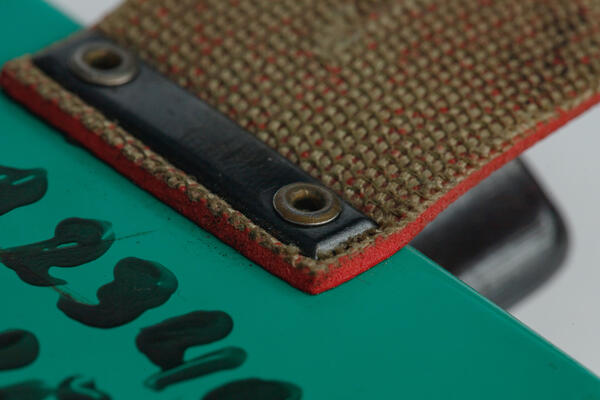
A large button on the top panel allowed the user to switch the light on or off quickly. The rear of the lantern had two loops for attachment to the uniform: the upper loop fastened to the shoulder strap, and the lower one to a button on the chest pocket. Many models also included a retroreflector that directed the beam toward the ground, minimizing the risk of revealing the soldier’s position.
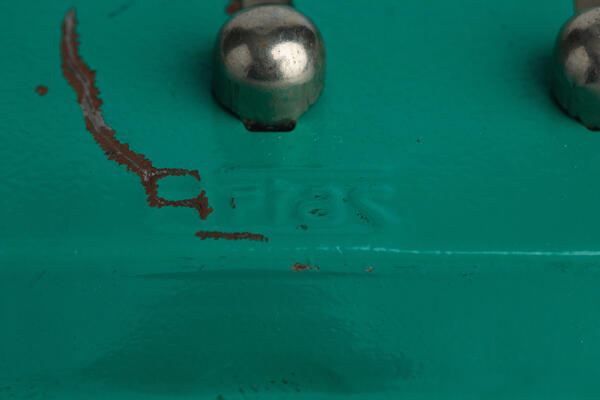
Partisan detachments operating in Nazi-occupied territories frequently used captured German equipment. One such trophy lantern belonged to Viktor Vasilyevich Kochetkov, a fighter in “The Winners” (Pobediteli) partisan unit, who carried out missions in the forests of Western Ukraine. This small but reliable device proved invaluable during sabotage operations, reconnaissance missions, and ambushes. In 1977, Kochetkov donated his lantern to the Nikolai Kuznetsov Museum.
Lanterns of that era differed significantly from modern flashlights: they were simple yet robust, typically housed in metal casings often painted in camouflage colors. Their light output was dim by today’s standards — but sufficient for the demands of wartime operations.
For “The Winners”, the flashlight was more than a piece of equipment — it became a symbol of hope and a vital link to their comrades. Because of shortages, every battery was carefully conserved, and the lamps themselves were hidden from enemy eyes. In time, this humble device entered the legend of Soviet resistance: a quiet testament to the courage, resourcefulness, and unwavering resolve of the people during the Great Patriotic War.