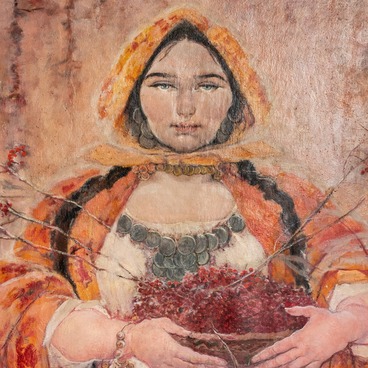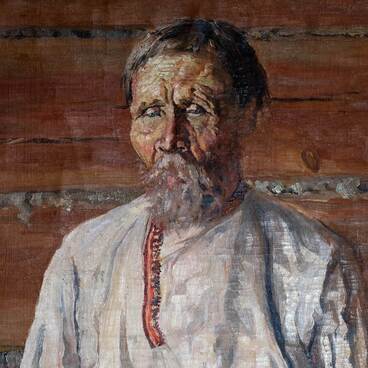


Sergey Valerianovich Evdokimov has worked as a chief artist and production designer at the M. Shketan National Theater, the Young Spectator’s Theater and the Mari State Academic Theater named after Eric Sapaev. Evdokimov began his artistic career as a realist, successfully debuting with the painting “Mari Apiary” in the Central Exhibition Hall in the Manege (Moscow, 1988). In the mid-1990s, the artist joined the artistic movement of ethnofuturism, the main goal of which is to make ethnic culture competitive and give it life in the future. The ethnofuturists based their works on the most ancient rock paintings, jewelry, and embroidery, which, in their opinion, represent “real, sacred art”.
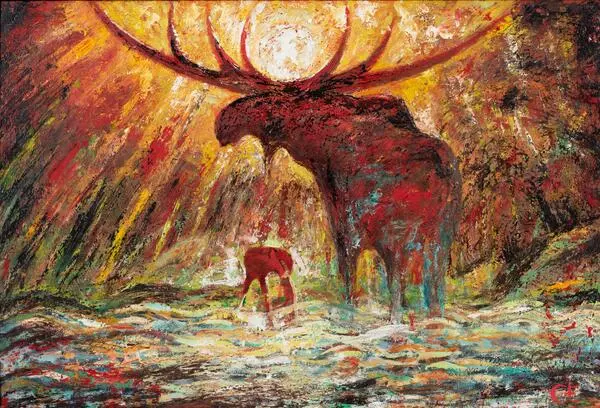
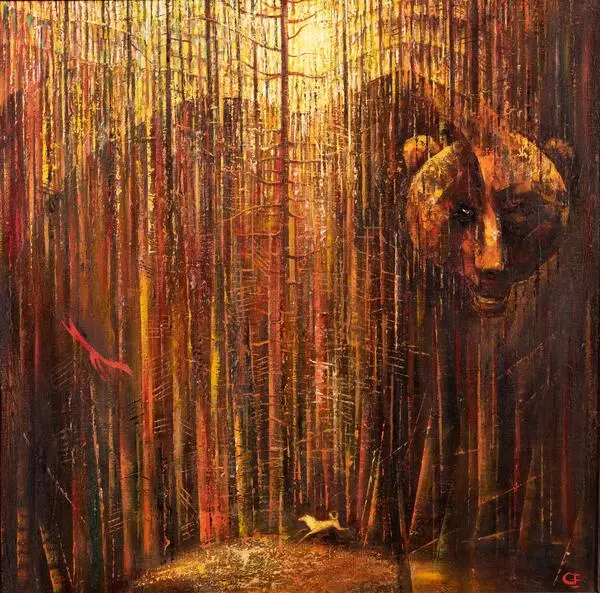
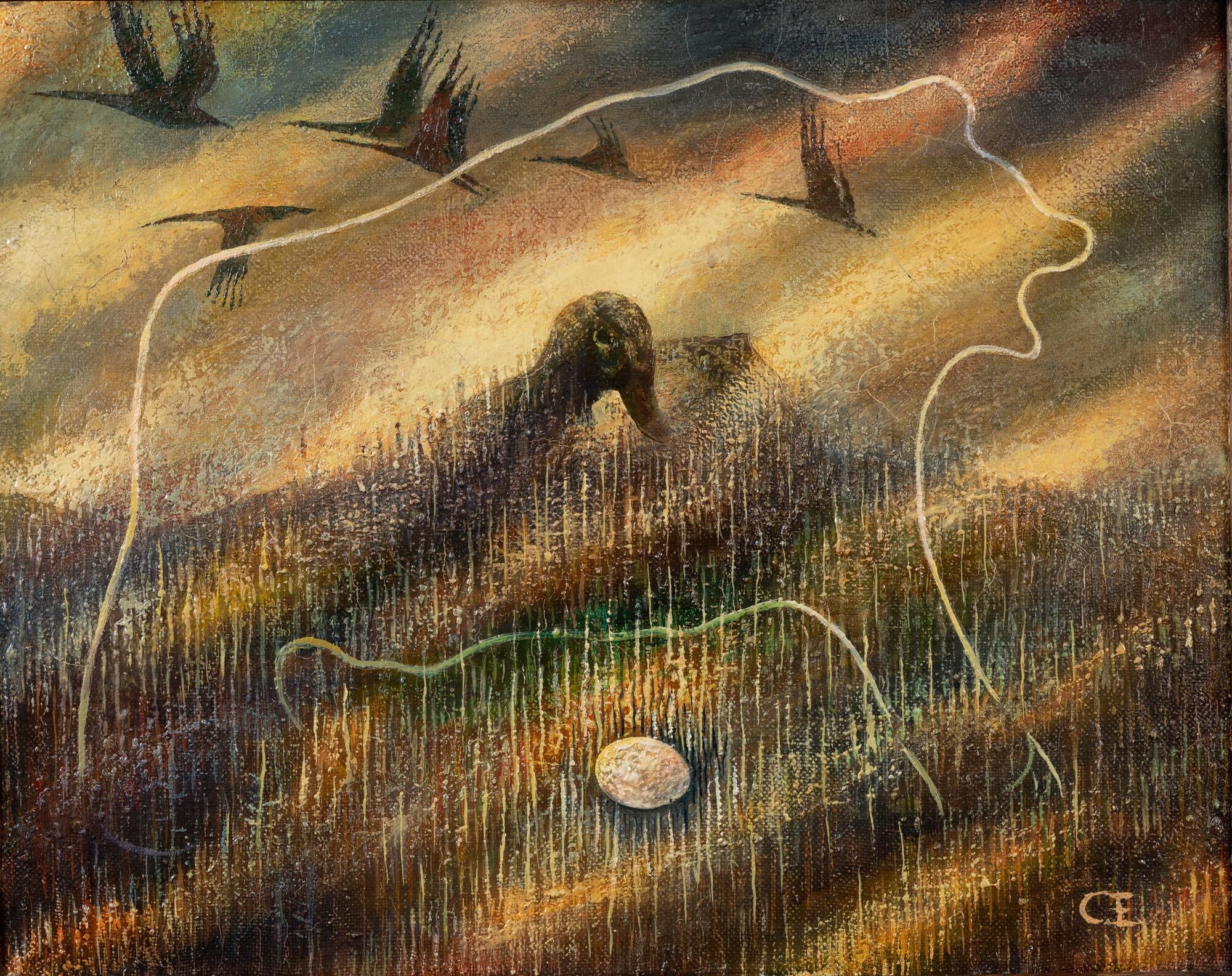
Sergey Evdokimov is interested in philosophical problems of art. His works, inspired by the Mari mythology, are multifaceted, associative, and vivid. Evdokimov’s paintings bring to life the inhabitants of forests that are especially revered by the Mari people — ducks, moose and bears. Among them, the cult of the waterfowl duck stands out especially: it is the only living creature capable of moving in any direction through air, land and water. In addition, the image of a duck is closely related to folk ideas about fertility and the life cycles of plants, animals and humans. In the mythology of the Mari people, the duck is the Progenitrix and creator of the Mari land. It was the duck that built a nest on the surface of the World Ocean and laid two eggs, from which two deities hatched in the form of two drakes — the good god Yumo and the evil god Yin. The drake gods created the earth from the silt raised from the bottom of the World Ocean, God Yumo made a man out of clay, the progenitor of the Mari people, and gave him the newly formed land, which he called the Mari land.
In his canvas “The Progenitrix” Evdokimov uses a technique called drip painting — it employs unique shading effects, scuffs, splashes, and streaks, through which the silhouettes of the characters indistinctly appear. It produces an effect of dreams or memories that come to life when looking at the picture.
Sergey Evdokimov is interested in philosophical problems of art. His works, inspired by the Mari mythology, are multifaceted, associative, and vivid. Evdokimov’s paintings bring to life the inhabitants of forests that are especially revered by the Mari people — ducks, moose and bears. Among them, the cult of the waterfowl duck stands out especially: it is the only living creature capable of moving in any direction through air, land and water. In addition, the image of a duck is closely related to folk ideas about fertility and the life cycles of plants, animals and humans. In the mythology of the Mari people, the duck is the Progenitrix and creator of the Mari land. It was the duck that built a nest on the surface of the World Ocean and laid two eggs, from which two deities hatched in the form of two drakes — the good god Yumo and the evil god Yin. The drake gods created the earth from the silt raised from the bottom of the World Ocean, God Yumo made a man out of clay, the progenitor of the Mari people, and gave him the newly formed land, which he called the Mari land.
In his canvas “The Progenitrix” Evdokimov uses a technique called drip painting — it employs unique shading effects, scuffs, splashes, and streaks, through which the silhouettes of the characters indistinctly appear. It produces an effect of dreams or memories that come to life when looking at the picture.